




For those paying attention to global news, it might be a bit overwhelming to keep up with the numerous ongoing threats, conflicts, and humanitarian issues that cycle through our news feeds. From Somalia in Africa to Kurdistan in the Middle East to Burma (Myanmar) in Asia to Ukraine in Eastern Europe and Haiti in North America, there’s a lot to keep an eye on as the face of conflict as we know it evolves.
During both world wars, innovation in combat shocked troops on either side as they faced tear gas and tanks for the first time. Machine guns were revolutionary as a single soldier could take out an entire front individually. Today, we see similar advances right in our backyard.
Just to remind us, in 2021, Jovenel Moïse, the 43rd president of Haiti, was assassinated. Supposedly carried out by a group of foreign mercenaries, the killing sent the country into a spiral as gang leaders and inter-governmental members alike fought to take control of the country.
A few weeks ago, multiple news sources reported an interesting update regarding efforts to restore order in Haiti — well-known businessman Erik Prince, a former Navy SEAL officer and the founder of the private military contracting (PMC) firm Blackwater (now Constellis Holdings), has been contracted by representatives of the Haitian government to use private contractors in Haiti to restore control to a recognised government.
While this would be a bold and unmatched move, it’s worth consideration and analysis, and that’s exactly what I plan to do.

Firstly, we need to define what that would actually look like, including the elements involved. Erik Prince, during his time in the SEAL teams, was deployed to Haiti and has continued to work within the country even after his service ended. Prince is familiar with the territory and the parties involved, providing some context for his selection as executor of this mission.
According to the New York Times, over the past few months, he has been a member of a task force of contractors using drones to eliminate high-value targets within Haiti. This is huge! We’ve seen an increase in the implementation of drone warfare globally, primarily through both the Ukraine-Russian conflict and, not so long ago, on June 13, with Israel’s devastating strikes against Iran.
Technological advances in warfare show us that targeted strikes no longer require on-the-ground elements. These weapons can virtually avoid most countermeasures, ensuring the highest levels of success with limited operator casualties.
Despite this, Prince has shown intent to include 150 in-theatre personnel, primarily Haitian-American contractors, in the contract. On June 25, 2024, almost 200 Kenyan police officers were deployed as part of the UN-backed Multinational Security Support mission. Almost a year later, no major success has been reported as troops are underequipped and outnumbered in a country where they lack both cultural and linguistic ties.
Moreover, additional elements, primarily from The Bahamas, Barbados, Belize, and Jamaica, have yet to arrive to support the mission. Prince’s Haitian-American contractors fill in two major capability gaps in the current security mission efforts. For starters, they integrate cultural fluency and language proficiency in the form of highly-trained operators, enabling more effective engagement with local populations, providing a framework to build a reliable intelligence network in such a volatile operational landscape.
Secondly, private contracts mean that security personnel will have the financial resources required to carry out the full range of operations required, contrary to their ill-equipped Kenyan counterparts.
While much attention is rightfully focused on what this escalation means for Haiti, it is equally important to consider its broader implications for the Caribbean region. Our region is no stranger to foreign armed forces. From the Bay of Pigs invasion to the invasion of Grenada to the 2020 coup attempt in Venezuela, our countries have seen state militaries and intelligence organisations carry out a range of violent acts on our land, and in many cases against our people.
Unfortunately, present conflicts no longer follow traditional rules as they are increasingly shaped by cartels, terrorist organisations, and private contracting firms. In Haiti’s case, the government is requesting that these PMCs operate in their country, but that might not always be the case. By nature, these organisations serve those who finance them, and that funding may one day come not from governments but from private corporations or wealthy individuals with their own agendas.
All Caribbean countries, whether or not they have territorial disputes with neighbouring countries, must create and evaluate comprehensive national defence strategies. If and when the time comes, citizens and defence force personnel must be properly prepared and capable of defending the nation’s borders.
No longer should sovereign nations of the Caribbean community solely rely on support or intervention from superpowers like the United Kingdom or the United States for their protection and safety. In order to ensure our Caribbean civilisation remains a safe one, we must assess all threats, domestic and external.
We must not limit the scope of our thinking, training, or deployment to contraband efforts. Instead, our national security institutions must be able to efficiently and effectively target and dismantle criminal elements within our communities while preparing for the increasingly plausible threat of foreign incursion by PMCs, nation-state actors, or other foreign threats.
Stories in the Middle East and Africa offer sobering lessons, as we’ve seen private military contractors like Falcon Security fight for oil interests in Kurdistan or the Wagner group for political reasons in Mali. To dismiss the potential for similar threats to reach our shores is not only naive but critically endangers our populations. Our governments have a responsibility to begin seriously discussing the state of security for our region. If CARICOM and related institutions fail to act decisively now, who says a situation like Haiti can’t happen again?
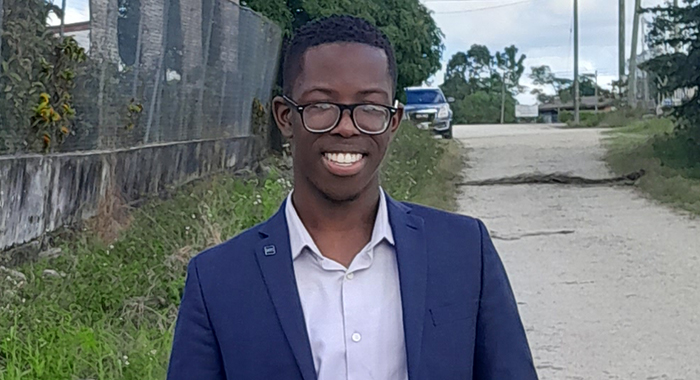
Daniel Burgin
Views expressed are of the writer’s and not those of any affiliated organisations or agencies
The opinions presented in this content belong to the author and may not necessarily reflect the perspectives or editorial stance of iWitness News. Opinion pieces can be submitted to [email protected].