



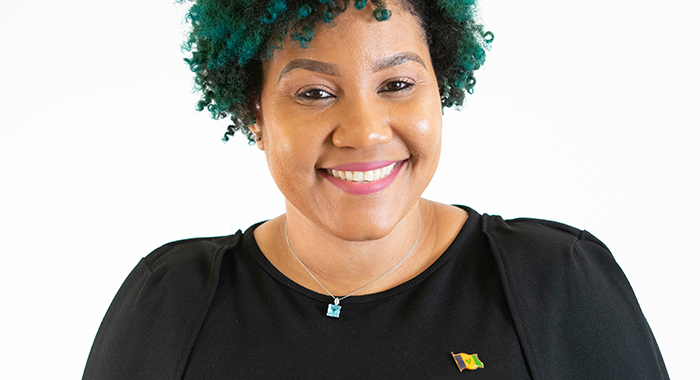

By *Tedra Kirby
2025 is one of those years in Caribbean politics where citizens of several Caribbean countries exercise their constitutional right by voting in a general election. As Jamaicans go to the polls today to do just that, I reflect on the pomp and flair of their campaign season. Not the animated speeches by politicians, the creative musical dubplates, nor the festive political rallies, but rather the series of political debates hosted by the Jamaica Debates Commission (JDC).
I watched and applauded, admittedly, in envy. Throughout the Jamaican election campaign season the JDC hosted three debates, which were broadcast throughout Jamaica and even globally via YouTube, Instagram and other social media platforms. It wasn’t the JDC’s first rodeo. In fact, it held political debates in the 2020 election as well. This 2025 season, debate #1 focused on social issues, debate #2 the economy and debate #3 leadership. For the first and second debate, Members of Parliament (including senior ministers of government), senators and candidates, divided into teams of three, exchanged oral jabs on their policies, their record and their promises.
The grand finale, though, came within the final week of campaigning. This was the much-anticipated heavyweight round, which saw Prime Minister Andrew Holness and Leader of the Opposition Mark Golding debate each other, “mano a mano”. I couldn’t help but ask aloud, “When will the political discourse in St. Vincent and the Grenadines get to this point?”
Debates play a crucial role in any democracy, and while they can take formal and informal forms, political debates, especially, are critical. These debates provide an opportunity for a side-by-side comparison and contrast of policies and candidates which help voters to decide, encourage respectful civil discourse amongst politicians and the electorate, as well as promote transparency.

A good debater makes you think, but a great debater convinces you not only to think, but to agree with their stance. We know elections are about winning over voters. Political debates during the election campaign season can help in the decision-making of undecided voters, and even help sway previously-decided voters. Strategically, this is an opportunity for candidates and voters alike.
Political rallies/talk shows etc tend to attract mainly party-specific supporters and sympathisers. These are the votes that a specific party likely has already. As a result, there is an entire segment of the voting population who are unlikely to hear what that particular party is campaigning on. Unreached voters, I would assume, each party wants to earn to increase the odds of winning. I can segue into how this in itself has the potential to lead to disinformation and misinformation, but let me stay on track.
For voters, this allows us the opportunity to scrutinise the past actions/lack of action and the proposed policies of candidates and the political parties they represent. The debate platform will offer a single platform, an equal platform, where candidates can present their case for why we should elect/re-elect them. An opportunity like this, in a controlled environment, should be embraced by our political candidates and encouraged by Vincentian voters. To those who would rush to proclaim that Vincentians do not vote on nor care about policies and actions, or that Vincentians have blind loyalty to political parties, I say to you: Give us more credit than that. Ultimately, a well-informed voter is the best voter.
Additionally, a properly organised political debate allows for the respectful exchange of opinions by candidates. We know opinions will differ, but a well-organised debate grants both sides the platform to articulate that respectfully. While some may look to rebut by saying, “But they debate in Parliament all the time!” let us be frank, or as we’d more comfortably say, ley arwe talk nuh: Too often these exchanges are chaotic. We’ve witnessed parliamentarians shouting over each other, engaging in name-calling, etc. Some have even been seen on live coverage of Parliament sleeping in sessions or scrolling sites like Facebook on their phones during sittings. In fact, one is left to wonder if many go to Parliament with the primary aim of simply uttering the most viral soundbite possible for social media audiences. Parliament is there, yes, but a regular disregard for the rules of the house makes it difficult for respectful exchanges to take place. A live political debate spotlight, away from the comfortable halls of Parliament, effectively puts candidates under a microscope as individuals — .their words, movements, everything, in a timeframe when it is most crucial: election campaign season.
Parliament also does not allow for voters to be involved actively in the discussions as they are taking place, which brings me to my next point: well structured political debates grant voters access to candidates that we may not have in the same way otherwise. Allowing the public to participate in the debate through the submission of questions gives voters the opportunity to keep candidates accountable, seek clarity on proposals, explanations on stances taken, raise concerns or advocate for the inclusion of things that matter to them, which may have been overlooked by the candidates/parties.
We saw this in the Jamaican debates where the moderator fielded questions from social media, especially during the leadership debate, where the voting Jamaican public took both Holness and Golding to task on the record and promises of the JLP and the PNP. Social media itself was buzzing, as voters candidly engaged each other on the content of the debate, the delivery and presentation of the participants, etc. It facilitated progressive national discussion between both sides of the main political divide. In fact, this positive effect is well evidenced in research. The London School of Economics and Political Science’s International Growth Centre states unequivocally that their primary research shows political debates increase voter knowledge, voter preference and politicians’ performance.
As we enter another election cycle locally in St. Vincent and the Grenadines we anticipate the rallies, the platform speeches, the catchy soundbites, the usual political stunts, bravado and banter. However, I encourage our politicians to be open to the establishment of and participation in political debates, as well as urge Vincentians to see the value that these debates bring to the electoral system and join in advocating for their introduction. Political debates signal a natural step in the maturity of a political democracy.
* Tedra Kirby is a communications professional with over 14 years of experience in media and corporate communications, a two-time regional championship-winning debate coach, as well as a former lecturer of communications and Caribbean society/studies at the associate degree and CAPE level. Kirby holds a Master of Arts in corporate communications, marketing and public relations, a postgraduate diploma in education (secondary – teaching of English), and a professional certificate in digital marketing and a Bachelor of Arts in communication studies and history (a double major degree).
The opinions presented in this content belong to the author and may not necessarily reflect the perspectives or editorial stance of iWitness News. Opinion pieces can be submitted to [email protected].