



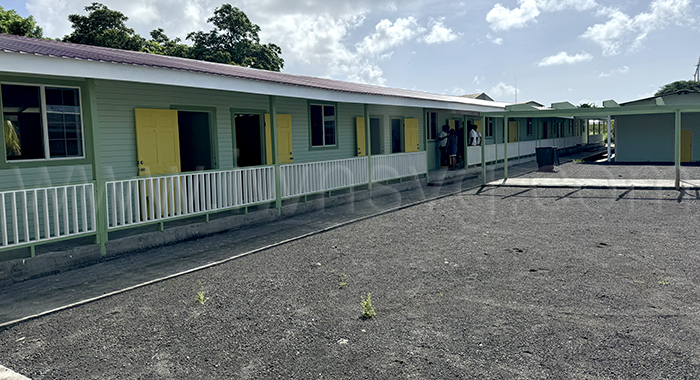

There are only 13 students enrolled at the temporary Union Island Secondary School at Arnos Vale.
However, Prime Minister Ralph Gonsalves has suggested that his government will not close the campus and send the students to other secondary schools in St. Vincent, because of a promise he made to the students’ parents.
However, MP for the Southern Grenadines, Terrance Ollivierre, an opposition lawmaker, said the situation exists because of poor planning by the government as regards housing of people from the Southern Grenadines, who were affected by Hurricane Beryl.
In September 2024, secondary and primary school students from Union Island were offered the option to attend classes at the former Teachers College compound in Arnos Vale, which the government rehabilitated for that purpose, after Hurricane Beryl devastated the Southern Grenadines on July 1, 2024.
Some of the students took classes there as their homes have been devastated by the storm, while others returned to their campus in Union Island.

As the 2025-2026 academic year began on Monday, most of the students have returned to Union Island or transferred to other schools in St. Vincent.
Speaking on NBC Radio, Gonsalves said that he wanted to get the final number of students still taking classes at the temporary campus in Arnos Vale.
He said there were 13 students at the secondary school and 33 primary school students at the elementary school.
“We have made a promise that those who are up here, we will keep them as far as possible together, which is what we’re doing,” the prime minister said, noting that some of the students have transferred to other secondary schools in St. Vincent.
” But things have improved sufficiently down in Union island for large numbers to have gone back, but I’ve given them a promise, even though it’s expensive to keep a school with 13 people, we will see how it goes over the next few weeks and until the end of the term,” Gonsalves said.
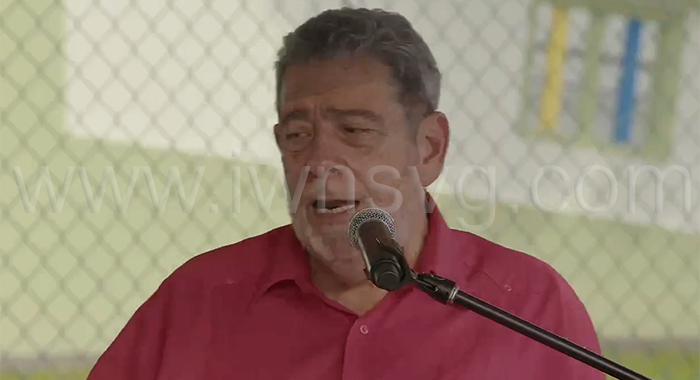
“Some parents may say, Listen, ‘Ralph, leh we put these others in another secondary school. But you know, I’m good with the people of the Southern Grenadines, always and it ain’t going change now,” the prime minister said.
However, Ollivierre, speaking at an opposition New Democratic Party campaign event in Canouan on Friday, noted how much the government had resisted his advocacy for a secondary school in Canouan before one was opened there in 2019.
“Imagine you’re going to operate a secondary school on the mainland with 12 children …” said Ollivierre, who was an educator before he was elected to Parliament in 2001.
“You know why? Because you didn’t take into consideration the people who were at the local shelter, the temporary accommodations and that they needed their house to be fixed.”
After Hurricane Beryl, the government paid for some of the people who were displaced by the storm to be housed in “touristic accommodation”, such as guest houses.
Ollivierre said that around July, the government wrote to the property owner, saying it was no longer responsible for the lodging of the people who were displaced by the storm.
“But hear what – the people had nowhere to go,” Ollivierre said.
He said that the government had not done a proper analysis of the damage to homes, “you would have had the files, and you would have said, ‘These are the most urgent people we need to cater for to make sure at the end of July, they were out of these accommodations.’
“So when you realise that nothing was happening. You try to bowl a googly, and you come to Parliament to say, we need $100 million more to do what you are supposed to do in the first place.”
He was referring to the EC$98 million in loans that the government had Parliament approve in August. Of that sum, EC$41.75 million was allocated to housing repairs across the country.
Ollivierre said that since he was elected to Parliament in 2001, he has been advocating for a secondary school and the repair of the wharf in Canouan.
“The ULP government said they can’t build it because … they say we don’t have enough children even to have a class,” he said.
“But you’re having school in St. Vincent now with 12 children. Now, what you call that, a class? And then we had more than that,” he said, referring to the number of secondary school students in Canouan before the high school opened there.
He further spoke on what he said was the story behind the actual construction of the secondary school in Canouan.
“So after one graduation I attended, the students came right in front of the bank and the administrative building, and they said they are not taking that, they’re not going to the mainland and that they want a secondary school.
“The developer was passing. He saw and he heard them, and he set about to build a school,” Ollivierre said.
“You see who built it again? You see who made it again?” he said, echoing his repeated statement that the private investors on the island, rather than the government, fund many of the public infrastructural projects there.
“The government didn’t pay anything. … Do you know that he (the developer) went so far to also conduct interviews right on the island … in order to choose the staff for the secondary school?
“Government knew nothing about that. It’s Pignataro — and added to that, he was paying the salaries of the teachers who were working at the school at that time.
“You ever heard government in charge of a school, but somebody else is doing the interview for the teachers right on the island here? People had to come here and be interviewed on the island.”
Ollivierre said that when the people at the Ministry of Education at the time were asked, they did not know anything about what was happening.
“They didn’t know anything because the government did not have a hand in it. When he fall out with that investor, then they try to take charge of it.”
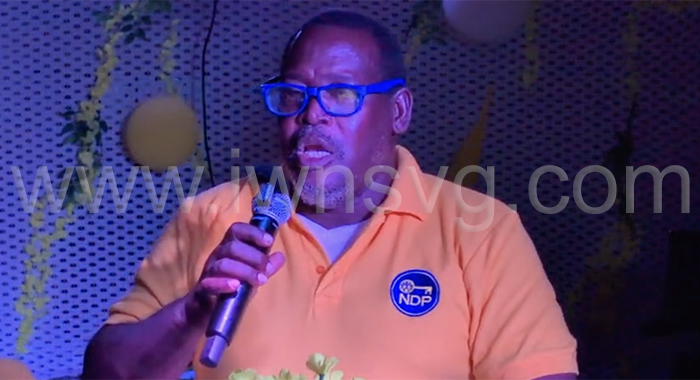
Ollivierre, who is the opposition spokesperson on education, repeated his call for skills training to be integrated in the secondary school syllabus.
“And you can link and put on-the-job training,” he said, noting that there are major tourism developments in the north and south of the island.
He said that entities in Jamaica and Trinidad can do the assessment so that students can be awarded the regionally recognised Caribbean Vocational Qualifications.
“CARICOM, since 2007 …made it mandatory that skills training should be taught in schools,” Ollivierre said.
“We’re waiting until the children drop out and throw them in some little, little cubby hole here and there to try to learn something when the children should be in school completing their secondary education and learning as much as they can.”
He said his proposal about skills training is not for secondary school students only.
“It also caters to out-of-school people who want to learn a skill and be certified, so you can improve your conditions and for upward mobility in your job.
“This is what the New Democratic Party will do. Elect the New Democratic Party today, tomorrow we start. Now, we ain’t making joke. Our young people are too precious to let go,” Ollivierre said.
“In Parliament, I tired complain about the amount of children who are dropping out of school only because the curriculum doesn’t fit their interests and that we need to do something to make sure that these children remain in school. And I have been saying it for years, and I will continue to say — furthermore, I stop saying because after November, we will be doing it.”
General elections in St. Vincent and the Grenadines are widely expected by November, ahead of the February 2026 constitutional deadline. Ollivierre will be seeking a sixth consecutive term in office, even as his party tries to avoid the same number of defeats since being booted out of office in March 2001.
Ollivierre is being challenged by first-time candidate, the Unity Labour Party’s Chevonne Stewart.
Stewart, the chief radiographer in the Ministry of Health, has been transferred to the Ministry of Housing through Dec. 31, in a move that the opposition has dismissed as an attempt to boost her chances at the polls while leaving the public service without the use of her specialisation.