



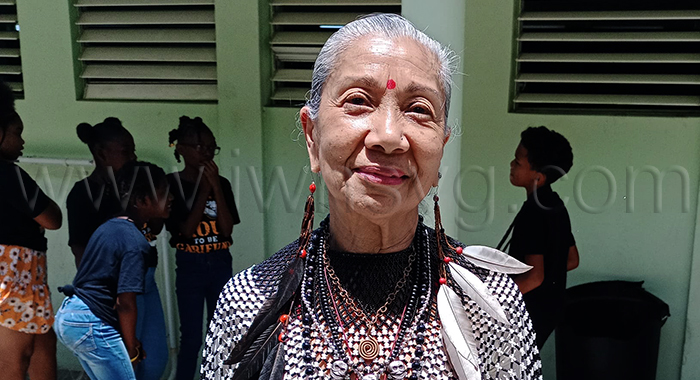

A Trinidad-born, New York-based “Carib queen” visited Fancy on Thursday, expressing pleasure that the Garifuna culture is thriving in the northeastern community.
While Nona Aquam is regarded as a “Carib queen”, she prefers to be regarded as “mama” or “aunty”.
“I don’t like to use the word ‘Carib queen’, … because I am a spiritual mother. So it’s either ‘Mama’ or ‘Aunty’ because you have to support the women in the community and as an elder, they could come for advice, both with social — things at home, whatever they need — healing, spiritually,” she told iWitness News.
“I am here for the community. So it is like the elder and you come to me for advice in health, what’s happening socially, mentally, physically, in whatever way I can assist you and also to remind you to be sustainable, to eat from what we can produce from the garden, not manufactured food. That’s not good for us.”
Aquam told iWitness New that she urged people to “go back to our roots”, adding, “… everything that you need is in the garden – for healing, the juices, everything that nourishes body, mind and soul.”

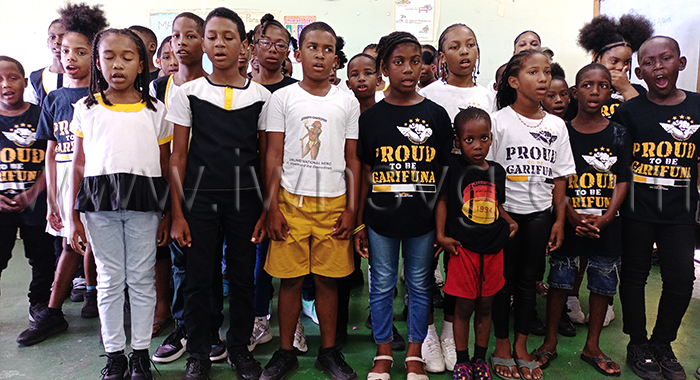
She said that while she works with the entire community, her focus is on women and children “because the women and children are our future, and somehow they seem to be attracted to me, and children are very innocent.
“They tell you exactly what you are doing, while an adult would not. It’s unconditional love,” Aquam said.
She said her visit to Fancy was “wonderful”, adding that she received “a warm welcome” and was so moved by the singing that she shed “tears of joy.
“And I am connected to my ancestors here and I have been received wonderfully. It’s a blessing,” Aquam told iWitness News.
She spoke to iWitness News just after having some boiled peanuts, something that she was trying for the first time.
Aquam also pointed out that doucana, which is made of grated sweet potato and spices boiled in leaves, is similar to a corn-based dish made in Trinidad.
“In Trinidad, we have the pone and different things like that – similar,” she told iWitness News.
“We call it pastels and we use corn. We call it pastels, probably because we are more South American-based and we use the corn, the cornmeal to make it.”
Aquam was happy that Garifuna culture is thriving in Fancy, but noted the small population, as reflected by the small classroom sizes in the northern-most village in St. Vincent.
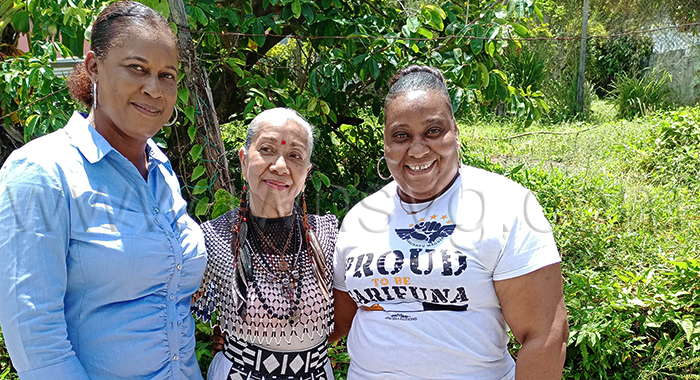
“It’s wonderful that you keep up with the language and the singing, the culture too; keep on, it is most important. And we have to procreate more,” she said.
“They need more children in the community to keep on,” Aquam told iWitness News and laughed.
“And that’s what’s important. You see, we need more children in the community. The classes should be like 20-30, not six or seven. So it is OK to procreate. The land provides for us,’ she said.
Aquam visited Fancy as part of a seven-member delegation that included MP for North Windward, Shevern John, who is also Minister of Social Welfare, Community Empowerment, Disaster Management, and National Heritage.
During the visit, the Fancy Government School exhibited woven baskets, coconut oil, root crops and some indigenous foods, including doucouna, sweet potato pudding and farine.
Fish boileen and callaloo with crayfish were served in calabashes.
The group also witnessed the preparation of some of the indigenous foods, including cassava bread and cassava pone.
Chefs Jazmin Johnson and Keisha Brown were also part of the delegation.
Fancy Government School is noted as the only educational institution in St. Vincent and the Grenadines where Garifuna language, heritage and culture are taught, although they are not part of the official curriculum.
The school is often called upon to perform, especially the national anthem of St. Vincent and the Grenadines in Garifuna language, at national and other events.