




By *Jomo Thomas
Island people are outward-looking dreamers. They are constantly in search of a better life. They maintain a permanent gaze at greener pastures. No one dreams like people from the islands. It is not that island people want to leave the quiet beauty of their homelands. Their singular quest is for economic security. Island people want to dream dreams that ain’t just a dream. They want to dream dreams that they can live.
This simple fact explains why we embrace New York, Toronto and London, and every other metropole in between, disregarding the harsh weather conditions, deep-seated racism and years away from family, children and friends. We celebrate others over our own, as if to show eternal gratitude for the little we get, wherever it comes from.
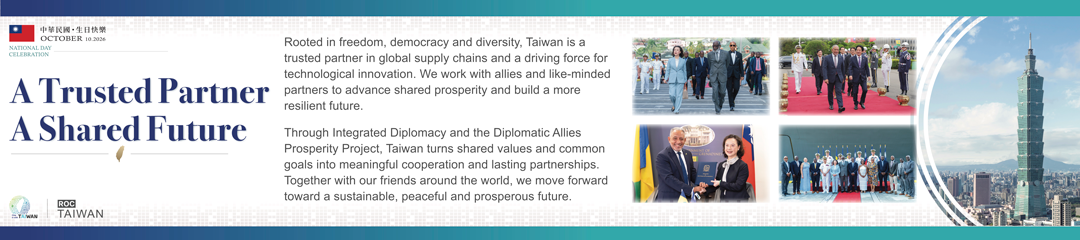
And so it is with Taiwan. They are richer than we are and offer budgetary support and scholarships. Since the turn of the century, they have provided Ralph Gonsalves’ regime with loans and told him to do whatever he wished with the money. Because most Vincentians have diminished self-worth and lack a true understanding of our worth as a nation and people, they mistakenly overestimate Taiwan’s value to us. Most of us are convinced we have little or nothing to offer. Nothing could be further from the truth.
In our last column titled “Are our diplomatic relations with Taiwan worthwhile?”, we said, “For Taiwan, retaining Kingstown is not trivial. SVG is one of only five Caribbean nations — and 12 worldwide — that maintain formal diplomatic ties with Taipei, a number that has shrunk steadily. Since 2016, ten countries have switched recognition to Beijing. Each defection shrinks Taiwan’s diplomatic footprint and feeds a narrative of inexorable isolation.”

Dare to struggle, dare to win
A clear understanding of what we bring to the diplomatic table will allow us to maximise our strengths. Do we only want support for YES and SET programmes, or for interventions that transform our nation for the better? The former government said agriculture is dead, but is it? We should be razor-focused on efforts to achieve food security. Taiwan can help.
We need to add value to what we grow. For too long we engaged in monocrop agriculture. We have to diversify, mechanise and industrialise our agriculture. Such innovations would make agriculture more attractive to young people, encouraging them to return to the land and thus helping reduce the high unemployment rate.
St. Vincent is one of the few countries in the region where citizens and visitors cannot drive completely around the country. This shortcoming leaves a huge part of the northern territory unexplored and underdeveloped. During its second term, 2005 to 2010, the ULP made the issue of a cross-country road a central plank of its campaign. The government wasted millions before abandoning the project, a clear case of misbehaviour in public office.
Taiwan’s infrastructure development, particularly roads and bridges, is impressive. The People’s Republic of China even more so. Either country can be approached for assistance to correct this developmental problem. Jamaica is a good example where Chinese assistance with a highway running from Kingston to Ocho Rios and Montego Bay has significantly reduced travel time. Overall, these improvements benefit both residents and visitors by improving connectivity.
At a 1985 conference of economists in Havana, Cuba, Fidel Castro declared that the combined debt of Latin America and the Caribbean, which was $360 billion, was “unjust, immoral and unpayable”. By 2025, the debt is estimated to be over US$683.56 billion. SVG’s portion of that debt is $1.5 billion.
Because of the reckless manner in which Taiwan offered Gonsalves money that was squandered to shore up its prolonged corrupt tenure in office, the government in Taipei has a special responsibility/duty to help reduce our debt-to-GDP ratio. Anything short of substantial debt forgiveness would be a clear signal of their unseriousness and of our leaders turning their gaze from Taipei to Beijing. To solidify relations from friends to family with such a regime would amount to rank irresponsibility and a betrayal of the national interest.
The alternative options have been shut out. Medical support from Cuba and fuel assistance from Venezuela were closed off by the Trump regime.
Following the relaxation of American immigration policies in 1965 and the demand for cheap labour in Canada and the United Kingdom, opportunities to migrate to these countries opened up. That safety valve/door is being shut in our faces, creating a frustrating and explosive situation, particularly among young people who see a disconnect between what society projects as the good life and the lack of opportunities needed to live it.
Sugar, once king of the islands, became uneconomical, and bananas were wrested from us by Dole and Chiquita with the help of Bill Clinton’s regime.
For a brief moment, industrialisation by invitation was touted as a viable development pathway, only to close soon after the generous 10 to 15-year tax holidays expired.
The offshore financial sector, ship and company registry were heralded as the next big opportunity by which the national coffers could benefit. Before long, powerful states blacklisted our islands and established restrictive policies that shattered dreams of economic prosperity.
Beginning in the 1980s with St. Kitts and later with other OECS countries like Antigua, Dominica, Grenada, and St. Lucia, regional leaders recognised the developmental mess left by British colonialism, coupled with the suffocating debt burden immediately after independence. They initiated citizen by investment (CBI) programmes in the quest to garner much-needed budgetary support and funding for development.
By 2013, Caribbean leaders, confronted with crushing debt and an increasingly bleak economic future made worse by an unprecedented climate change crisis that witnessed increasingly powerful hurricanes and frequent drought, made a bold demand for reparations from former enslaving powers.
In 2014, the CARICOM Reparations Commission (CRC) issued a 10-point plan for reparatory justice. The plan, not revolutionary by any means, calls for: a full formal apology that acknowledges the crimes against humanity and the reparations owed, assistance to address the public health crisis faced by the descendants of enslaved Africans, the sharing of technological advancements with the descendants of the formerly enslaved and a demand for reducing or eliminating the debt incurred by the enslavers.
Both initiatives, CBI and the reparations demands, have been rejected by Europe and the United States with a brazenness unseen since the heyday of empire and colonialism. The European Union has issued an ultimatum to Caribbean countries with CBI programmes, demanding that these programmes be halted. As with the “hook in the gill” debt trap with Taiwan, the opposition ULP, blinded by partisan political blinders, gleefully celebrated the EU’s attacks on our sovereign right to choose a development path.
For all of the nastiness about CBI being havens for criminal activity, there has been no major corruption or criminal scandal in the over 40 years that the programmes have been on offer in our region.
The Americans and Europeans have stridently rejected the demand for reparations. They claim that slavery was legal during its existence, was long ago, and that current generations of Europeans cannot be held responsible for the “wrongdoings” of their foreparents. They neglect to mention that the 20-million-pound loan taken out in 1833 to reward the enslavers was paid off a mere 11 years ago, in 2015. They express regret, but refuse to apologise for the pain and horrors of enslavement and colonialism. They dismiss calls for debt cancellation and threaten to bar nationals of any country whose leaders commit to reparations.
A perusal of our history conclusively proves that the ruling elites of Europe and America are an arrogant, vindictive and dismissive group. They use their power and control over the international economic, political and legal order to assert and maintain their domination. Our governments need to think creatively about how we survive in this hostile environment. SVG-Taiwan relations are a test case in 21st-century leadership. We will soon see if they are up to the task.
*Jomo Sanga Thomas is a lawyer, journalist, social commentator and a former Speaker of the House of Assembly in St. Vincent and the Grenadines.
The opinions presented in this content belong to the author and may not necessarily reflect the perspectives or editorial stance of iWitness News. Opinion pieces can be submitted to [email protected].