



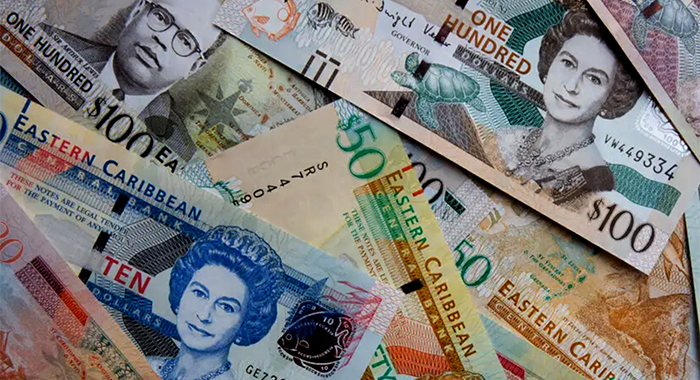

Double bubble? 3% increase? Lower VAT? Owe Taiwan — Way yo say? I can’t count dem zeros.
Election seasons are noisy affairs. Promises rain from podiums like confetti, and hope is packaged, branded, and sold to a weary electorate. Roads will be fixed. Jobs will multiply. Prices will fall. Life will improve swiftly and effortlessly, but once our party takes office.
Governance is not a campaign rally.
It is time we ask an uncomfortable question: when did politics become a competition of who can promise the most, rather than who can govern responsibly?
Both the NDP and the ULP are guilty of this. Different slogans, same strategy. One promises rescue, the other promises continuity. But too often, neither sufficiently explains how, when, or at what cost.

Campaign promises are not inherently bad. They signal priorities. They tell us what a party values. But there is a difference between aspirational commitments and reckless assurances. Quite frankly, voters deserve honesty about that distinction but we must look below the surface.
You cannot promise billion-dollar-style services with Caribbean-sized economies and debt burdens and expect credibility. You cannot pledge sweeping wage increases, tax cuts, new infrastructure, expanded social programmes, and debt reduction all at once, WITHOUT explaining trade-offs — and still claim to be serious about governance.
That is not leadership. That is marketing!
Good governance requires restraint. It requires telling people not only what they want to hear, but what they need to know. It requires admitting limits — fiscal, institutional, and human.
However, the blame does not rest solely with political parties.
We, the electorate, also play a role. Too often, we reward the loudest promise rather than the most reasonable plan. We boo caution and cheer extravagance. We confuse honesty with weakness and fantasy with vision.
The result? Governments — whether NDP or ULP — enter office constrained by reality and judged by promises that should never have been made in the first place.
Disappointment follows, cynicism grows, and trust erodes.
Governance is not magic. It is budgeting. It is prioritising. It is choosing this over that. Every promise fulfilled means another deferred. Every policy has a cost, even when it is morally justified.
If we want better outcomes, we must demand better politics.
Tell us what you can do — not just what you wish to do. Tell us what will take time. Tell us what may fail. Tell us the truth about trade-offs. Treat voters like adults, not customers in a bidding war.
Empty promises are easy. Responsible governance is hard.
And until both NDP and ULP learn to campaign with the same seriousness required to govern, and until voters reward honesty over hype, we will remain trapped in a cycle of expectation and disappointment.
Democracy deserves better than slogans.
The people deserve better than fantasy.
Double Bubble
The opinions presented in this content belong to the author and may not necessarily reflect the perspectives or editorial stance of iWitness News. Opinion pieces can be submitted to [email protected].
This opinion piece is cynical, nonsensical and stupid. So, writer, because Vincentians voted for change after about 24 years of oppression and victimization, now you want to criticize the will of the people? Furthermore, just because a political party wants to alleviate the suffering of Vincentians, does it means that this political party is wrong to do so? You know what? Let me use this example, slavery was abolished in the United States, January 31st 1865. But, just because, the former slaves didn’t have any place to go, after 400 years of slavery, even though they were promised 40 acres and a mule each per slave and at the same time, the former masters reneged on that promise. Does it mean the abolishment slavery should not have happened? Writer, guess what? After all the broken promises to the former slaves, these former slaves built houses on their own, educated themselves, built institutes of higher learning, created new medicines for all kinds of ailments and diseases. Moreover, created new technologies , music and made many scientific discoveries, etc, etc. Writer, in my opinion, I always think,, that the will of the people is divine, and should not be questioned. Writer, I that you are questioning the lowering of VAT was by 3%. Writer, do you think that VAT is Vincentian creation? You know what? VAT was implemented in 2007, at the request of the European Union. I believe, at the implementation of VAT in 2007, was when life, became unaffordable in SVG. Yes, the ULP put Vincentians in debt of 3.1 billion dollars over the last 24 years, Writer, does it mean that Vincentians cannot devise a plan to deal with our debt problems? Writer, take for instance, our ancestors were put into slavery here in SVG, and at the abolition of slavery our ancestors were not given any compensation. But, Writer, look at Vincy people in 2025. We have built stately homes. We have educated ourselves in every field of education. Writer, this is my advice to you, before you sit down to write an article, you must learn how to think in four dimension. Writer, you know what I think? You are very limited in the way you think. Writer, do you know anything about quantum science, which is rooted in quantum mechanics? Do you know anything about quantum entanglement? Writer, believe it or not, if you had any understanding of these terminologies, you will be able to think in four dimension.