



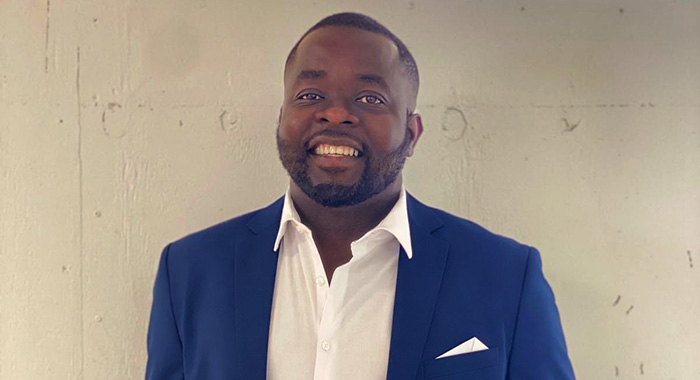

By Kenrick Quashie
Over 23 years ago, I stood before an audience at the finals of the Lions Club South Public Speaking Competition as a proud representative of the North Union Secondary School in the student-prepared category. I began with these exact words: “As we go through the hustle and bustle of life each day, we often hear the words, ‘Is life fair?’”
It is a question many of us first encounter in childhood, in moments of disappointment, confusion and often through comparison with others. I remember asking it myself as a student, standing before an audience and trying to make sense of a world that did not always seem to reward effort, goodness or intention equally. At the time, my mother was on her deathbed. I was about to become an orphan at 16, having already lost my father when I was 4. Back then, the question felt simple. Today, it feels anything but.
We see people work tirelessly and still struggle to get ahead, while others seem to advance with ease. We witness talent go unnoticed and mediocrity rewarded. We experience moments when doing the right thing does not produce the right outcome. In those moments, the question of life’s fairness returns, sharper than before.
The honest answer is no…not always. Life is not a perfectly balanced system of rewards and consequences. It is influenced by timing, opportunity, environment, relationships and, sometimes, sheer luck or lack thereof. Where we are born, the resources available to us, the connections we possess and the challenges we encounter early in life can shape our paths in ways largely beyond our control.
In St. Vincent and the Grenadines, we have also seen how unfairness can become embedded in our politics and institutions. For too long, political affiliation or even the perception of it has sometimes influenced who receives an opportunity, who is promoted, who is heard and who is quietly pushed aside. Too many people have felt that advancement depended not only on their ability or effort, but on who they knew, what party they supported or whether they were prepared to remain silent.
Whenever a qualified person is denied an opportunity because of political considerations, the country loses the benefit of that person’s talent. Whenever public institutions are used to reward loyalty or punish independence, public trust is weakened. Whenever citizens are made to feel that they must choose between their conscience and their livelihood, our democracy is diminished.
Changing a government does not automatically change that culture. It is very important that we make a conscious effort to resist the temptation to reproduce the same practices under different colours. If unfairness was wrong when it was directed against us, it remains wrong when we have the power to direct it against someone else.
My experiences as an entrepreneur have caused me to confront the same question in a different setting. I have learned that entering business is one thing; attempting to enter territory traditionally protected by established interests is something else entirely. When you challenge the familiar order, introduce a new idea or attempt to operate in a space others consider their exclusive domain, the resistance can be intense. Doors that appear open can suddenly close. Standards can shift. Requirements can become moving targets. Your failures are magnified while the shortcomings of established players are excused. Sometimes you are resisted not because your idea lacks merit, but because it threatens a comfortable arrangement or challenges assumptions about who is entitled to participate.
That experience can be deeply discouraging. It can make you question yourself, your purpose and whether persistence is worth the cost. It can even tempt you to conclude that the system is designed only for those who already possess influence, capital or access.
Yet I have also come to understand something important: the barriers we confront are not only about us. Sometimes we must push against a closed door not merely because we want to enter, but because others are coming behind us. Every barrier challenged, every unfair practice exposed and every piece of protected territory opened makes the journey a little less difficult for the next entrepreneur, the next young professional or the next person with a bold idea but without the “right” connections.
Perhaps some of us are called to absorb the resistance that comes with being first so that those who follow will not have to carry the same burden. That does not make the unfairness right. Nor does it mean that we should romanticise suffering or pretend that every setback is secretly a blessing. Some experiences are simply difficult, and they should be identified and challenged as such. But we can decide that the unfairness we experience will not end with us. We can use it to expose what must change, break down the barriers placed before us and create opportunities for those who might otherwise remain excluded.
This brings us to a deeper question. If life is not fair, what does that mean for us? Do we simply accept the imbalance and move on? Or do we redefine what fairness requires of us?
As I grow older, I am concluding more and more that fairness is not something we should passively expect from life. It is something we must actively create. It exists in how we treat others, how we respond to inequality and how we use whatever position we occupy, whether one of privilege or struggle, to make life better for someone else.
Fairness shows up in small, everyday decisions like choosing integrity when dishonesty might be easier; extending an opportunity where none existed before; judging people by their ability rather than their associations; and standing up when silence would be safer or more convenient.
It is not always grand or visible, but it is powerful. Perhaps that is where we have misunderstood the question all along. Instead of asking only whether life is fair, perhaps we should also be asking: Are we being fair within the life we have been given?
When we gain influence, do we open doors or guard them? When we reach a position of authority, do we treat others as we once wished to be treated? When we overcome a barrier, do we remove it for those behind us or rebuild it once we are safely on the other side?
We may not control the hand we are dealt, but we do have influence over how we play it and how our actions affect others along the way. In a world that often feels uneven, that influence matters. It shapes communities, institutions and futures. It determines whether unjust systems remain in place or gradually give way to something better.
So no, life may not always be fair. But that does not absolve us of responsibility. If anything, it demands more from us; not less. It challenges us to be intentional, to remain conscious of the struggles of others and to build the fairness that life does not automatically provide. It calls upon those who have endured exclusion not to become gatekeepers themselves, but to become bridge-builders. And perhaps that is how I now answer the question I first asked more than 23 years ago as a 16-year-old standing before that audience: Life may not always be fair but through courage, integrity and the opportunities we create for those coming behind us, we can make it fairer.
The opinions presented in this content belong to the author and may not necessarily reflect the perspectives or editorial stance of iWitness News. Opinion pieces can be submitted to [email protected].
So long as the UK prints the EC$ and it is pegged to the US$, life will never be fair.