



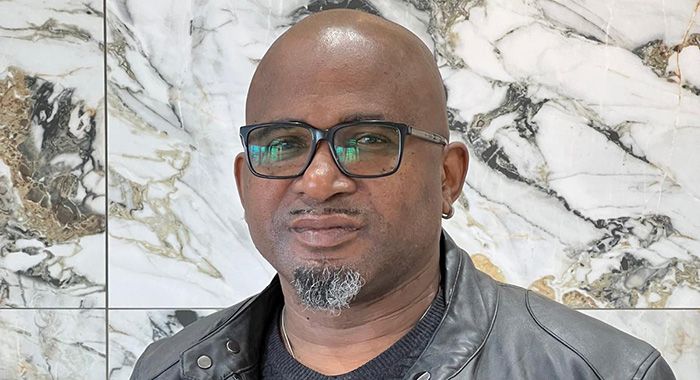

By Marlon Bute
In Part I of this series, I suggested that the true measure of power is not found merely in the longevity of a government, but in the institutions that continue to serve the nation long after governments have changed.
Constitutions establish offices, prescribe powers, and provide safeguards, but institutions derive their character from the judgement, independence, courage, and integrity with which those powers are exercised.
There is, however, another reality that deserves equal attention.
Governments govern through institutions. Ministers formulate policy, but it is constitutional and statutory offices that advise, implement, regulate, enforce and, in many respects, determine whether the goals of an elected administration are achieved. A new government therefore inherits not only ministries and departments, but also institutional cultures, practices and assumptions that may have developed over decades.

That is the challenge now facing St. Vincent and the Grenadines.
After almost 25 years under one administration, the country has embarked upon a new political chapter. Yet many of the institutions through which the State functions remain unchanged. That should surprise no one. Constitutional offices are designed to survive elections. The question, however, is whether every institution inherited by the new administration commands the level of public confidence that effective governance needs.
This is not an exercise in questioning the integrity of individual office holders, nor is it a call for arbitrary dismissals. It is an examination of institutions whose performance has shaped the lives of Vincentians and whose effectiveness will inevitably influence the success or failure of the present administration.
The first institution I wish to consider is the financial architecture of the State.
Among the most important offices within that architecture is the Director General of Finance and Planning. Working alongside the wider financial administration, this office bears responsibilities extending far beyond accounting.
It is expected to provide objective professional advice, promote fiscal discipline, safeguard the public purse and ensure that governments fully appreciate the long-term consequences of their financial decisions.
Governments are elected to make political choices. Financial institutions exist to ensure that those choices are informed by sound professional judgement rather than political expediency alone.
After almost 25 years under one administration, it is entirely legitimate to ask whether this financial architecture discharged that responsibility as effectively as it ought to have done.
The historic downgrade of St. Vincent and the Grenadines’ credit rating by Moody’s to Caa1 did not occur overnight. It reflected the cumulative effect of years of fiscal management under the earlier administration and placed the country’s finances under an unwelcome international spotlight.
Responsibility for those policies rests with elected governments. Yet the downgrade also raises unavoidable institutional questions. What professional advice was being provided? Were sufficient warnings given about excessive borrowing, rising debt and the long-term sustainability of the country’s finances? If those warnings were given, why were they ignored? If they were not, why not?
A downgrade of that size should never be regarded merely as an economic statistic. It is an indictment of a model of governance that did not place sufficient emphasis upon fiscal prudence, productive investment, and long-term sustainability. It is also a legitimate reason to examine whether the institutions set up to protect the public purse functioned with the degree of independence and professional rigour that the country was entitled to expect.
These are not political questions. They are constitutional ones.
The same constitutional examination must extend to the Office of the Director of Public Prosecutions.
Few constitutional offices exercise powers of greater consequence. The framers of the Constitution deliberately insulated the office from political direction because decisions about criminal prosecutions must never become instruments of partisan influence. The Director of Public Prosecutions has extensive constitutional authority, but that authority depends upon public confidence.
Independence alone is not enough. Justice must be done. It must also be seen to be done.
It is impossible to examine public confidence in the Office of the Director of Public Prosecutions over the past quarter century without beginning with the appointment of Colin Williams. His appointment generated considerable controversy, with the St. Vincent and the Grenadines Bar Association publicly expressing concern about the appearance of independence because of his earlier professional association with the then Prime Minister, Dr Ralph Gonsalves.
The Bar Association was careful not to impugn Mr. Williams’ personal integrity. Its concern was institutional. Public confidence depends not merely upon actual independence but also upon the appearance of independence.
Those concerns did not disappear. They intensified when criminal proceedings against the then prime minister were taken over by the Director of Public Prosecutions and dropped. The courts affirmed the constitutional authority of the office to exercise that discretion. That legal position should be respected. The broader constitutional issue, however, is whether those decisions strengthened or weakened public confidence in the institution.
Confidence is rarely lost because of one appointment or one controversial decision. It is built, or diminished, over time. Beginning with the controversy surrounding the appointment of Colin Williams, continuing through decisions involving the then prime minister and extending to subsequent controversies regarding prosecutorial independence, the Office of the Director of Public Prosecutions gradually became associated, fairly or unfairly, with recurring public debate over its independence.
During the Cornelius John matter, serious questions again arose regarding prosecutorial independence when an assistant director of public prosecutions became connected with the investigation and calls had to be repeatedly made by commentators, widely supported by the public, for charges to be laid and for the appointment of an independent prosecutor.
After weeks of public furore, both happened. Whether one agreed with those calls is secondary to the larger point. Once again, one of the country’s most important constitutional offices found itself at the centre of a national debate about public confidence.
The issue, therefore, extends beyond any individual director of public prosecutions. Institutions inherit reputations just as they inherit powers. The present director of public prosecutions was inherited by the new administration. That fact alone neither requires nor justifies change.
Yet constitutional independence should never be interpreted as institutional immunity. If confidence in the office has steadily diminished over many years, the country is entitled to ask whether comprehensive institutional renewal has become necessary.
The same institutional examination must extend to the Office of the Chief Medical Officer.
No statutory office exercised greater influence over the lives of Vincentians during the COVID-19 pandemic. Extraordinary powers were exercised in extraordinary circumstances. Yet the exercise of extraordinary power demands an equally extraordinary degree of accountability and public confidence.
The vaccine mandate remains among the most controversial public policies in our nation’s history. Public servants lost their employment. Families suffered severe financial hardship. Businesses were disrupted. Relationships were strained. Communities became deeply divided. Years later, litigation arising from those decisions continues before the courts, reminding us that the legal and constitutional questions surrounding that period remain unresolved.
This article is not an attempt to determine those proceedings. That responsibility belongs to the courts. The broader institutional question is whether the Office of the Chief Medical Officer emerged from that period with greater public confidence or substantially less.
That question extends beyond the pandemic.
For many years, Vincentians have expressed concern regarding the condition of public healthcare, the physical state of the Milton Cato Memorial Hospital, service delivery, waiting times and the wider administration of the health system.
Governments determine budgets and priorities, but the chief medical officer remains the principal professional adviser on public health and the senior technical leader of the public health service. Confidence in that office therefore extends beyond medicine. It influences confidence in the healthcare system itself.
The new administration inherited by the current chief medical officer. That fact neither demands removal nor guarantees continuity. It simply raises a legitimate constitutional question. If public confidence in one of the country’s most important statutory offices has been significantly diminished after almost 25 years, should the institution continue exactly as it was inherited, or should it undergo careful review and renewal?
The same constitutional principles apply with equal force to the Office of the Commissioner of Police.
No reasonable person would suggest that the commissioner alone determines the level of crime in a society. Crime is influenced by economic opportunity, family life, education, and many other social forces. Nevertheless, the commissioner bears constitutional responsibility for leadership, discipline, operational readiness and the effective administration of the Police Service.
After almost 25 years under one administration, are we satisfied with the condition in which law enforcement was left?
The country witnessed levels of violent crime that would once have seemed almost unimaginable. Murders, shootings, and sex crimes increasingly became part of the national conversation. Public confidence in personal security was tested as communities grappled with a level of violence unknown to previous generations.
Equally troubling were recurring allegations of police brutality and excessive force. Whether every complaint proved justified is not the issue. Their persistence alone demonstrates the importance of maintaining public confidence through strong leadership, transparency, and effective accountability.
Beyond serious crime, there has also been the gradual normalisation of everyday lawlessness. Illegal tinting became commonplace. Dangerous driving, reckless public transport practices and widespread disregard for traffic regulations increasingly came to be accepted as ordinary features of daily life. Respect for the rule of law is rarely lost suddenly. It is eroded gradually when indiscipline is tolerated and breaches of the law attract little meaningful consequence.
Following the change of government, senior police officers themselves publicly highlighted deficiencies in resources, working conditions and officer welfare that had accumulated over many years. Those disclosures suggested that institutional challenges affected not only the public but also the officers entrusted with protecting it.
The new administration inherited the current commissioner of police. Once again, the issue is not the personal integrity of any individual office holder. The issue is whether an institution that has experienced a prolonged decline in public confidence should simply continue unchanged because governments have changed.
That same question arises across every institution examined in this article.
The people of St Vincent and the Grenadines did not vote merely to replace one Cabinet with another. They voted for a different standard of governance. That mandate cannot be fulfilled if inherited institutions are regarded as beyond examination simply because they are constitutional or statutory offices.
Constitutional independence was never intended to become institutional permanence. Neither was continuity intended to become stagnation. Institutions exist to serve the people, and where public confidence has been substantially diminished over many years, institutional renewal should not be viewed as an attack upon constitutional governance. Properly undertaken, it is one of its highest expressions.
This is, therefore, not an argument against constitutional offices. It is an argument for stronger constitutional offices. It is not an argument against independence. It is an argument for restoring the public confidence that gives independence its legitimacy.
Political parties will continue to contest elections. Governments will continue to change. The enduring question is whether political leaders possess the courage to examine inherited institutions honestly and, where necessary, reform them in the national interest rather than preserve them out of habit or convenience.
The overwhelming 14-to-1 mandate was a vote in the hope of a different philosophy of governance, one that is prepared to ask difficult questions, confront uncomfortable truths and strengthen the institutions upon which our democracy depends.
That is the true measure of power.
In the final instalment of this series, I leave institutions behind and turn instead to those upon whom the Constitution places the ultimate responsibility for governing. Institutions do not reform themselves. They are reformed, or left untouched, by political leaders.
Part III: The Measure of the Man
The opinions presented in this content belong to the author and may not necessarily reflect the perspectives or editorial stance of iWitness News. Opinion pieces can be submitted to [email protected].