



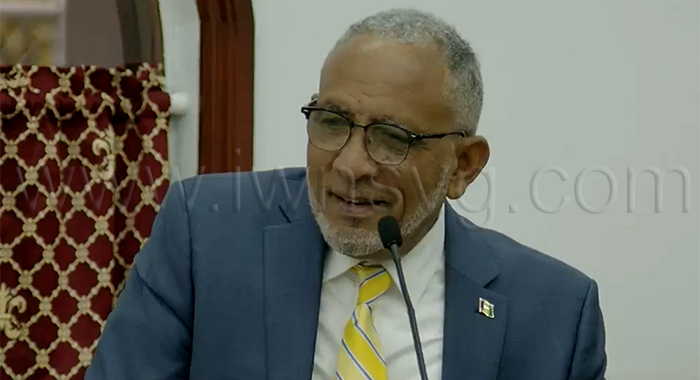

The New Democratic Party government is standing by its economic strategy as one of “opening the country for business” and “liberating private capital,” even as the opposition accuses it of selling off one of the state’s prime tourism assets at a discount to keep the public finances afloat.
During Thursday’s sitting of Parliament, Prime Minister Godwin Friday framed his broader legislative agenda — including sweeping changes to the Companies Act — as part of an effort to ease doing business, attract foreign investment and “grow our way out” of a heavy public‑debt burden.
Without referring directly to Chatham Bay, the prime minister told lawmakers that with government finances constrained, the state must increasingly rely on private capital, including foreign investors, to drive growth.
Friday argued that the state must “create an enabling environment for doing business,” including reforming penalties and regulatory requirements that he said were deterring foreign companies from operating in the country.
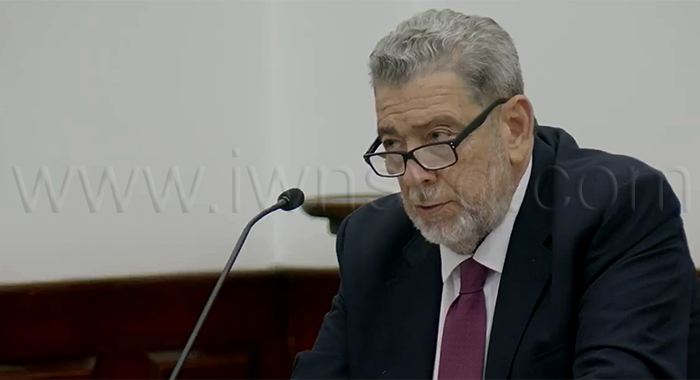
However, Opposition Leader Ralph Gonsalves accused the government of having been forced to sell “the crown jewel down in Chatham Bay” at a fraction of its earlier valuation to keep current spending going — a symbol, he argued, of a deepening financial squeeze and misplaced priorities.

In his contribution to the debate on the Companies (Amendment) Bill, 2026, Gonsalves linked the proposed relief for non‑compliant external companies to what he portrayed as a broader pattern of fiscally driven concessions and asset sales.
He noted that current revenue for the period 1 April to 31 July was down by 10.6%, and that the government owed over EC$17 million to fuel suppliers Rubis and Sol.
He then tied those pressures directly to the government’s handling of Chatham Bay, a high‑value tourism asset on Union Island.
“We have heard that… in order to make payments, to keep things going, you had to sell the crown jewel down in Chatham Bay for half, less than half the price it was valued for nearly 15 years ago, and to spend the US$20 million from OFID… to put it largely on recurrent spending, not for development,” Gonsalves said.
Gonsalves did not provide evidence of the alleged earlier valuation of Chatham Bay, nor did the government side respond to his claim about the valuation or use of the proceeds from Chatham Bay.
However, Friday and other government speakers repeatedly defended their broader approach to investment, debt management and regulatory reform, presenting them as necessary to stabilise the economy and attract capital.
Government: regulatory relief needed to attract investment
The government defended the Companies Amendment Bill as a targeted fix to what ministers described as “draconian”, “unimaginative” and “strangling” penalties introduced in 2016.
Friday told Parliament that the existing fee structure — including the EC$350‑per‑day fine and the requirement that all shareholder companies in a corporate chain register as external companies — had made SVG uncompetitive within the region and had driven foreign investors away from using company structures to hold land.
He said practitioners in the field had “stopped recommending” the external‑company vehicle for property ownership because the demands were too onerous, leading foreign buyers to hold land in their personal names instead.
By reducing penalties, simplifying registration requirements and offering a time‑limited 50% amnesty on historic fees, Friday said, the bill would “remove red tape” and administrative burdens.
He further said that the changes would encourage more companies to regularise their status at the Commercial and Intellectual Property Office; generate some immediate revenue through partial payment of outstanding amounts; and send a clear signal that St Vincent and the Grenadines is “open for business”.
“[This bill] seeks to remove onerous penalties… that have become a disincentive… They have deterred business in St Vincent and the Grenadines, especially foreign investors. So we are seeking to fix the problem… What we’re doing essentially is saying fix a problem so that we can all benefit, and the country overall does well,” the prime minister said.
On Saturday, the ruling New Democratic Party said it supports the government of St. Vincent and the Grenadines in the sale of approximately 100 acres of land at Chatham Bay, Union Island, for approximately EC$54 million.
The party, which came to office in November, said the sale took place under an agreement designed to protect the area’s biodiversity while strengthening the country’s fiscal position.
The NDP said the lands “are to be held by a company for conservation purposes, with binding covenants included in the sale agreement to ensure that the natural environment and biodiversity of the area are protected”.
What is the difference between selling it out and “teefing” it out to allow duncy head family members of politicians to sell it off in dribs and drabs to benefit and aggrandize family, friends and party faithful from the proceeds?
So someone has 54M and they will invest it in a conservation project with no return afer 2 years. Money laundering 101.