



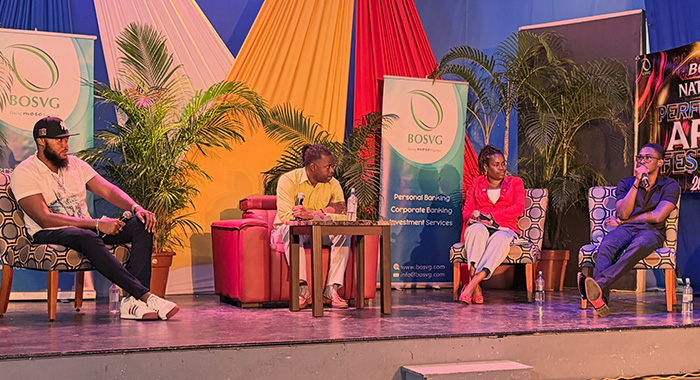

St. Vincent and the Grenadines (SVG) has creative talent, but needs stronger systems to help it thrive was the central message that emerged as artistes, cultural leaders and government representatives gathered in Kingstown on Wednesday for the inaugural National Performing Arts Conference.
The conference, held under the theme “Believe, Innovate, Inspire: Next Level,” focused on how SVG can develop its “orange economy” — the broad range of creative and cultural industries — and expand opportunities at home and abroad.
The inaugural conference comes as the New Democratic Party government, which came to office in November 2025, has identified the orange economy as a key sector to drive economic growth in SVG.
Director of Culture Maxine Browne said the conference was intended to bring creatives and organisations together to exchange ideas, build professional networks and commission new work.
She urged attendees to “pool our time, our talent, and our treasure” and called for “action, action, and more action” to advance the sector.

Playwright and cultural practitioner Nisha Hope described a sector where creators often have to manage every step of bringing work to an audience—from organising and production to marketing and distribution.
“An original idea may emerge in a community, a studio, or even at a kitchen table, but developing it into a sustainable enterprise requires access to resources, protection, distribution, and customers,” Hope said.
She added that practitioners can end up spending time on those tasks instead of developing their work.
Policy, structure and opportunity
Moderator Orandi “Bomani” Charles, who is also a soca artiste, framed the discussion around how the country might benefit from the global creative economy.
He cited an estimate of US$2.25 trillion to US$2.5 trillion annually, attributing the figure to UNESCO and the International Finance Corporation.
Marketing strategist Jonard Forde said creatives need to identify their area of focus and understand how to turn it into a viable business.
“Understanding the space that we want to develop or want to uptake,” he said, helps creatives consider how to position themselves to earn from their work.

Hope argued that a creative and cultural industries policy could help establish the conditions for that growth.
“We need [an] enabling environment and proper policies,” she said, recalling earlier discussions about the sector that, in her view, had not led to enough lasting change
Musician and producer Gareth “Icon” John urged the country to recognise the range of careers connected to the creative industries and not only those performed onstage.
“There is space for everybody,” he said, pointing to work in areas such as styling and event decoration as well as artistic practice.
He also called for education and training to help people find their place in the sector.
Protecting creative work
Intellectual-property rights and professional standards were another major theme. The panel discussed the vulnerability of creators in fields such as publishing, photography and fashion, and the challenges of accessing practical legal support.
John said international success often requires a team to manage bookings, rights and royalties.
“It’s not a one-man operation or a few-people operation,” he said, arguing that creatives need outreach and education about the systems that protect and pay for their work.

Forde said creative work should be treated as professional work.
He said “the same level of authority and respect that you would give a lawyer, or give a doctor, or give a judge” should also be extended to creatives and their services.
Hope pointed to limited representation for some practitioners seeking intellectual-property advice.
She also challenged the tendency to offer “exposure” instead of payment.
“You can’t really quantify the creative arts work,” she said, describing the difficulties artistes can face when trying to establish the value of their work.
Bringing the arts into education
Panellists and audience members called for closer links between culture and the school system.
John argued that the performing arts should be part of ongoing education, rather than treated as an occasional extracurricular activity.
“Put the performing arts on the syllabus,” he said, adding that schools should have trained arts practitioners and a year-round programme to help students see creative work as a possible career.
Hope, a former teacher, said that education and culture should be more closely connected, while Forde highlighted the need for accessible facilities and programmes across the country, including for creatives in the Grenadines. “No person or no creative is left behind,” he said.
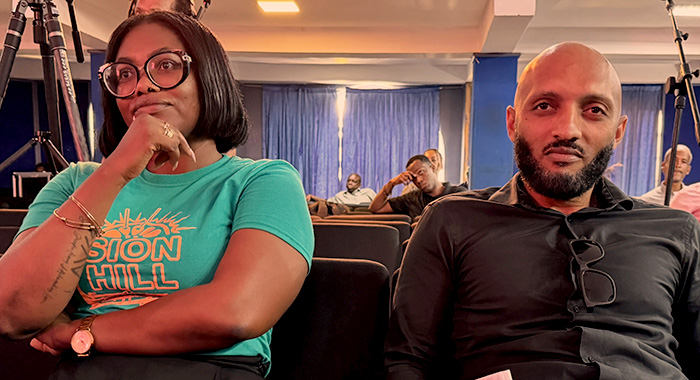
Speaking from the floor, Sion Hill Euphonium Steel Orchestra representative, Mikala Knights, who is also a teacher, said he had encountered barriers in efforts to integrate steel pan into school music programmes.
She also described difficulties securing fair payment for performances and protecting instruments used in tourism-related work.
Her comments prompted renewed calls for greater respect for the arts and for fairer terms for performers.
Reaching beyond the local market
The panel also considered how Vincentian creatives could reach regional and international audiences.
John recommended learning from more established creative sectors in the Caribbean, while adapting those lessons to local circumstances.
Hope stressed the importance of continuity and collaboration, saying the country should examine past efforts and learn from them.
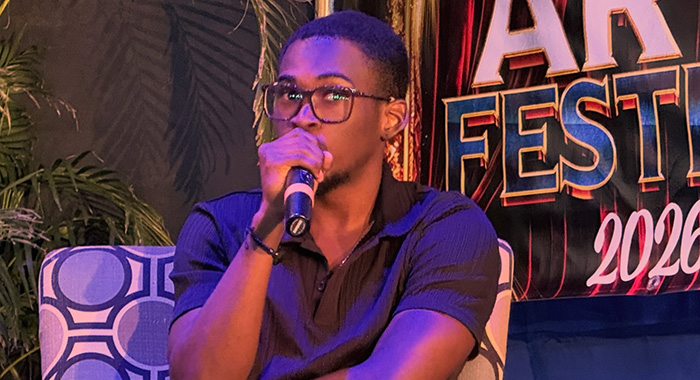
Forde called for more formal structures, including administrative, accounting and market-development support, to help creatives identify and pursue opportunities.
The discussion also touched on the importance of documenting and celebrating Vincentian achievements.
John said that local pioneers and successes are not always sufficiently recognised. “We need to know the greats,” he said, calling for the country’s history and accomplishments to be taught to younger generations.
Contracts, payment and constructive criticism
Audience member Crystal Oliver, a multimedia professional, urged organisations to pay creatives on time and fairly.
She said artists can be left chasing payment after other service providers have been paid, and warned that people entering the sector may find it difficult to refuse unfair terms.
John recommended written contracts that set out payment, technical needs and other expectations before a performance.
He said performers should understand the work that happens before they take the stage and shared how receiving a contract from another practitioner helped him formalise his own arrangements.
Hope summed up a recurring call for collective action, saying, “You can start the standard before the policies are made. You start the standard because that now can inform policy making.”
Government response and next steps
Meanwhile, Rommel Currency, acting permanent secretary in the Ministry of Youth, Sports, Culture, and Creative Industries, said the discussion had highlighted the need for coordinated effort, advocacy, policy and clearer pathways for people seeking careers in the creative industries.
He said he would pursue further conversations with ministry staff and the minister, Kaschak Cupid, while acknowledging that change would take time. >
Meanwhile, Charles said the Department of Culture’s CCI unit offered guidance and consultations, and described plans to work with the National Qualifications Department on training and certification in music production and performance.
He also encouraged creatives to make practical changes, including making contracts part of routine business practice.