



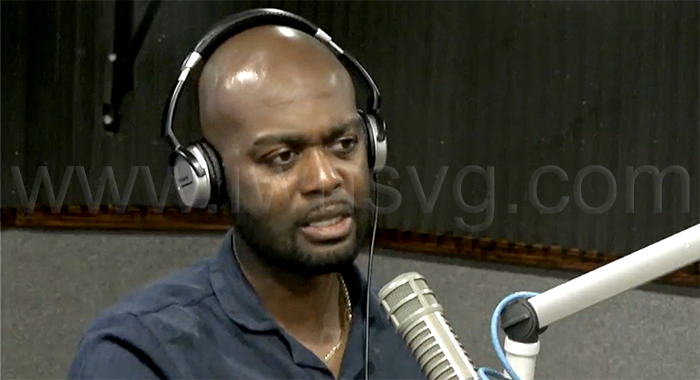

President of Cricket West Indies, Kishore Shallow, says he is “hurt” and “disappointed” by the regional team’s performance on Monday, when Australia bowled them out for 27 runs — the second lowest score in a Test — to win the three-match test series in another whitewash.
He, however, said he would not make any rash decision, such as firing the head coach or resigning from his post
“This is, again, about people, and this is what leadership is about: being composed in these difficult situations,” he said on Boom FM, in Kingstown, on Tuesday.
Shallow said that he had instructed the chair of CWI’s cricket committee to convene an urgent meeting to review and assess Monday’s performance as well as the team’s performance during the series.
“… yesterday was just one encounter, a very terrible encounter, but it was one encounter. But we have lost a series. We have lost all three matches,” he said, adding that while Australia are the best cricket team in the world, the meeting would help “to understand and bridge that gap that exists”.

Shallow said he had also asked former West Indies cricket greats Sir Clive Lloyd, Sir Vivian Richards and Brian Lara to attend the meeting and to assess the team’s weaknesses, adding that the issue is with the team’s batting.
He said the meeting would come up with ideas on short-term goals “to ensure that what happened yesterday doesn’t happen again in the near future, at least, and to ensure that, long term, we have that sustainable growth and success in our cricket”.
The CWI president said he was not offering any comfort in saying that around 2020-2021 Australia bowled out India for 35 runs and there was a turnaround in the Indian team after that.
Shallow is facing immense pressure as the West Indies continues to disappoint their fans.
At home in St. Vincent and the Grenadines, there is the added pressure of politics as he prepares to make his first bid to be elected to Parliament.
His political opponents, chief among them Prime Minister Ralph Gonsalves, have pointed to the continued poor performance of the West Indies on the field and have attempted to lay the blame squarely at Shallow’s feet, suggesting that he is not fit for political office.
On Tuesday, Shallow accepted some responsibility for the team’s performance, saying that he was “hurt” by it.
“I believe in accountability. So as the president of Cricket West Indies, you can’t escape responsibility for your team,” he said during the wide-ranging radio interview.
Shallow, however, said that the issues affecting West Indies cricket are generational, adding that Lara, in his 2024 book “Lara The England Chronicles”, pointed to 1995 as the year when the decline began — following two decades of West Indies dominance of the game.
“Now the truth is, we have enjoyed such success in the past, in the 70s and the 80s, that it is so difficult to accept why we are at this stage today…
“Why can’t we win aseries when we are in positions where it clearly shows that we could win these matches?”
He said that in Monday’s games, spectator hopes were raised after West Indies bowled out Australia for 121 in their second innings.
“I can’t remember the last time a team bowled out Australia for 100 and 20-something runs and getting a total of 200 runs. Why we can’t we make that runs?”
Shallow said that people who have been paying attention over the years would have realised that the team would “reach to this point”.
“And, unfortunately, they had to get to this point in order for people, stakeholders of West Indies cricket, including administrators, including governments, including players and staff and so on, to realise that, to accept that, we have to do better in pooling resources across the region and implementing systems and infrastructure”.
Shallow said that while Lara identified 1995 as the year when the decline of West Indies cricket began, even before then, Sir Clive had called on regional governments to introduce retainers.
“… he saw players going all over and playing, but he realised that our development came from playing in England and not in the Caribbean, because we didn’t establish systems in the Caribbean, or infrastructure; we had nothing in place”.
Sir Clive’s calls fell on deaf ears as did those of Sir Wes Hall, who was the president of regional cricket from 2001 to 2003.
“Sir Wes called, again, on all stakeholders in the Caribbean to unite, let us walk to rebuild our cricket then. Again, that fell on deaf ears. So, remember 1995 being when Brian Lara said our decline started, I was just about 10 years old,” said Shallow, who became president of CWI in 2023.
“And so, they have had different presidents since me. You’re talking about established businessmen, … high-profile lawyers, politicians who have been the president of cricket West Indies and West Indies Cricket Board, as it was called, and they were not able to resolve this thing in their tenure.”
Shallow said that when he became president of CWI in 2023, he concluded that it was important to get the various stakeholders, including CARICOM heads of states and governments on board.
“… until we get coaches and people appreciating that, or even the former players appreciating that, not because you’re a former great means you could be an excellent coach, but that you have a role that you could play otherwise, until we understand that we need to generate more revenue in West Indies cricket, to rebuild infrastructure and establish systems, we are not going to be able to compete consistently”.
Shallow said he had visited Australia and seen the systems and infrastructure that exist there.
“… there’s a clear gap between Australia cricket and West Indies cricket,” he said.
Asked if it was not his responsibility to bridge that gap, Shallow said:
“… we have had a prime minister for 25 years can’t turn around St. Vincent and the Grenadines. Do you expect a president of Cricket West Indies to turn it around in two years? It is impractical. It is simply impractical.”
He said that while the gap between Australia and the West Indies is closing, Australia would not wait for West Indies to catch up.
“So, they are implementing infrastructure, first-class system technologies. They’re coming up with innovations and so we are still behind.”
Shallow admitted that CWI had made significant money from the ICC World Cup last year, and is expected to make US$100 million over 10 years from a deal with Caribbean CAGE.
“Even if you start investing this money, whether from last year or this year, it doesn’t translate automatically to improved performances on the field. Because players can’t wake up tomorrow morning and get better.”
He, however, said that there are “glimpses of hope” already, adding that the Windies fast bowling unit skittled out Australia, “and sort of took us back to the years of Michael Holding and our great fast bowlers…
“So, we are making strides, but everything cannot come together at the same time, at the same pace,” Shallow said.