




President of the Bar Association, Shirlan “Zita” Barnwell, is among lawyers who have expressed concern about the length of time it takes the court to dispose of sexual offences matters involving children.
“I personally, … and perhaps the entire bar, remain very concerned about matters that the sexual offences, involving under-13s, in particular, wherein it still takes too long for matters to resolve at trial,” Barnwell said during a recent special sitting of the High Court.
She said she did not have the data to say how long, on average, it takes for such cases to be heard but pointed out that the situation is anecdotal.
“So, for instance, there was a young girl who was violated when she was 8 years old and at the time of trial, she was 11-plus,” Barnwell said.
“And there might be others in terms of speaking with members of the DPP, wherein sometimes some of these matters where a child has been offended or allegedly been offended, is under 13, and by the time the matter comes up for trial, this young person has already hit secondary school, faced with the issue there now of whether or not they want to go ahead and give evidence in the court because they are older.”

She said the alleged victim also has to deal with reliving the trauma.
“Maybe it has to do with the older teenager of dealing with the issue of shame and speaking about it, but we really must do something or try to streamline,” she said, noting that minors are vulnerable.
“To have these matters from the time the person has been arrested and charged expeditiously,” she said.
Barnwell said that in the civil court, it is often said that judicial review matters must be heard expeditiously. Notwithstanding, however, nothing in that court takes less than two years.
“I am saying because of these vulnerable children, that we need to really do something that makes these matters somehow, … that they must be dealt with under two years, so that these young people can go on with their life and have to revisit trauma,” Barnwell said.
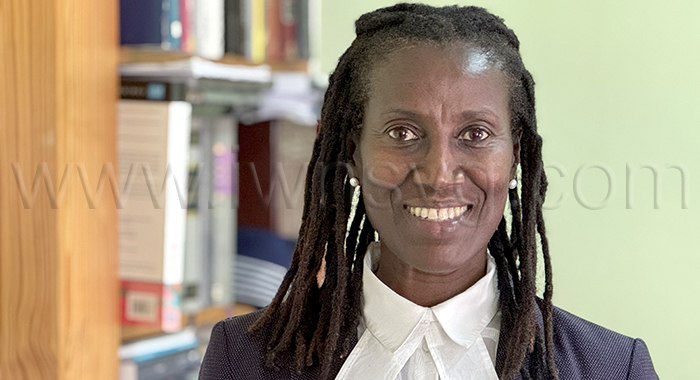
She noted that the acting Director of Public Prosecution (DPP), Duane Daniel, was employed on a contract.
“But whether or not he continues as DPP, I think in the period, we can start that conversation again and see how it is,” Barnwell said, adding that she would extend this to the police force because disposing of matters swiftly starts with investigation.
“And once somebody’s charged, then it becomes the Office of the DPP’s — I want to call the issue to deal with.”
She noted that sexual offence matters go through the Family Court.
“Whether we’re going to try to make sure, whether by legislation or not, have these things done by paper committer, rather than by P.I. …” she said.
A preliminary inquiry (PI) in a hearing in which a magistrate decides, after hearing the evidence, whether there is enough evidence to send a case to be tried by a judge and a jury.
Since PIs involve witnesses coming to court to give evidence, they are similar to trials, and some witnesses testifying in a matter twice by the time it is heard at the High Court.
During a paper committal, on the other hand, the magistrate along with a lawyer for the accused and the prosecutor, goes through the written statement and decides whether to send a matter to the High Court for trial.
A paper committal can take anything from an hour to a few hours, while a PI can drag on for months.
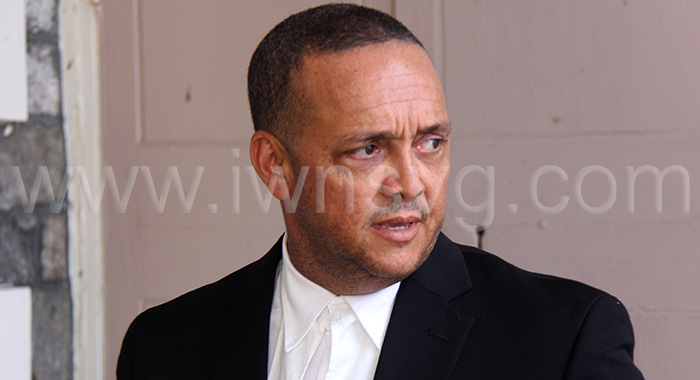
Speaking during the same sitting, lawyer Grant Connel also raised the issue of sexual offences, saying that the system needs to change its approach to them.
The lawyer said he was involved in a case recently where a man assaulted a 7-year-old boy, who was able to escape.
“And he met the man again, who wanted to do him certain things: buggery. I don’t hold back. It’s illegal but rampant,” Connell told the court.
“They abuse our young boys and they abuse our young girls. And the police’s hands are tied.”
The lawyer said he had visited the hospital two or three years ago and had met a pregnant 11-year-old.
“Catatonic, could hardly talk, but she knew who did her what and they told the police but their hands are tied,” Connel said.
“There is a need for new legislation to protect our children and to protect our women. Make it so drastic that when you watch a child and you watch a woman, you say, ‘Boy, me ain’t touching them dey at all’, because you know when the law deal with you, that’s it. And when the police are empowered, they can act,” Connell said.
Meanwhile, the acting DPP said the delay in disposing of sexual matter is a regional concern.
He said he did not wish to speak for the registrar of the High Court, who was present.
“But I know it’s a concern for Madam Registrar as well, because we have had conversations about prioritising those matters, and that is at the forefront,” Daniel told the court.
“But in terms of the length of time, as the public may be aware, there’s only one criminal High Court that is sitting right now.”
Daniel, however, said that the delay is sometimes based on psychological issues.
“Because after an alleged offence, there’s sometimes room for some form of therapy, counselling, and preparation before that individual is deemed fit to be able to give evidence without being retraumatised,” the acting DPP said.
He said at least one lawyer in court could attest that there was a sexual offence matter that the DPP’s office was hoping to proceed with, but thought it wise to have a psychological assessment first.
“And that psychological assessment raised issues, which meant that it is probably not in the best interest of the individual to proceed,” Daniel said.
It’s Tru these kinds of matter should have been in place growing up in used to hear add the age of the child a your age that’s how much time u getting
Ms. Barnwell is absolutely right. Full stop. The delays of which I’m aware represent a travesty. There can be no excuses, if we care at all about the children of this nation.
Please also address (look into) matters involving children in the Magistrates’ Court. The system is definitely designed to frustrate, with lengthy adjournment times etc. The children are the future AND need to know the system is one that protects them.