



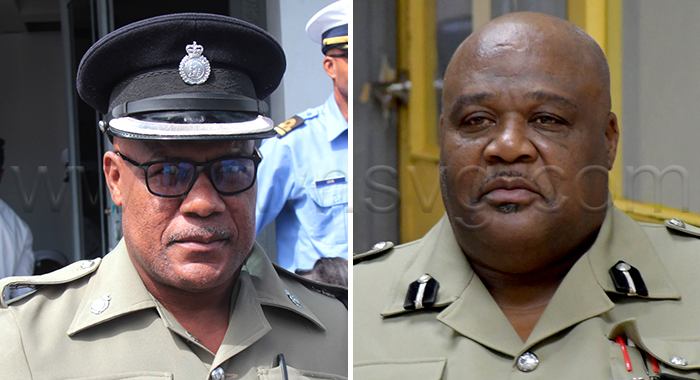

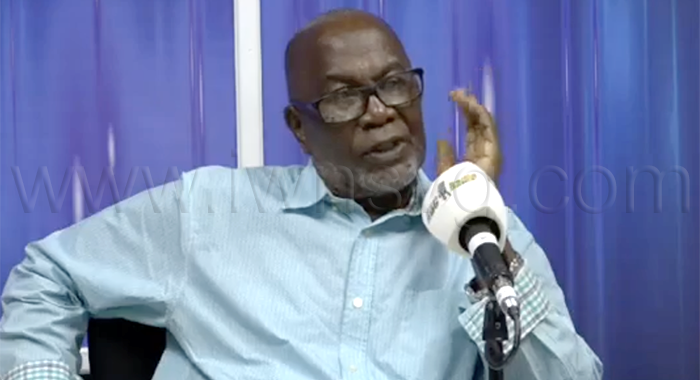
Deputy Prime Minister and Minister of National Security St. Clair Leacock has confirmed that brothers Trevor “Buju” and Dwayne Bailey are to serve together at the top tier of the Royal St. Vincent and the Grenadines Police Force, as part of a wide-ranging reorganisation of law enforcement, school security and the fire service.
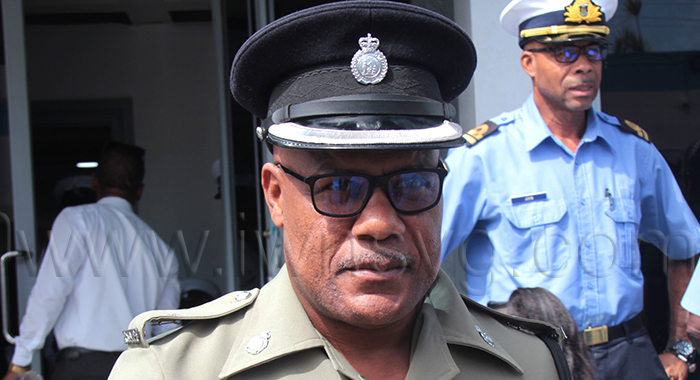
Leacock said on NBC Radio on Wednesday that when the current Deputy Commissioner of Police (DCP), Frankie Joseph, who is acting as the police chief, proceeds on leave, Tevor Bailey will act as DCP.
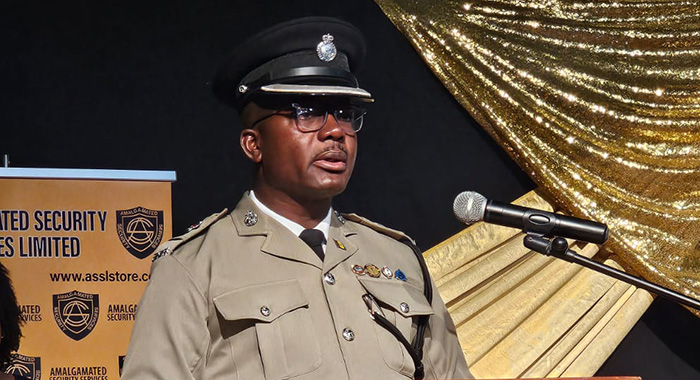
His younger brother, Dwayne Bailey, a superintendent of police who has been serving as the superintendent of prisons since 2021, will be brought back into the police High Command, also as a deputy commissioner.
This means that Enville Williams will continue as Commissioner of Police.
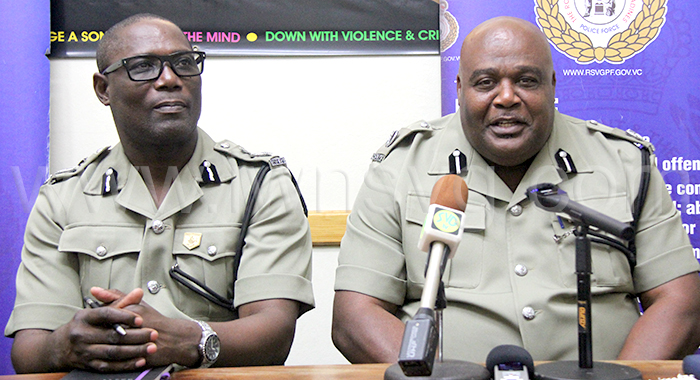
The New Democratic Party (NDP) government, which came to office in November, approved an additional DCP in the budget passed in February.

Leacock had said then that the additional DCP post might not be filled this year and that the money would be used to pay constables acting as corporals.
He said on Wednesday that the acting corporals would continue to be paid even as the government fills the two DCP posts, and underscored the unprecedented nature of the appointments.
“… history is being made there, in that they’re going to come from the same household,” Leacock said.
“And Dwayne is a fine police officer, and we think his elevation and bringing him back will strengthen our operational capacities.”
Leacock described the move to return Superintendent Dwayne Bailey to the top command as “almost a lateral movement” in terms of rank, but a strategic one in terms of operations.
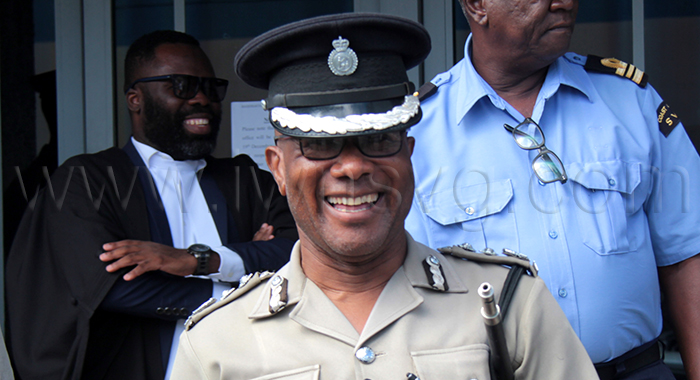
Promotions and a reshaped high command
The minister said the Bailey brothers’ appointments are part of a broader restructuring that includes new promotions at the level of assistant commissioner of police (ACP) and reassignment of current senior officers.
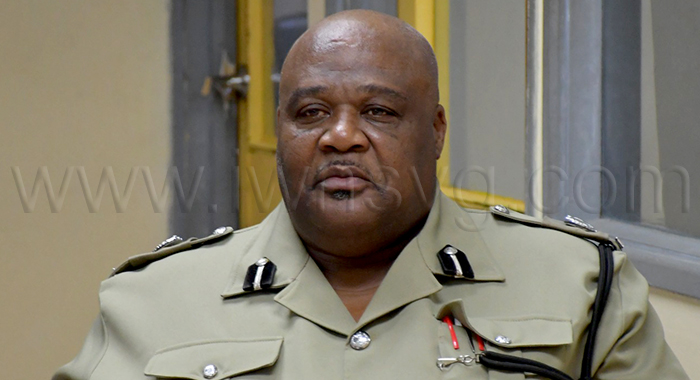
He announced a major promotion for Station Sergeant Brenton Smith, whom he noted had long worked in police welfare and human resources.
Smith was fired from the force under the Unity Labour Party (ULP) COVID-19 vaccine mandate in 2021 and later served as the NDP’s general secretary until last December.
He returned to the constabulary under the NDP government policy of reinstating the workers dismissed under the mandate, with all benefits intact.
“… he’s going to be getting a big jump,” Leacock said.
“Beyond inspector, beyond ASP, beyond superintendent, to ACP … and he’s getting there, in many ways, to speak to his core strengths,” he said of Smith, who holds a Master of Science in police leadership and management.
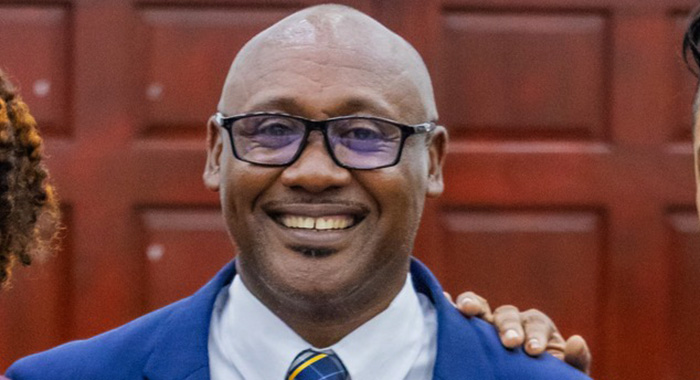
Leacock said Smith will be given a portfolio aimed at cleaning up long-standing complaints about stagnation in the lower ranks.
“He is going to take care of the human resource development department – performance appraisals, training, development, recruiting, manpower planning and all those important things to make sure the force is properly streamlined,” Leacock said.
The national security minister said that there are people in the constabulary who are still constables after 20 or 25 years, and some people, after a few years, officer.
“We want to straighten that out, so he’s going to have a good eye on that for us.”
Leacock also disclosed that another superintendent of police (SOP), Junior Simmons, is to be promoted to ACP, though he withheld details.
Over recent years, Simmons has served as the spokesperson for the police force, even as he specialises in intelligence.
“We may have another assistant commissioner of police coming at some time soon, but I don’t want to jump the gun… until we have cleared the actings and people actually move into the offices,” Leacock said.
ACP Christopher Benjamin is currently on leave, and Leacock noted that his position must be formally cleared before final confirmations.
“So they’re really going to be acting in that capacity, confirmed when that leave expires,” he said, indicating that Benjamin will not return to the constablulary when his leave expires.
ACPs moved into school security amid controversy
Leacock acknowledged that the reshuffle has stirred debate, especially around the reassignment of current ACP Benzil Samuel and Hezran Ballantyne to oversee security in schools across the country.
“They are not demoted. They are going to be reassigned duties, which, to our mind, is very important. That is, school security is a matter of concern for us.”
He described the present arrangements in many schools as inadequate.
“A number of the schools – some have, some don’t have [security]. Some have proper perimeter fences. Some have an allocation of two auxiliary police for an entire school population of 400, 300, 200, and the auxiliaries are generally overwhelmed,” he said.
“In some cases, the auxiliary presence is not as respected as the regular police force. So the assistant commissioners of police are going to beef up the quality of the security at the schools in total… the whole management of law and order around [the] school compound”
Leacock noted that assigning ACPs to school security has “incurred the ire” of some critics.
“I know already that is incurring the ire of some people who feel that there should be no presence of police in schools,” he said. “I don’t know how far we’ll go with that debate … but that’s not the view that we share.”
The deputy prime minister insisted that the approach is evidence-based, “in that we have had consultations, symposiums and workshops.
“The police high command has been into the schools one-on-one with school principals and school bodies, parent-teacher associations, and have made their own assessments, and they have also been requested many, many times by the schools to make interventions.”
Leacock linked the school security focus to concerns about wider behavioural trends.
“I don’t think anybody in St. Vincent will have a blind eye now to say that over the last several weeks, we have had behaviours on the street and even in public places… of a kind that’s unacceptable,” he said.
“So we are proceeding with that, even recognising the objections.”
SVG not a ‘police state’
The deputy prime minister pushed back against claims that the changes amount to the creation of a “police state”.
“It seems to me, by merely announcing those changes in the leadership of the police organisation and tightening up in the areas that I’ve just identified, that suddenly we have created St. Vincent into being a police state,” he said, summarising his critics’ argument.
“I mean, that is so long and far-fetched that I can’t begin to imagine what is driving those kinds of conclusions…
“We have to do what we have to do. And that’s what’s happening to the police,” Leacock said, adding, “Good must triumph over evil in our midst.”
Tackling ‘bad actors’ and rebuilding capacity
Leacock said the restructuring is driven by a need to address “operational challenges” and what he repeatedly termed “bad actors” in society.
“Because we are having a special eye on operational challenges in the police force, to address the situation with what I refer to as the bad actors, we’re bringing back Dwayne Bailey,” he said.
Dwayne Bailey was a leading personality on the frontline against crime as a member of the Rapid Response Unit (RRU) before being assigned to manage the prisons.
He was assigned to the penitentiaries after Veron Primus, who has since been convicted of murder, escaped twice while waiting for his trial.
He argued that the wider security system — including the Special Services Unit, the RRU, the prison service, the fire service, and auxiliary forces — must be rebuilt to full strength.
“Quite naturally, if you’re going to have these movements at the headship of the police force, I’m aware that a number of positions have just become available, and they’re across the board,” Leacock said
“Superintendents, assistant commissioners of police, inspectors, sergeants, corporals, constables — that is going to take place in the police force.”
He said that recruitment and specialised units are central to that plan.
“The police are also going to do some recruiting… The police are also going to look at the fact that a number of the specialised units need to be beefed up and get back to their manpower levels.”
He cited complaints from embassies, judges and other officials about inconsistent security details, which he linked to depleted specialised units during weekend operations.
To address this, he said the government is considering a more formal guard unit.
“We are going to have an additional interest of seeing … what we want to call a guard unit,” he said
“That is, those sections of the police force that have a dedicated responsibility to provide service to embassies, judges, senior officials who get that security service.”
Such a unit, he said, could be “a mix of specially trained auxiliary police officers… or people from the tactical units”.
Leacock also signalled an end to moving highly trained officers back to ordinary beat duty on an ad hoc basis.
“One of the things you’re not going to find us perpetuating is where we are arbitrarily moving people who are specialised in their training from, let’s say, SSU and RRU to regular police duties,” he said
“We’re going to allow more specialisation for more efficiency and competence in the delivery of service.”