



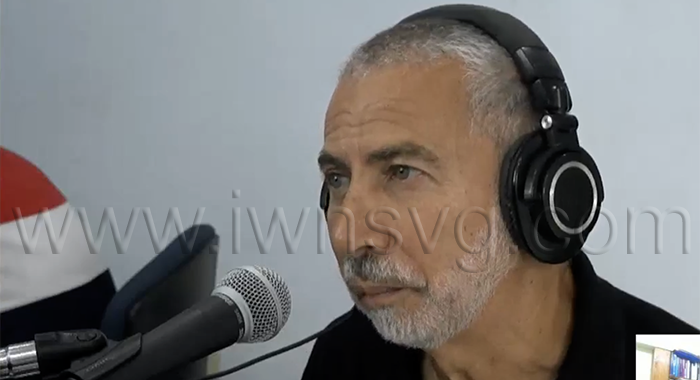

Chair of the National Insurance Services (NIS) board of directors, Stephen Joachim, says that the state-managed social security agency is under pressure but “financially stable for a while”.
He said on Boom FM that the new executive director, Ronette Lewis, takes up the position on July 1 amid a demographically and financially pressured NIS in a heavily indebted state.
He said the most recent actuarial review — completed three years ago, with a new one now being finalised — showed that the NIS was “good until 2060” under then‑current assumptions.
“The last actuarial survey done showed that we were good until 2060… When you factor in the contributions, the payments and so on,” he said.
However, Joachim warned that falling fertility and possibly inaccurate statistics could sharply affect those projections.

“When that report was done, the fertility rate in St. Vincent was probably around two,” he said.
“A couple of months ago, we thought maybe it was around 1.8. Apparently, the official statistics are closer to 1.5. That has massive implications for your future… in terms of how you fund an NIS going forward and what benefits you can get.”
Joachim’s core message was that the NIS has no “endless supply of money”, and any decision on benefits and retirement ages is a balancing act between current and future generations.
“Everybody wants lots of benefits,” he said.
“We could double your pension next week… but what happens to your grandchild? There’ll be no money there for your grandchild. You really want us to do that?” said Joachim, an account.
“When we make decisions, it is not about we being factually right or factually wrong. It is about our opinion of where we find the balance between how much we are willing to pay out now and how much we want to try and keep for later,” Joachim said.
Joachim responded to critics of Lewis’ appointment, saying that the NIS needs a manager, and not necessarily an actuary.
Stewart Haynes, an actuary, managed the NIS for the last nine years and quit earlier this year to take up a new post in St. Kitts.
“Why do you need an actuary? People just say it because Stuart was an actuary,” Joachim said.
“If anybody doubts me, speak to Stuart Haynes. He will tell you: ‘Steve, I do not use my actuarial skills to manage the NIS. This is about managing.’”
‘Engage your brains’ — Joachim to critics
In a pointed message to those attacking Lewis’ appointment and the board’s approach, Joachim urged critics to move beyond sloganising and engage with how the NIS actually functions.
“At least be logical and sensible,” he said.
“Tell me why you need to have an actuary. Tell me, do you understand the NIS and how it works? Do you understand what really happens in the NIS? I don’t think most people have a clue, so they automatically assume, because Stuart is an actuary, we have to have an actuary too.”
While insisting people are “entitled to their opinion”, he made clear that under his chairmanship, the NIS board will stand by decisions it believes are in the long‑term interest of contributors.
“We had people who disagreed with us. I don’t have a problem with people disagreeing,” he said. “But you can’t say we didn’t do a thorough process.”