



Tourism Minister Kishore Shallow says the government’s proposed 30-year partnership with Global Ports Holdings (GPH) for the management and redevelopment of the Kingstown cruise terminal is a “no-brainer” in light of persistent losses at the facility and the state of the national finances.
On Wednesday, the New Democratic Party (NDP) government signed a memorandum of understanding (MoU) with GPH, the world’s largest cruise port operator, paving the way for a 30-year concession and up to EC$250 million in phased investment to modernise the Kingstown Cruise Terminal and expand cruise tourism across the country.
The cruise ship terminal has not undergone any major expansion since the NDP government built it in the late 1990s.
It remained the country’s sole dedicated cruise ship pier during the 25 years of the Unity Labour Party administration, which came to office in March 2001 and was voted out last November.
The agreement, signed in Kingstown, will allow ordinary Vincentians to own 30% of the shares in the concession company, the government said.

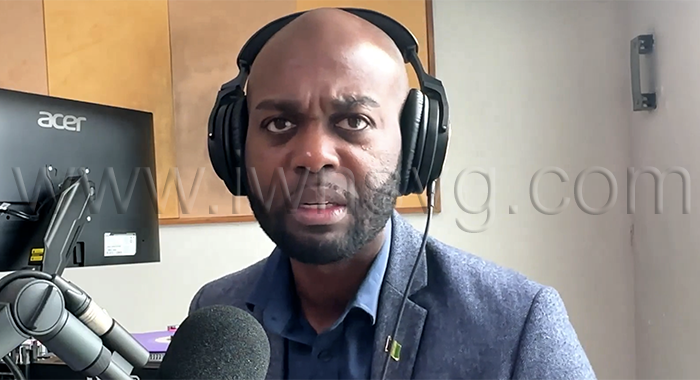
Speaking on Hot 97 FM on Tuesday morning p with hosts Too Cool Chris and Luke Boyea, Shallow said the cruise port has operated at a loss in four of the last five years, forcing the state to pump in over EC$15 million during that period just to keep it going.
“For the last five years… we have made a profit in one single year, which is 2023,” Shallow said. “The profit then was $266,000…
“Just imagine if we didn’t have to spend that 15 million there, and we could invest that in healthcare, education, [and] improve our roads. That is what is in front of us here.”
Shallow framed the GPH agreement as a strategic choice between taking on more debt to upgrade the facility or partnering with a major global operator willing to inject capital and expertise.
“Do we have the capital now to invest in our port? The answer to that is no,” he said. “Can we access it as a loan? Yes. Do we want more loan? No. Not for the port, certainly.”
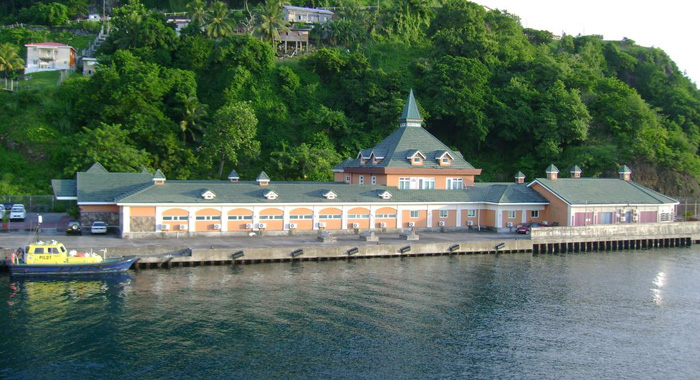
30-year lease, EC$255m investment and local equity
The minister said Global Ports Holdings, which he described as “the largest cruise port operator in the world”, has agreed to an initial investment of over EC$55 million in the first phase, focused on upgrading the terminal and immediate surroundings, and a total investment of about EC$255 million over the life of the agreement.
He reiterated that the arrangement is a 30-year concession, insisting this does not amount to selling the port.
“So just imagine you invest in 250-something million dollars, and then after that we own the entire thing… They’re not walking with the port when they leave.”
He said the deal includes two features he claims are unique in the region:
- Up to 30% Vincentian equity in the local company that will operate the cruise port, and
- At least one Vincentian representative on the board of that company.
“They’re going to come in and set up a company, and that company, Vincentians will have the opportunity… to invest in this if you want, and have shares,” Shallow told listeners.
“Up to 30% are going to be owned [by Vincentians]. So… the dividends, 30% of that coming back to Vincentians.”
He added:
“We are the only country that we are going to have a member on the board to ensure that Vincent’s interest is always represented.”
Shallow said ordinary Vincentians will have to see the key terms of the agreement before buying in.
“Before you purchase any equity in something, then you must know what’s the agreement,” he said, promising a prospectus that will lay out “the source of revenues, fees, etc., etc.,” for potential local investors.
Modernisation and tourism product gaps
The tourism minister said the deal is not just about the terminal building, but about repositioning St. Vincent and the Grenadines as a more competitive cruise destination.
He disclosed that average annual cruise arrivals over the last five years, excluding the COVID period, were about 230,000 passengers, far below regional competitors, and that per-passenger spend in St. Vincent Island is just about US$59, which he characterised as “the lowest in the region”.
“We can’t attract bigger vessels,” Shallow said. “We don’t have a developed product like the other islands. We don’t have a zip line, we don’t have… so many different things we could do.”
He also pointed to basic deficiencies at the terminal.
“Simple things like toilet [facilities] not working for weeks… Even though you’re spending $15 million,” he said, arguing that the current model is unsustainable.
Shallow said GPH brings “a wealth of experience, network and capital”.
The first phase will include:
- Renovation and “transformation” of the existing terminal building
- Improved pedestrian access between the port and Kingstown
- Investment in tourism sites across the country as part of the negotiated package
“One of the things that we have carved out, and we negotiated tightly for this, is to have them invest in our sites as well,” he said. “If you’re going to benefit… then we should benefit [too],” Shallow said.
I’m sorry to say, St Vincent is a place where the populations are glad to escape to greener pastures. No matter how optimistic and rosy politicians want to paint it. The reality remains hopeless; it was engineered that way.
It’s a no-brainer; that’s why BP owns almost 50% of Trinidad’s gas reserves. It too was a no-brainer. I know we need the money, but that doesn’t mean you have to give away everything.