



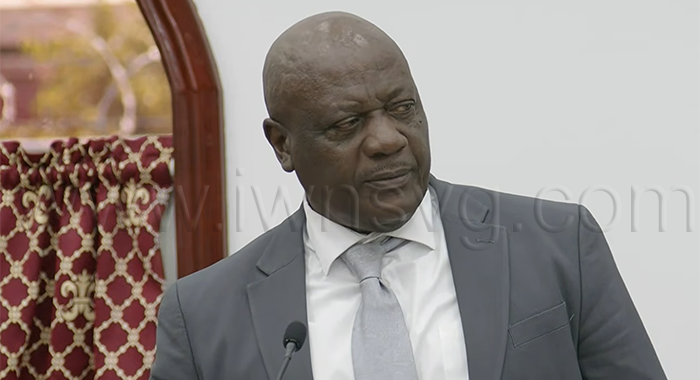

Land Management Minister Andrew John is urging people who were assigned state lands in the lead-up to the November 2025 election to report to the Housing and Land Development Corporation (HLDC) and start paying for their lots, as the government’s review of those allocations nears completion.
He insisted in an interview with NBC Radio that the review is not aimed at taking away land from people who should not have been denied it in the first place.
John, who is also the minister of housing, urban development, and informal settlement upgrading, said people who received land properly and are prepared to honour their commitments should come in and regularise their position.
He, however, cautioned that those who benefited from overgenerous or irregular distributions should expect their cases to be revisited in the interest of equity.
John said that the then-Unity Labour Party administration distributed about 250 parcels of land “within a month or two” of the last election.

After winning the general election, the New Democratic Party administration, of which John is a member, conducted an internal review of how those allocations were handled.
John said the review is now “almost completed”, and the ministry is moving into a case-by-case phase, inviting people to come in individually rather than relying on rumours or political commentary.
The minister said the checks uncovered several problems, including multiple lots to one person.
He said that in some cases, individuals were attributed up to four lots, despite a policy that, as a rule, state-owned land for housing should be one parcel per person, particularly for those in need.
The minister said there were also repeat beneficiaries, in that some people had been offered government land previously, had not yet settled payments on those earlier parcels, and still appeared on the list for new lots.
Another issue was a weak link to need: some recipients were already comfortably housed, while others in more desperate situations remained without land.
John said these issues made it necessary to pause and check “how this was done”, given the volume and timing of the allocations.
Review not about people who genuinely needed land
The minister stressed that the regularisation effort is not targeting people who have long been asking for land and have received it properly, or who are genuinely in need.
He drew a clear distinction between people who had applied over time and were finally offered a piece of land, and people who benefited from over-allocation or repeated access to state lands.
He said that if someone has been asking for land for a long time and is willing to purchase a piece of land from the government, the ministry has no issue with that person and is not trying to strip them of their allocation.
John also rejected claims that the review is an attempt to “take land from the poor”, describing it instead as an effort to correct excesses and ensure equitable distribution.
“This is not a witch hunt,” he said, adding that the goal is to put land “into the right hands” and avoid situations where a small group accumulates multiple lots while others, including their own children, cannot get one.
Call to come in and regularise
John is urging affected people to go directly to the HLDC, rather than rely on “street talk” or partisan narratives.
He said the ministry has the relevant information on file, so discussions should not be lengthy.
Recipients are being asked to come in one-on-one to confirm their status. Those who are willing and able are encouraged to begin or continue payments on their offers.
The ministry will then determine whether any adjustments or reallocations are required in cases of multiple or irregular allocations.
He acknowledged that some lawyers had previously talked about taking the government to court over the review.
John, however, said that each land offer is governed by a written contract, including payment terms, and that successive administrations have in fact been lenient, giving beneficiaries more time to pay because many are unemployed or on low incomes.
Balancing equity, compassion and enforcement
John presented the current exercise as a reset, combining compassion for low-income beneficiaries with a firmer stance on fairness and abuse.
He pointed out that while contracts often require full payment within 12 months, or half up front with instalments for the balance, governments have routinely allowed payments over a longer period.
At the same time, he said it is unreasonable for some people to collect multiple parcels or return for new land while still owing on earlier lots, especially when others have never received an allocation.
The minister said the wider objective is to open up access to state land more fairly, across income groups and political lines, particularly as the housing programme expands and the HLDC takes on a broader role in building homes for both government and private clients.
Honestly, where are the people still waiting? You’d think a story about ‘equity’ would actually talk to them. But no—it’s all minister this and landholder that. And nobody even says how long the list is or what happens to the plots they take back. This reads like a press release dressed up as journalism.