



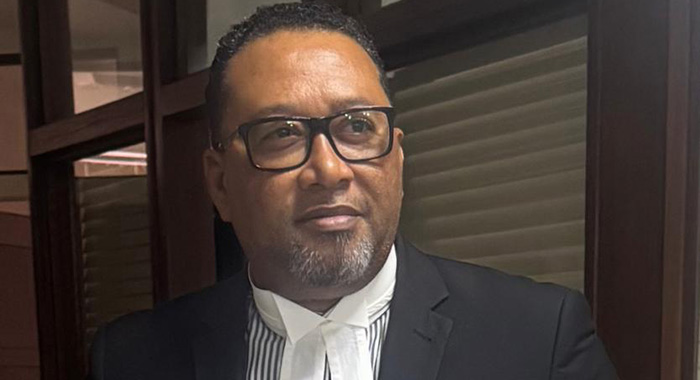

By *Sten Sargeant
One of the greatest differences between campaigning and governing is this: campaigns run on promises; governments run on cash flow. A political party can promise the world while in opposition. A government, however, must find a way to pay for it.
That is why I found One News SVG’s recent analysis of Moody’s assessment of St. Vincent and the Grenadines both timely and sobering. Credit rating agencies are not political parties. They do not attend rallies. They do not endorse candidates. They have no interest in whether the New Democratic Party or the Unity Labour Party occupies office.
They are interested in one thing only: can a country meet its financial obligations?
When Moody’s speaks about “liquidity pressures”, it is speaking the language of economics, not politics. Liquidity is the lifeblood of government. It determines whether salaries are paid on time, whether contractors are paid, whether roads are repaired, whether hospitals function and whether promises become policies.

Most Vincentians never hear the term “liquidity pressure”. They hear about potholes, delayed projects or unpaid bills. Those are simply different expressions of the same underlying problem. The worrying aspect of Moody’s report is not merely the downgrade itself. It is the suggestion that these pressures were already building well before the 2025 general election.
According to Moody’s analysis, domestic debt increased from 51.6% of total government debt in 2024 to 62.4% in 2025. That is not simply an accounting statistic. It suggests that the government was relying increasingly on borrowing at home to finance its operations. Reports also emerged that attempts to access the domestic bond market were encountering difficulty. Whether viewed individually or collectively, these were warning signs that fiscal space was narrowing.
If those warning signs existed before the election, then an uncomfortable question naturally arises. What exactly did the previous administration know about the country’s financial position during the election campaign? If the fiscal outlook was already deteriorating, should the electorate have been told more candidly about the state of the nation’s finances before it went to the polls?
Those are legitimate questions in any democracy. Instead, what the country witnessed was an election campaign in which spending continued at a remarkable pace. As Prime Minister Godwin Friday has colourfully described it, the previous administration appeared to spend “like a drunken sailor” — albeit in its last hoorah.
Politics often rewards optimism and fortune favours the brave. Public finance does not. Perhaps this is what the former prime minister meant when he boasted that he was leaving the incoming administration with “a hook in the gill”. At the time, many dismissed the comment as political bravado. Today, viewed against Moody’s assessment, those words take on an altogether different meaning.
Winning an election does not create money. It creates responsibility. Governments inherit not only ministries and SUVs. They inherit contracts, debts, obligations, deficits and cash-flow problems. They inherit the consequences of decisions made years before.
That is why those who now criticise every financing initiative of the new administration must confront a fundamental question. If not this, then what? For months, we have heard criticism of public-private partnerships. We have heard objections to the proposed cruise terminal concession. We have heard outcry over the harvesting of volcanic aggregate from the Roseau River. We have heard objections to virtually every attempt to generate economic activity.
Yet, remarkably little has been said about the financial circumstances that make these conversations necessary in the first place. The easiest word in politics is “No.” The hardest word is “How?” How do we finance infrastructure? How do we reduce debt? How do we stimulate growth? How do we create employment? How do we diversify an economy which Moody’s itself describes as “undiversified”?
That single word should concern every Vincentian. An undiversified economy is an economy that remains dangerously dependent on too few sectors for growth and foreign exchange. One volcanic eruption, one hurricane, one collapse in tourism, or one external economic shock can derail years of progress. That is precisely why the New Democratic Party campaigned on its compelling developmental narrative of the four pillars of economic development: agriculture, tourism, the blue economy and the new economy.
Those pillars were never intended to be campaign slogans. Each is pregnant with meaning and is intended to become the architecture of a more resilient economy. The challenge now is to increasingly implement them. One area where this conversation has become particularly relevant is citizenship by investment. Some commentators argue that St. Vincent and the Grenadines has missed the boat. Perhaps. The countries in the region that pioneered citizenship-by-investment programmes have enjoyed a 30- to 40-year headstart. They have financed international airports, hospitals, schools, climate resilience projects and debt reduction through investment migration.
Premier Mark Brantley of Nevis has recently and repeatedly pointed to the transformative role that citizenship-by-investment revenues have played in developing Nevis and strengthening its public finances. Whether one agrees entirely with his conclusions or not, the experience of our neighbours cannot simply be ignored. But neither can we ignore the changing international landscape. The European Union has expressed increasingly serious concerns about visa-free access for countries operating citizenship-by-investment programmes. Security, due diligence, transparency and the integrity of passports have all become matters of legitimate international concern.
Some see that as proof that St. Vincent and the Grenadines has missed its opportunity. I see something different. I see an opportunity to design the next generation of investment migration. Unlike those who began 40 years ago, we have the benefit of hindsight. Instead of copying programmes designed in the 1980s, we should be asking whether St. Vincent and the Grenadines could work with the European Union, the United States, CARICOM and the OECS to develop a bespoke legislative framework that directly addresses modern concerns about security, transparency, due diligence and sovereignty.
That conversation is worth having. If the objections are genuine, then they ought to be capable of being answered through better legislation, stronger institutions and closer international cooperation. If they cannot, then at least the country will have explored every available option. Until then, we must focus relentlessly on what we can control. We must strengthen our investment climate. We must make it easier to do business. We must encourage Vincentians abroad to return, invest, build businesses and create employment.
Our diaspora is not merely a source of remittances. It is one of the country’s greatest untapped pools of capital, expertise and international networks. The future of St. Vincent and the Grenadines will not be secured by nostalgia. Nor will it be secured by endless Facebook debates over every decision the government attempts to make.
Economic development demands difficult choices. Sometimes it requires borrowing. Sometimes it requires partnerships. Sometimes it requires concessions. Sometimes it requires saying “yes” where previous governments said “no”. That is the burden of governing. Moody’s has done the country a favour. It has reminded us that economics does not recognise political slogans. Balance sheets do not care about election speeches. Cash flow cannot be negotiated with rhetoric.
The election is over. The campaign is over. Governance has begun. The real question now is not whether difficult decisions will have to be made. They will. The question is whether we have the political maturity to understand why they are necessary. Because governments do not usually fail because they run out of ideas. They fail because they run out of money.
*Sten Sargeant is a barrister-at-law of Inner Temple in England, and a barrister-at-law, solicitor, notary public in St. Vincent and the Grenadines — the 6th from his native Bequia. He is also a trained mediator. He has a deep interest in history, politics, sailing and cricket, while moonlighting as a gourmet chef.
The opinions presented in this content belong to the author and may not necessarily reflect the perspectives or editorial stance of iWitness News. Opinion pieces can be submitted to [email protected].
As a once avid student of the differential and infinitesimal calculus, I am interested in establishing the minimum population size at which a country becomes capable of running a viable economy. Most would accept that 10,000 population size is too small. What about 50,000? 100,000?