



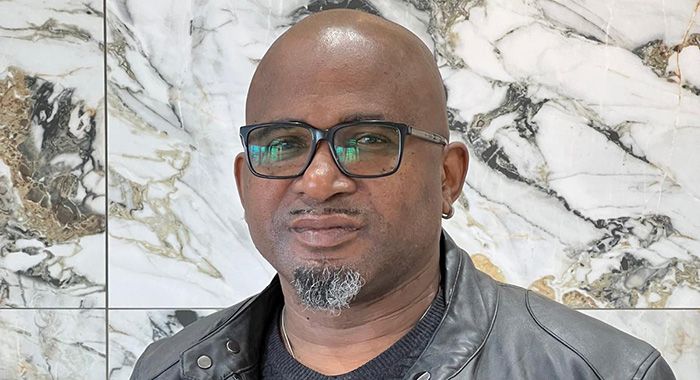

By Marlon Bute
On Friday, July 3, at approximately 5:02 p.m., Stephen Joachim, chairman of the National Insurance Services, forwarded me a summary of Moody’s latest rating action on St. Vincent and the Grenadines. It confirmed what some had feared: our country’s sovereign credit rating had been downgraded.
I began authoring this article at once.
Then I put it aside.
Today, Sunday, July 12, as I sit at my dinner table, I have taken it up once more. I have reread every line, made a few final revisions and decide that it is time to submit it for publication.

The Moody’s downgrade is too significant to be dismissed as just another news item or reduced to another partisan exchange. It deserves careful reflection because it speaks not only to where we are as a nation, but also to how we arrived here and, perhaps more importantly, what we must now do if we are to restore confidence in our economy and secure a stronger future for St. Vincent and the Grenadines.
The former prime minister and current opposition leader, whose Unity Labour Party (ULP) suffered an embarrassing trouncing at the polls, has expectedly already suggested that responsibility for this downgrade rests with a government that has been in office for only eight months.
I reject that proposition. It is patently ludicrous.
No credible assessment of a country’s sovereign creditworthiness attributes structural fiscal challenges of this size to an administration that has governed for less than a year. Sovereign credit ratings are not based on the last few months of government. They are based on years of fiscal management, economic performance, institutional strength and a country’s demonstrated capacity to meet its financial obligations.
The conditions identified by Moody’s did not appear in eight months. They were, in my view, the cumulative result of 25 years of economic management under the former ULP administration, of which the former prime minister was the principal architect.
There will also be those who point to the COVID-19 pandemic, the eruption of La Soufriere and Hurricane Beryl as the principal causes of the downgrade. Those events unquestionably imposed some burdens on the country and strained the public finances. They cannot, and should not, be ignored.
But they are not, in my view, the principal explanation for Moody’s decision.
Natural disasters expose weaknesses; they do not create them. The pandemic, the eruption and Hurricane Beryl tested the resilience of our economy, but they did not create the structural economic conditions that existed long before those events occurred. Those conditions were the product of policy choices made over 25 years.
The downgrade is, in my assessment, the culmination of 25 years of economic management under the former ULP regime. It reflects the cumulative consequences of persistent overspending, excessive borrowing, and an insufficient commitment to developing the productive sectors capable of generating sustainable economic growth.
Countries do not suddenly wake up with debt exceeding 100% of gross domestic product. International credit agencies do not downgrade sovereign borrowers because of a single budget or a single year of disappointing performance. Such decisions are based upon long-term trends, structural weaknesses, and the confidence that lenders have in a country’s capacity to meet their financial obligations over time.
For years, government expenditure expanded while economic productivity did not keep pace. Borrowing became an increasingly important means of financing development, yet agriculture, fisheries, manufacturing, agro-processing, and export-oriented industries never received the sustained strategic investment necessary to transform the economy. Consumption too often outpaced production. Debt accumulated faster than wealth was created.
That imbalance could not continue indefinitely.
Every responsible government borrows. The real question is what that borrowing achieves. Debt used to finance productive investment, investment that expands the economy, creates employment, increases exports, and generates future revenue, is fundamentally different from debt that leaves the productive capacity of the economy unchanged.
Eventually, creditors begin asking whether the economy is producing enough wealth to service the obligations it continues to accumulate.
Moody’s has now answered that question.
There is another issue that cannot be separated from the country’s economic performance: governance.
For years, I have argued that what I regard as state-sanctioned corruption has imposed a high economic cost on St. Vincent and the Grenadines. Corruption is not simply a matter of ethics or criminal law. It is an economic issue. It distorts investment decisions, undermines confidence, rewards political loyalty over competence, weakens institutions and diverts scarce public resources from productive uses.
Former opposition leader Arnhim Eustace has long observed that corruption robs a nation of the resources needed to help the poor and to generate the economic activity that creates jobs. That observation deserves careful consideration. Every dollar lost to waste, patronage or corrupt practices is a dollar unavailable for improving agriculture, strengthening fisheries, supporting manufacturing, investing in education, modernising infrastructure or creating opportunities for the next generation.
Poor governance suppresses productivity. It discourages investment. It erodes public confidence. It weakens economic performance.
These realities cannot simply be dismissed because they are politically uncomfortable.
For years, some of us warned that the country’s fiscal trajectory was unsustainable. We questioned whether sufficient emphasis was being placed on wealth creation as opposed to expenditure. We argued that stronger support should be given to entrepreneurs, manufacturers, farmers, fishers, and exporters. We called for greater transparency, stronger accountability, and better stewardship of public finances.
Those warnings were often dismissed.
Today, Moody’s has arrived at conclusions that should cause every Vincentian to pause.
The Vincentian people recognised that the country needed a different direction. Their decision at the polls was not merely to elect a new government; it was to endorse a different economic philosophy. They entrusted Prime Minister and Minister of Finance Godwin Friday and his administration with the responsibility of restoring fiscal discipline, rebuilding investor confidence, and creating the conditions for sustainable growth.
That responsibility is immense because the challenges inherited are structural rather than temporary.
Recovery will require discipline rather than expediency, investment rather than dependency and production rather than consumption. It will require renewed attention to agriculture, fisheries, manufacturing, tourism and entrepreneurship. It will require a public sector that sees itself as a facilitator of private enterprise rather than its substitute. It will require policies that encourage investment, reward innovation, and expand the country’s productive capacity.
It will also require renewal within our institutions.
After 25 years under one administration, it should surprise no one that many of the principal actors throughout the public service, statutory corporations and state institutions remain the same. This is not to suggest that every public servant has failed the country. Far from it. Some have served with distinction and professionalism.
But institutions, like governments, benefit from renewal. Fresh leadership, fresh ideas, and renewed accountability are often essential to meaningful reform. If we expect different outcomes, we must also be prepared to examine whether existing structures, practices and leadership in the public service remain fit for purpose. Or simply put, whether they are complicit.
The opinions presented in this content belong to the author and may not necessarily reflect the perspectives or editorial stance of iWitness News. Opinion pieces can be submitted to [email protected].
We don’t expect too here anything better about SVG,but all I have to say Ralph and the ULP need to be investigated,25 year of corruption is not 5 yrs . Dr. Friday pls wake up and do what is right to save our country