



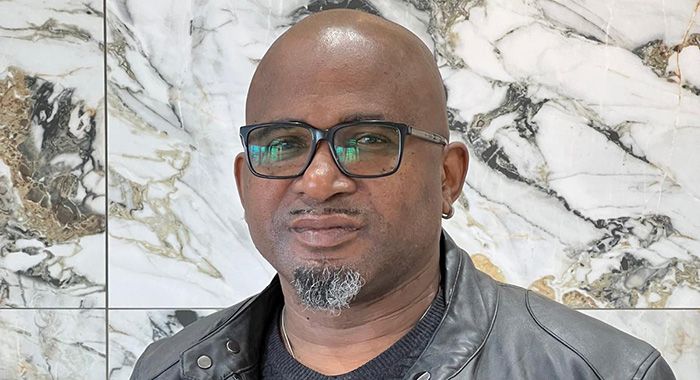

By Marlon Bute
About two weeks ago, I wrote a piece entitled The Measure of Change. In it, I argued that after almost 25 years under one administration, change was not only expected but, in many respects, necessary. In passing, however, I noted that despite the change of government, an extraordinary degree of institutional continuity remains. That observation deserves much closer examination, particularly within the unique political circumstances of St Vincent and the Grenadines.
For almost 25 years, Ralph Gonsalves served as prime minister of St Vincent and the Grenadines. During that time, he became the Caribbean’s longest-serving prime minister and, for a period, one of the longest-serving heads of government in the world. Today, although no longer prime minister, he remains leader of the opposition, continues to lead his party, has been quite combative, and has insisted on numerous occasions that the brand-new government, with its brand-new Members of Parliament, in whom the people have displayed overwhelming confidence, has begun to implode imperceptibly.
As opposition leader, following a decisive election defeat, he may believe that he could one day be returned to Parliament as prime minister. Whether that prospect is politically realistic is, of course, for the electorate to decide. At present, however, even many of his most loyal supporters would regard such a prospect as politically improbable.
Relationships built over decades do not disappear overnight. Nor do familiarity with institutions, knowledge of the machinery of government, or the professional relationships cultivated with many of those who occupy some of the country’s most important constitutional and statutory offices.

This is neither an accusation nor a criticism. It is simply the reality of longevity in public life.
To borrow a metaphor, it is like asking the architect of a broken system to advise on how that same system should now be reformed.
The metaphor is simply to illustrate how someone who has shaped a system over many years may continue to possess some influence over it even after his formal authority has changed. How best to manage that influence is a matter for political strategists and institutional actors to consider. It is not for this writer.
Suffice it to say that influence may be used for good or for ill. Where government, opposition, and constitutional office holders all place the national interest above partisan interest, continuity can become a tremendous asset. Good things happen when people work together.
But where political power becomes the overriding goal, continuity can also raise legitimate questions that every democracy ought to be willing to examine honestly.
This is not a call for anyone to be removed from office, nor is it an attempt to impugn the integrity of any individual presently occupying one of these constitutional positions. Rather, what I seek to examine is the relationship between these offices and political power, and how that relationship, whether real, perceived, or simply possible, may affect the quality of governance in St Vincent and the Grenadines.
Constitutions establish offices. They prescribe powers and seek to protect office holders from improper political interference. Those safeguards are indispensable in any democracy. However, constitutions do not administer themselves. Institutions derive their true character not from the words written in the Constitution alone, but from the courage, judgement, independence, and integrity of the men and women entrusted to administer them. The law can define powers, prescribe duties, and set up safeguards, but it cannot legislate character, judgement, independence, or courage.
It is therefore entirely legitimate in a democracy to ask not only whether constitutional safeguards exist, but whether they are sufficient to inspire public confidence. Independence is not merely a constitutional provision. It is also a matter of conduct, judgement, and public confidence.
A newly elected government receives a mandate from the electorate to pursue a particular programme of governance. Ministers alone cannot deliver that mandate. They depend upon a public service and constitutional offices capable of implementing lawful policy efficiently, professionally, and impartially. That does not mean constitutional office holders should become political actors or partisan agents. Quite the contrary. Their independence is essential. But independence should never be confused with inertia, nor should impartiality be confused with an inability to facilitate the lawful programme of the administration that the people have chosen.
After almost 25 years under one administration, it is entirely reasonable to ask whether our institutions remain equipped to facilitate a smooth transition of governance; whether institutional cultures adapt as readily as governments change; whether relationships forged during one political era have any bearing, positive or negative, on the ability of a new administration to govern effectively; and whether continuity, while valuable in many respects, can sometimes become an obstacle to renewal.
For, in the end, governments change. But the effectiveness of any government is measured not simply by the promises it makes, but by the policies it develops, the directives it issues, and, most importantly, its ability to see them through to completion.
That responsibility does not rest with ministers alone. It depends upon the constitutional and statutory offices that translate policy into administration, advice into action, and decisions into results.
As I take my leave, I leave you with one final question.
After almost 25 years under one administration, are we satisfied with the functioning of these offices? Are we satisfied that they have served the people of St Vincent and the Grenadines as effectively, as independently, and as faithfully as they ought to have done? Have they strengthened governance, enhanced public confidence, and facilitated the efficient delivery of the people’s business?
Each of us will answer those questions differently. My purpose has not been to answer them for you, nor to call for anyone’s removal from office. It has simply been to invite a discussion about where power truly resides and how it is exercised within our constitutional democracy.
In Part II, I will move from principle to practice. I will examine several of the country’s most consequential constitutional and statutory offices, including the Director of Public Prosecutions, the Commissioner of Police, the Director of Finance, and the Chief Medical Officer, not to question the integrity of any office holder, but to explore how these offices shape governance, accountability, and public confidence in St Vincent and the Grenadines.
If you keep ULP appointees in key positions, it is a sure-fire way to burn down the NDP’s house.