



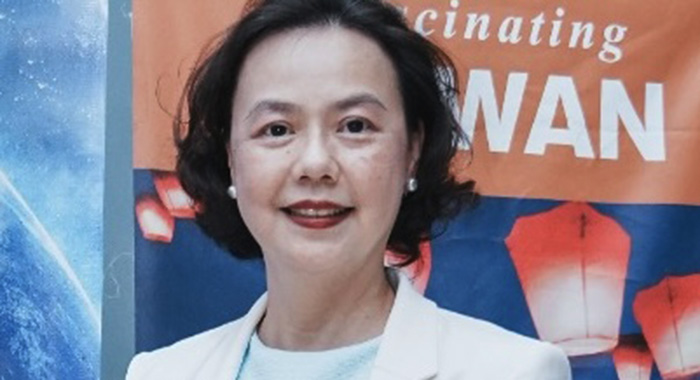

H.E. Fiona Huei-Chun Fan, ambassador of the Republic of China (Taiwan) to St. Vincent and the Grenadines
As island nations, St. Vincent and the Grenadines and the Republic of China (Taiwan) share a profound understanding of natural vulnerabilities. From devastating hurricanes and volcanic activity in the Caribbean to typhoons and earthquakes across the Pacific Rim, our people have long demonstrated unmatched resilience in the face of adversity. Yet, as climate change accelerates and compound disasters grow more unpredictable worldwide, resilience can no longer be built in isolation — it demands robust, institutionalised global solidarity.
It is against this backdrop that President of the R.O.C. (Taiwan), Lai Ching-te announced on Sept. 19 the establishment of the World Alliance for Disaster Management (WADM) in Taipei. Formed by Taiwan alongside diplomatic allies — with St. Vincent and the Grenadines taking a pivotal role as a founding member — and supported by twenty-one partner nations and observers including the United States, Japan, the United Kingdom, and Germany, the Alliance positions Taiwan as a cross-border coordination hub for humanitarian assistance and disaster risk reduction.
Meeting with delegation leaders on Septe. 21, President Lai highlighted a fundamental truth: while the specific disasters we face may vary, our collective duty to protect human lives and livelihoods is universal. The Alliance moves beyond traditional emergency relief. While the United Nations Sendai Framework for Disaster Risk Reduction champions the principle to “Build Back Better”, the WADM introduces a forward-looking paradigm: “Prepare Better Together”. Leveraging world-class infrastructure such as Taiwan’s National Fire Agency Training Center in Zhushan, Nantou, this initiative will provide advanced training, technology exchange, and real-time operational coordination across borders.
This collaborative spirit is particularly critical today. As the 81st Session of the United Nations General Assembly convenes in New York, the recently released 2026 Sustainable Development Goals Report delivers a sobering reminder: the window to achieve the 2030 Agenda is rapidly closing. The choices world leaders make over the next four years will determine whether global peace, human security, and environmental sustainability can be preserved for generations to come. To overcome these multifaceted crises, the United Nations must return to genuine inclusivity.

Taiwan has long proven a willing, capable, and indispensable partner in advancing the SDGs. As Taiwan and Saint Vincent and the Grenadines proudly celebrate forty-five years of diplomatic relations in 2026, our enduring bond continues to bear practical fruit.
In smart agriculture (SDG 2), the launch of the Agricultural Productivity Recovery and Young Farmers’ Training Project, powered by Taiwan’s Technical Mission and IoT-enabled climate monitoring systems introduced in May 2026, has significantly bolstered local food security and climate adaptability. In youth empowerment and education (SDGs 4 and 9), Taiwan’s ongoing collaboration with the Pan American Development Foundation (PADF) under the EcoYouth Ventures Initiative (2025–2027) is equipping young Vincentians with essential STEM skills to become tomorrow’s leaders.
Beyond bilateral cooperation, Taiwan’s value to the global commons is undeniable. As a democratic powerhouse leading advancements in semiconductors, artificial intelligence, and next-generation technologies, Taiwan plays a cornerstone role in securing transparent, resilient global supply chains. Taiwan also remains a steadfast anchor of peace and stability across the Indo-Pacific region, upholding international law and democratic governance.
Global challenges do not respect national borders, and no country should be denied the right to contribute to our shared future. The unjust exclusion of Taiwan’s 23.5 million people from the United Nations system undermines the very universality and effectiveness the UN was founded to uphold. When Taiwan is excluded, the global community loses an innovative leader in public health, digital governance, climate adaptation, and disaster preparedness and response.
On behalf of the government and people of R.O.C. (Taiwan), I express our deepest gratitude to the government and people of St. Vincent and the Grenadines for their principled and vocal advocacy for Taiwan’s international space. As we navigate an era of unprecedented global disruptions, the United Nations must open its doors to Taiwan. Together, with trust and mutual respect, we can build a more secure, resilient, and prosperous world for all.
The opinions presented in this content belong to the author and may not necessarily reflect the perspectives or editorial stance of iWitness News. Opinion pieces can be submitted to [email protected].