




A tourism industry that does not invest in local creativity risks missing what visitors increasingly seek: experiences rooted in a destination’s culture.
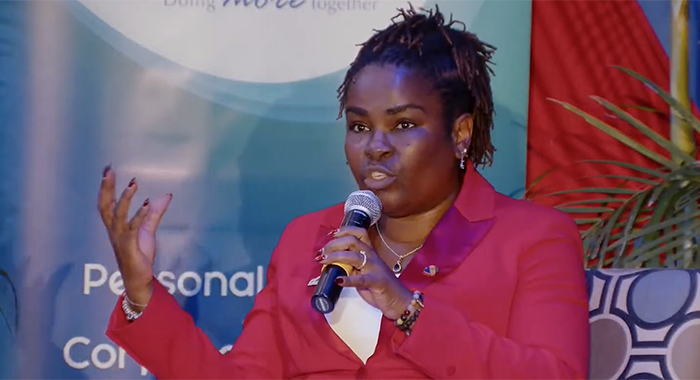
That was the message from playwright, cultural practitioner and former teacher, Nisha Hope, speaking during a discussion on the orange economy at the inaugural National Performing Arts Conference in Kingstown on Wednesday.
“We cannot build a tourism industry without a strong orange economy, with no apologies,” Hope said, arguing that tourism has changed, with people travelling for an “immersive experience” as well as the destination itself.
Hope argued that cultural and creative work should not be treated as a decorative extra to tourism, saying music, theatre, visual arts, craft, fashion, heritage and other creative fields can help shape the experiences visitors encounter.
The arts should be recognised as part of the foundation of the country’s visitor offering, Hope further stated.

She, however, pointed out that developing those experiences takes more than talent and described how creative practitioners are often left to manage the entire path from an idea to an audience, without adequate support.
“An original idea may emerge in a community, a studio, or even at a kitchen table,” she said, “but developing it into a sustainable enterprise requires access to resources, protection, distribution, and customers.”
She summed up the burden on individual creators this way:
“A designer becomes a marketer. A writer becomes a distributor, and a craft producer must solve production, packaging, shipping issues before even receiving a payment for sale.”
Hope said those demands consume time that could otherwise be spent developing creative work.
Her argument linked the orange economy’s potential to the practical conditions that allow artists and cultural businesses to make a living from their skills.
The inaugural conference comes as the New Democratic Party government, which came to office in November 2025, has identified the orange economy as a key sector to drive economic growth in St. Vincent and the Grenadines.
Building the conditions for local creativity
Hope urged policymakers and cultural stakeholders to address gaps in the environment supporting creative work and called for a creative and cultural industries policy, saying that the country needed an “enabling environment and proper policies”.
She said the link to tourism makes that work more pressing. If visitors are seeking experiences that connect them with a place, local artists, performers, makers and cultural practitioners need opportunities to create, participate and be paid.
Hope also raised concerns about preparing workers for parts of the hospitality sector. Referring to recruitment in some areas, she said, “When we put these ads out there to hire the personnel in St. Vincent and the Grenadines, we are subpar.”
She used the point to argue that the country must take seriously the skills and standards needed across the industries it hopes to grow.
Hope warned that failing to address the challenges could mean repeatedly revisiting the same problems.
“If we don’t get it right … If the national performing arts decides to have a conference again next year, might be a new set of panellists, but we might be discussing the same things.”
A creative sector tied to tourism’s future
Hope’s remarks placed the orange economy not only in the realm of cultural preservation, but also in the country’s broader economic ambitions.
As she framed it, the question is whether practitioners have the resources, training, protection and routes to market to turn creative ideas into sustainable work.
Her comments resonated with a wider conference discussion about the need for arts education, professional standards, infrastructure and stronger support for creators.
The argument was not that tourism alone can solve the challenges facing the creative industries, but that a tourism strategy built around cultural experiences cannot flourish without a capable, supported local creative sector.
Hope’s position was that the connection is direct: if St. Vincent and the Grenadines wants visitors to encounter the country’s culture in meaningful ways, its creatives need more than praise for their talent. They need an environment in which their work can be developed, presented and sustained.
“We have to first address what these issues are,” she said, urging the sector to identify the obstacles and work toward solutions.