



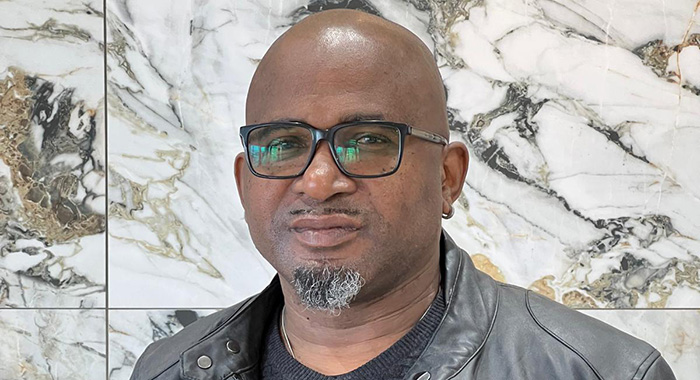

By Marlon Bute
To take the measure of Ralph Gonsalves in opposition, we must consider how he acquired power and what he came to make of it. His present demeanour belongs to that longer history. After almost 25 years as prime minister and the electorate’s utter rejection of the ULP, he should have resigned as leader of the opposition and made way for new leadership. That is what a 14–1 defeat means. A party brought to such a historic low requires renewal, and that need existed long before the electorate delivered its verdict.
Gonsalves failed not only to encourage and nurture a new generation of leaders, but also to give way. In my assessment, he remained the greatest obstacle to the growth of leadership within his own party. What he appears unwilling to understand is that the rejection extends to him personally.
He is immensely unpopular, and the man who presided over the party’s decline cannot reasonably expect to be entrusted with rebuilding it. Yet he persists, with an urgency that increasingly suggests desperation to recover his standing and rescue his legacy.
But anyone who believes his government’s defeat has made him politically irrelevant is making a mistake. He remains capable of weakening the government, particularly if it allows him the room to do so. His task becomes easier if the NDP does not give the people the accountability they thirst for: a full reckoning of his years in power.

To understand what he is doing now, we must look beyond the possibility of his becoming prime minister again, because that will not happen, and he knows it. His mission is to make the path less arduous for someone else by delivering body blows to the NDP, diminishing its credibility and weakening the confidence the electorate placed in it. In my assessment, that person has not yet entered our national imagination. It will not be anyone from the current crop rejected by the electorate.
And while Gonsalves works to deliver those blows, he is incapable of delivering the knockout punch himself. Yet the NDP has not matched his political activism with its own. That avoidance may not be fatal now, but it could prove deleterious, allowing his attacks to weaken public confidence while the government leaves unanswered both his account of the present and the demand for a reckoning with his past.
In “Toward an Understanding of the Gonsalves Years”, I traced the route that brought him to office. His attempts in 1979 with the United People’s Movement, and in 1984 and 1989 with the Movement for National Unity, ended in electoral defeat. His parliamentary breakthrough came through the 1994 accommodation between the MNU and the St. Vincent Labour Party, then led by Stanley “Stalky” John.
Vincent Beache moved from North Central Windward to South Windward, opening the constituency through which Gonsalves entered Parliament. The parties subsequently merged, with Beache leading the ULP and Gonsalves serving as deputy.
By the time Gonsalves assumed the party leadership after the 1998 election, the ULP had already secured seven seats and a majority of the popular vote under Beache. He inherited an organisation within reach of government. His later ascent to the prime ministership drew on that foundation and on the confrontational politics that helped bring forward the next election. The Labour tradition, Beache’s standing, and the negotiated opening are essential to understanding his rise.
This is the basis of my argument in “The Ignominy of Defeat” that he was never organically popular in the way several other Vincentian politicians were. That assessment does not diminish his political skill. His ability to turn an accommodation into parliamentary entry, and an inherited organisation into a vehicle for sustained authority, helps explain his formidability. He persisted through rejection, recognised opportunities, and positioned himself to benefit from them. Organic popularity and political dominance are not the same thing.
The distinction matters when measuring the man now. His intellect, discipline and appetite for political combat survived the loss of government. In my assessment, he spent his years in office consolidating authority around himself, until the party’s identity became inseparable from his own. That makes defeat intensely personal. The organisation he inherited must now be rescued from the consequences of the leadership he imposed upon it.
Gonsalves, therefore, has a point to prove. Saving the party becomes, in my reading, an exercise in self-preservation. If he can help prepare the ground for its eventual recovery, he can claim a part in that recovery and soften the judgement on his own leadership.
He is not indispensable, nor has he ever been. But having occupied the centre for so long, he appears unable to accept a future in which the party must grow beyond him. That is his predicament: its renewal requires the space he has been unwilling to surrender, while his legacy depends, in part, on what becomes of it after him.
This connects with “The Measure of Change” and “The Measure of Power”. The people voted for a different philosophy of governance, but the government must deliver that mandate through much of the machinery inherited from the administration they rejected.
Within that machinery remain assets of Gonsalves: relationships, loyalties, and office holders appointed on his recommendation or under his administration’s direction. While he attacks from outside, the NDP must deliver through institutions still shaped by his years in power.
He speaks as though he had not governed for almost 25 years. The debt burden, weakened credit standing, severe violent crime, and deteriorating infrastructure are discussed as though he recently arrived to discover them. These conditions form part of his administration’s inheritance. In my view, they reflect failures of management and priorities for which he cannot deny responsibility. The NDP must address them, but that obligation does not erase how they developed.
Gonsalves understands that repetition can blur this distinction. There is an old saying that a lie can travel halfway around the world while the truth is putting on its shoes. Joseph Goebbels, Nazi Germany’s propaganda minister, provided a sinister demonstration of propaganda’s power, saturating public life with the regime’s messages through the press, radio, film, and other channels. The lesson is how relentlessly reinforced messaging can shape belief and displace scrutiny.
People might begin to believe that the NDP caused problems it inherited. Eventually, who caused them might not even matter politically. Someone awaiting medical attention or travelling over roads filled with potholes wants relief from those governing now. Gonsalves can turn that frustration into an indictment of the present administration while his stewardship recedes from view.
An emerging tragedy is the government’s failure so far to demonstrate sufficient urgency in pursuing the claims of corruption and poor accountability that helped produce the demand for change. Those claims require investigation, disclosure of what the evidence establishes, and prosecution where warranted. While there is inaction, or insufficient visible action, the ULP is politically prosecuting the NDP for the ULP’s own failures.
As the first anniversary of the victory the people delivered to the NDP approaches, their clamour grows impatient. The reckoning has yet to arrive, while many institutions through which it must proceed remain under inherited leadership. The institutions are creatures of our jurisprudence and democracy; many occupying them are products of the political era against which the electorate revolted.
The eventual beneficiary will not be Camillo Gonsalves, Saboto Caesar, or anyone else from the old guard. In my assessment, none within the present leadership, including former candidates, offers the renewal needed. I envisage someone outside our present calculations who could inherit the organisation while bringing credibility acquired beyond the party.
That is why I refer to Dr. Kenny Anthony, the respected legal academic who lectured at UWI’s Cave Hill Campus and headed its Teaching Department of Law. After serving as CARICOM’s General Counsel, he became St. Lucia Labour Party leader in 1996, led it to a 16–1 victory on May 23, 1997, and became prime minister the next day. Someone could emerge here with comparable appeal, inheriting ground prepared by Gonsalves’s attacks.
The greatest thing people appear thirsty for is accountability. Jobs matter, but the demand I hear most insistently is for exposure of the Gonsalves years: how their money was spent, who benefited, and what obligations were incurred in their name. This departure from the usual bread-and-butter emphasis shows the depth of their rejection and the expectation that change would bring answers.
By not moving decisively on that demand, the NDP may be unwittingly making Gonsalves’ work of opposition easier. Every unanswered allegation and unexplained delay gives him room to redirect attention from his stewardship to theirs. He can then use the government’s own shortcomings to prepare the ground for the ULP’s recovery. The responsibility for that project remains his; the government must recognise how its conduct can assist him.
People have lost their appetite for being taken for granted. Those at the centre of the NDP, including its most ardent supporters, must not imagine that the habits, excuses, and unquestioning loyalties that sustained the ULP will sustain them.
People expect real change, and the clearest demonstration would be the reckoning they demand. Otherwise, voters could wake one day, look from left to right and from right to left, and find themselves unable to tell the difference. That is the tragedy which must be avoided.
In Part II, I turn to Prime Minister Dr. Godwin Friday. Having examined the purpose of the man seeking to weaken his government, I will examine the leadership of the man entrusted with delivering change, and how courage, judgement, integrity, and independence find expression in accountability, institutional renewal, and the exercise of power.
The opinions presented in this content belong to the author and may not necessarily reflect the perspectives or editorial stance of iWitness News. Opinion pieces can be submitted to [email protected].