



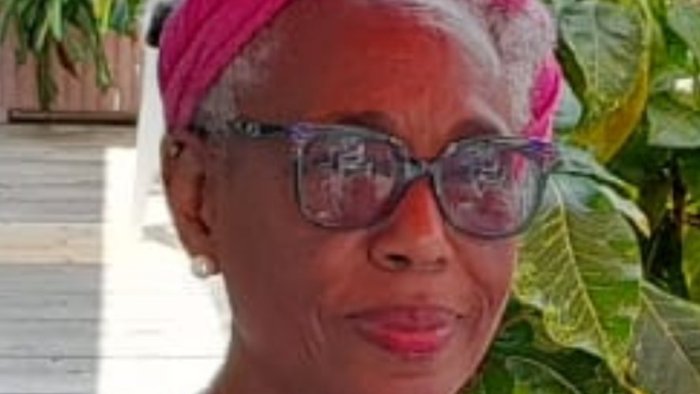

A member of the team translating the New Testament into Vincentian dialect is urging nationals to move beyond a “trauma victim” mentality and embrace their natural accents and language, instead of trying to sound like others.
Frances Clarke made the remarks in a Nov. 17 interview with iWitness News while discussing the Wycliffe Vincy Telling Everyone About Mission project—an initiative by a seven-member local team producing an oral translation of the New Testament in the Vincentian vernacular.
Clarke was addressing skepticism she encountered during an earlier project in which the Association of Evangelical Churches of St. Vincent, alongside the Summer Institute of Linguistics (SIL), produced a set of Bible stories in Vincentian dialect covering an overview of the Bible from Creation into the New Testament—an effort some individuals felt was downgrading scripture.
“Because, as far as I’m concerned, this is my viewpoint, anybody who thinks like that is trapped in a colonialist mindset because there is nothing broken – Language is simply an agreed way of communicating between a group of persons,” she said.
She said there is “nothing better or worse than any particular language,” adding that there are creoles all over the Earth.

“There is nothing better or worse than any particular language; there are creoles all over the Earth. Wherever there was a scenario where you have people who were speaking different languages, and they want to be able to have a code of their own, or they want to be able to have what they call a trade language, where all the bodies who doing any exchange of goods and services want to be able to talk to each other, then… they produce a language that they can all understand each other,” she said.
“And as far as I’m concerned, we were extremely clever and intelligent to have a language of our own, a code of our own, then, so to speak, where we could all communicate with each other when we have indigenous people who are speaking Carib, Arawak, Garifuna, English people who coming from Scotland, Ireland, England, folks who coming from different parts of Africa with different language groups—all of Hausa, Yoruba.”
She explained that the slave masters did not care which language group enslaved people belonged to.
“They were only interested in one thing: strength, so, by natural selection, if you survived the capture, the march to the coast, you ride in the bottom of the boat through the Atlantic, then clearly you are the strongest that survive and the most intelligent, obviously,” Clarke said.
Clarke said that there is a language in The Gambia called Aku, which is English-lexified, meaning it incorporates English words.
So the letters will be using English letters, Latin letters — like what we know as regular ABC — as distinct from Chinese characters, Hebrew characters. They don’t use the Latin letters; they use a different set of symbols to say different sounds,” she said.
“I find I could understand any of them, so I could listen to West African Creole and know exactly what they’re saying,” Clarke added.
She said there are some words used in St. Vincent that are unique to the island, such as “drogue” — also spelled phonetically as drog or drogg.
“I’ve never heard that word in my travels here and there. I’ve never heard any other group of people using that word, and that word describes exactly what you have to do: say you carrying blocks or wood or sand or whatever up these kinds of steep hills that we have here in St. Vincent, that’s really ‘droguing,’ that’s not really carrying,” Clarke said.
“So we have some special, unique things and we need to be at the place now where we love ourselves, because as Jesus said, ‘Love your neighbours and love yourself,’” Clarke added.
She explained that if people do not love themselves, they cannot love anybody else.
You have to appreciate, respect, and love yourself and all that you are — the best version of you. You want to be the best version of you so that you’re not telling yourself that there’s anything broken about you,” she said.
Clarke said when people tell themselves otherwise, they will forever have a victim mentality.
“And victims operate a certain way — less than — and it makes no sense you’re trying to twist up yourself to be somebody else. And the heartbreaking thing about it is trying to be somebody else — some of these somebody elses, they don’t even like us. They don’t even like Black people. Period. We are just seen as people to be used as workhorses and burden bearers. So why am I going to tell myself I must become like them, speak like them, and everything like them, and they don’t even like us?” Clarke said.
Clarke also criticised how quickly some nationals change their accents.
“You’re trying to talk in ‘dix.’ By the time you reach from here to the airport, you talking a different thing because that is who you admire. Get a grip. Come out of being a trauma victim and a defeated people,” she said.
She added that tourists are not looking for a watered-down version of themselves.
“They’re looking for the best version of you that they come to check out, so we need to cultivate what is unique and special about us,” Clarke said.