





When the New Democratic Party’s (NDP) Laverne Gibson-Velox and Shevern John were elected as MP for East St. George, and North Windward, respectively, in the Nov. 27, 2025, general election, they became the only women to be elected to Parliament for the first time since 2001.
In 2001, the Unity Labour Party’s (ULP) Rene Baptiste was elected MP for West Kingstown and she retained the seat in the 2005 general election before bowing out of electoral politics in 2010.
However, between 2005 and 2020, the electorate rejected every other woman who offered themselves as a first-time candidate in a general election, including Gibson-Velox and John in the 2020 polls.
In the 2025 election, Gibson Velox defeated the ULP’s Camillo Gonsalves, who was seeking a third five-year term as MP and had served as minister of finance in the last government.
John, on the other hand, defeated first-time candidate Grace Walters, the hospital administrator, who was bidding to keep North Windward in the ULP column for a sixth consecutive term.

Speaking on the election panel on state media on election night, Baptiste noted that, before the victories of Gibson-Velox and John, she was the last woman elected to Parliament.
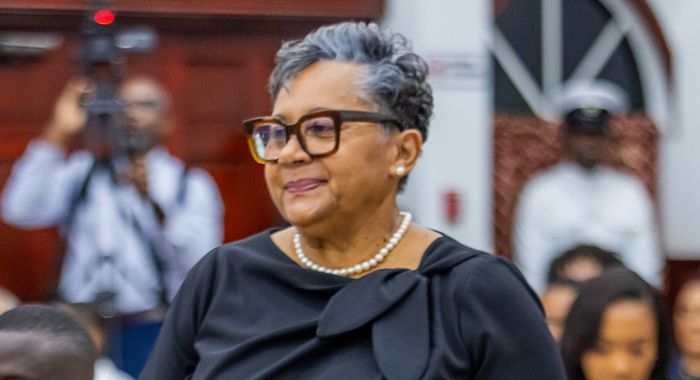
Gibson-Velox told iWitness News on Nov. 28 that Baptiste reminded her of this fact in a WhatsApp group for Girls High School’s Staff House alumnae.
“It feels great. The women can step forward now. We’re staying back too much. Time for us to take over,” Gibson-Velox told iWitness News.
Asked if she thought there was a glass ceiling affecting women in politics or whether they were just not stepping forward, the MP said, “I think they’re afraid.
“They’re afraid of the ridicule. And, you get a lot of bad raps when you’re in politics, because everybody feels they can just disrespect you and tell you anything.
“But you know what? I went through this like people’s opinion of me is not my business, so I just go past them, and I’m fine.”
The NDP won the general election by taking 14 of the 15 seats, with only the former prime minister, Ralph Gonsalves, surviving the “yellow washing”.
In defeating the finance minister, Gibson-Velox dethroned one of two heirs apparent to the ULP leadership and the prime ministership, even as Agriculture Minister Sabato Caesar also failed in his bid to secure a fourth term as MP for South Central Windward, falling to the NDP’s Israel Bruce.
“That was the plan,” she said of the impact of her victory on Camillo Gonsalves.
Gibson-Velox said her campaign was “a little clinical in that you had to do what he doesn’t do.
“You study him, you see what he doesn’t do, and you do it because you recognise that that is what the people wanted,” Gibson-Velox said of the incumbent.
“He had no relationship with the people in East St. George, none at all. I call him aloof and that he was. So, I tried to be one with the people. I met them in their own spaces. I sat on their steps, I sat by the roadside, I played dominoes, I did everything and just made them know that I’m no better than them.”
Gibson-Velox defeated Camillo Gonsalves in every polling station, unseating the politician who just 10 years earlier had secured the most votes in the election — 3,135 – 120 voted more than his father.
Gibson-Velox acknowledged that with the election behind her, the serious business of governance began.
“I don’t know where I’m going to go, but wherever I go, I make the most of it, and I’ll represent the constituency of East St. George like it’s never been represented before,” she said, referring to the ministerial portfolio she would be assigned.
When the Cabinet was sworn in on Dec. 3, 2025, Gibson-Velox was assigned the Ministry of the Family and Gender Affairs, Persons with Disabilities, and Labour.
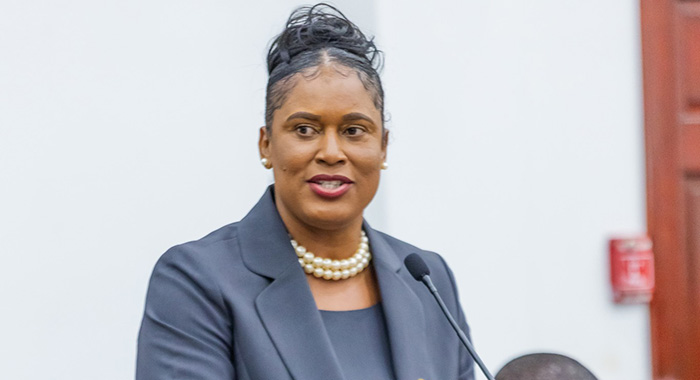
Meanwhile, John’s victory came five years after she decided to accept a senatorial appointment and a salary of just about EC$2,000 a month rather than returning to teaching, which would have paid her twice as much.
“Service to humanity is the best work of life, not salary,” she told iWitness News, outside Parliament, on Monday, as the national assembly met for the first time since the polls.
John left her graduate teacher job to contest the 2020 election.
If she had returned to her job, she would have earned about EC$5,400 monthly before tax and social security deductions.
However, as a senator, she earned about EC$3,500 monthly, before similar deductions.
In her inaugural address to Parliament as MP for North Windward, John congratulated the people of St. Vincent and the Grenadines for entrusting the NDP with the mandate to lead the country over the next five years.
“I’m proud because I’m reminded of when we were practically in exile, and now we have crossed over the Jordan, and that time has come, and we are all here, and we are here to serve the people of St. Vincent and the Grenadines.”
John was referring to the almost 25 years that the NDP spent in opposition — from March 2001 to November 2025.
“And I charge my colleagues, please do not look after yourself. Yes, your health, your wellness is important, but remember the people whom you are here to serve. It is not going to be easy, but it is easier in government than when you are in opposite, if you are in opposition,” John said.
She urged fellow MPs to always put God at the centre of everything.
“We are here so that we can ensure that the communities are well represented. Go back to the same people who you sat with, ensure that they see you,” she urged her fellow parliamentary representatives.
“Don’t say you are too busy for them. You will be busy. You will get busy. But remember, day by day, that those people saw hope in you, and that is why they overwhelmingly went to the polls to get us here on this side of this Parliament.”
Twenty-one women have failed in their bids to win a seat in Parliament since 2001.
They are as follows:
NDP: Advira Bennett (2005), Vynnette Frederick (2010), Kay Bacchus-Baptiste,
SVG Green Party: Elca Cain, Yvonne Simon, Carvenia Culzac, Aphine Simmons, and Sabrina Ells (2010); Adella Samuel, Marsha Caruth, Natasha Black (2015).
ULP: Michell Fife (2010), Deborah Charles (2015 & 2020), Mineva G. Glasgow (2020); Grace Walters, Keisal Peters, Chevonne Stewart (2025).
Democratic Republican Party: Anesia Baptiste, Karima Parris (2015).
Independent: Kenna Questelles and Doris Charles (2025).
It seems as though we have forgotten Ms. Girlyn Miguel who represented the Marriaqua constituency from 1998 to 2010 and also who once served as the first female Deputy Prime Minister.
Hi Cornelius Browne,
Thank you for your comment.
The article was about the women elected to parliament for the first time since 2001. Ms Miguel was first elected in 1998.
So where is Girlyn Miguel in all this?
HI Lisa Browne,
Thank you for your comment.
The article was about the women elected to parliament for the first time since 2001. Ms Miguel was first elected in 1998.
Deborah Charles (2025 & 2020), This should read (2015 & 2020)
And where does Girlyn Miguel fit into the mix? Strange she wasn’t mentioned at all.. Come on IWN
Hi Urlan Alexander,
Thank you for your comment.
The article was about the women elected to parliament for the first time since 2001. Ms Miguel was first elected in 1998.
And Ralph got rid of the only woman elected for the ULP because he was afraid of her. There were signs she would have challenged him.
IWN, your article missed a critical opportunity by not engaging with Girlyn Miguel. As it stands, the piece lacks substantive analysis. A focus on the broader landscape of women elected to office over the last 25 years would have been much more valuable than profiling just two individuals.