



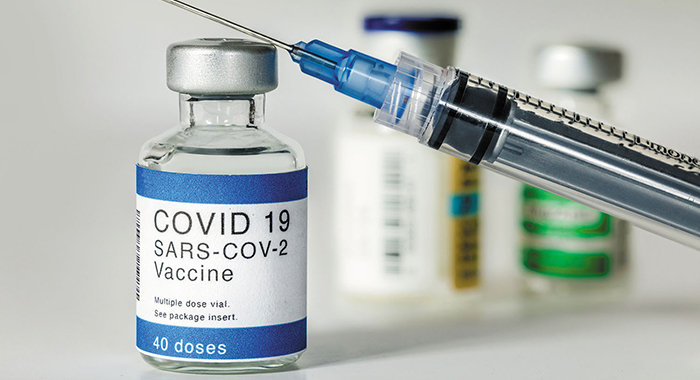

In St. Vincent and the Grenadines (SVG), the Health Services Subcommittee of the National Emergency Management Organisation (NEMO) was responsible for implementing the national COVID-19 response. This body, comprising a small group of public servants, advised Cabinet and legislators on the strategic, legislative and financial measures required to address the pandemic.
It is noteworthy that prior to the introduction of COVID-19 vaccines, SVG’s response was widely regarded as effective, with zero recorded deaths during that period. Following the introduction of vaccination and the subsequent mandate, however, the national response became increasingly contentious and socially divisive.
Supporters of the Health Services Subcommittee have justified the vaccine mandate by asserting that members were merely following instructions. However, in light of recent changes within the Cabinet and Parliament, it is reasonable to question why resistance to the new policy persists.
Reports suggesting that the return of certain public servants would be obstructed “as long as certain individuals remain in place” have caused concern, particularly as current actions appear to lend credibility to those claims.
Additionally, the mandate was enforced inconsistently. Some frontline workers were reportedly permitted to remain in their posts while unvaccinated or under-vaccinated. Also, the mandate remained firmly in place for health care workers only, even after the World Health Organization (WHO) declared the pandemic phase over. Such selective enforcement raises serious questions about fairness, proportionality and public health rationale.

The COVID-19 vaccine mandate has had far-reaching consequences for thousands of Vincentians, affecting them financially, psychologically, socially, physically and emotionally. These impacts have extended beyond individuals to the broader national fabric, with long-term consequences that SVG will continue to confront for years to come.
Public confidence in health leadership has been significantly eroded. This loss of trust threatens the effectiveness of future pandemic responses and complicates current efforts to address other pressing public health challenges. Restoring integrity, accountability and transparency within the Public Service is therefore essential to safeguarding national resilience.
Future public health emergencies demand responses that are evidence-based, proportionate and free from personal bias or institutional self-interest. SVG can and must do better. In this regard, we respectfully call upon the Minister of Health, Wellness and Energy to commission an independent review of the national COVID-19 response, with a view to identifying lessons learned and strengthening preparedness for future crises.
Accordingly, we seek clarity on the following matters:
1. Mortality data and public health assessment
In view of public observations regarding a possible increase in deaths among Vincentians, kindly advise whether official data indicate any change in mortality trends during the relevant period. If so, please indicate whether public health authorities have identified any associations between these deaths and COVID-19 vaccination. This assessment should also include Vincentians who travelled overseas for medical treatment and subsequently passed away.
2. Use of public funds for the COVID-19 response
Noting that substantial financial resources were committed to the national COVID-19 response, it would be appreciated if a detailed and itemised account of expenditures could be provided. This may include allocations for public education initiatives, vaccination programmes, and other related response measures.
3. Compensation and allowances
Please advise whether members of the COVID-19 Subcommittee, or other public officers engaged in the response, received any form of remuneration, allowances or reimbursements in connection with their duties, including participation in “fully-vaccinated” events and related activities.
4. Vaccine availability and uptake by officials
For the sake of transparency, kindly indicate whether any members of the COVID-19 Subcommittee or senior public officers elected to defer vaccination with AstraZeneca in anticipation of receiving alternative vaccines, such as Sputnik V, during the period when the AstraZeneca vaccine was being recommended to the general public.
5. Regional policy context of vaccine mandates
In light of the decision to implement a vaccine mandate, kindly clarify the considerations that informed this approach, particularly given that similar measures were not adopted by other CARICOM member states during the same period.
6. Alignment with international public health guidance
While acknowledging the guidance provided by CARPHA, PAHO, and the WHO, please advise how the government assessed and applied the WHO’s stated cautions regarding the use of vaccine mandates within its overall public health strategy.
7. AstraZeneca vaccine deployment
Please outline the factors that informed the decision to proceed with the rollout of the AstraZeneca vaccine at a time when certain European countries had temporarily suspended its use pending further safety reviews.
8. Vaccination status of healthcare personnel
For planning, transparency and workforce assessment purposes, please provide information on the number of frontline healthcare workers who continued in active service while unvaccinated or partially vaccinated during the relevant period.
Minister, we respectfully urge that these concerns not be dismissed. Vincentians voted in the hope of meaningful change and improved governance.
Deeply Concerned
The opinions presented in this content belong to the author and may not necessarily reflect the perspectives or editorial stance of iWitness News. Opinion pieces can be submitted to [email protected].
All reasonable questions….
I find it interesting that these questions are only being asked.
Why were they not asked of the administration who put themnin place?
How persons here are familiar with the cruise ship Diamond Princess, she had 3611 souls on board. This was January 2020 days before WHO changed the definition of pandemic and declared “a pandemic”. After it was reported that there was a Covid outbreak, no country would allow it to dock for at six weeks. When it was finally allowed to dock in an extremely remote port in Japan, the passengers were tested – less than 800 tested positive with unreliable “PCR” (famous for false positives – see what the inventer Mullis had to say about using it to test for viruses) 8 persons supposedly died from the “contagious and deadly” virus. The average age of those who died was 82, the average age on ship was 58. This was about selling poison. Bills Gates bragged about his best investment – $500m in profit then said in July 2023 that the jab didn’t work: “We need a new vaccine.” All this was known to the PM of SVG long his CMO mandate!