




The Royal St. Vincent and the Grenadines Police Force says that addressing school violence requires a comprehensive and coordinated national approach built on prevention, early intervention, protection, and enforcement.
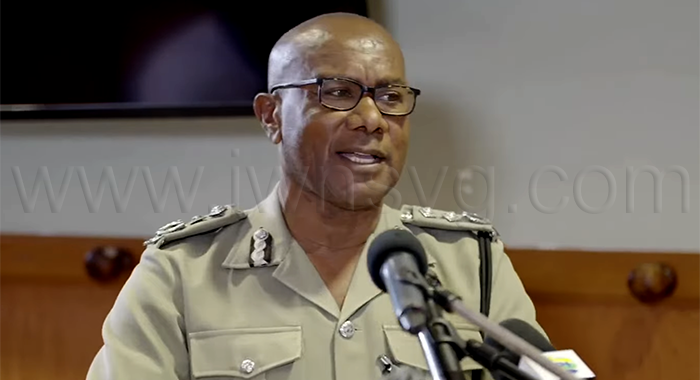
Deputy Commissioner of Police Frankie Joseph outlined the constabulary’s view of the problem as he addressed the National Stakeholders Consultation on School Violence Prevention in Kingstown on Tuesday.
“Schools must be places where young people feel safe, respected, and inspired to learn,” Joseph said.
“Unfortunately, we are seeing worrying trends that threaten this ideal,” he told the consultation, which was organised by the Ministry of National Security, in consultation with the Ministry of Education.
The deputy top cop said that across the region, and increasingly within SVG, issues such as bullying, gang influence, fights among students, cyber harassment, and the presence of weapons are affecting the school environment.

He said the vast majority of students in SVG are responsible and focused on their education, but some are “becoming vulnerable to negative peer pressure, gang recruitment, and violent behaviour.
“When violence enters our schools, it disrupts learning, traumatises students and teachers, and places the future of our young people at risk,” Joseph said, adding that this was the reason for the consultation.
“The purpose of this consultation is not simply to discuss the problem — but to develop practical solutions through partnership.”
He said prevention must always be our strongest weapon.
“We must strengthen programmes that guide our young people toward positive behaviour and responsible citizenship. Initiatives such as Police Youth Clubs, mentorship programmes, conflict resolution training, and anti-bullying education can help build resilience and leadership among our youth,” Joseph said.
The second element is early intervention, Joseph said, adding that in many cases, violence does not occur without warning signs.
“Changes in behaviour, repeated conflicts, bullying, and disengagement from school can all signal that a child needs help.
“Through stronger collaboration between teachers, parents, counsellors, social services, and law enforcement, we can identify and support at-risk students before problems escalate.”
As regards protection and school safety, Joseph said that students and teachers must feel safe within the school environment.
“This means strengthening school safety protocols, improving communication between schools and police, and addressing threats such as gang influence, drugs, or weapons near school premises.”
Joseph told the consultation that while the focus of the police force is on prevention and intervention, “we must also be clear that criminal behaviour — including assaults, weapon possession, and gang activity — will be addressed firmly in accordance with the law.
“Accountability is an important part of maintaining order and protecting the rights of all students.”
He, however, said that policing alone cannot solve this issue.
“Teachers shape minds; parents shape character; faith-based leaders shape values; community organisations create opportunity,” Joseh said, adding, “Together, we form the protective network that surrounds our young people.”
He expressed hope that, following the consultation, stakeholders will develop a national school safety framework and that there will be stronger coordination among the agencies responsible for youth development.
Joseph also called for expanded youth engagement programmes and clearer reporting and response mechanisms for school violence.
“Most importantly, we hope to create sustainable partnerships that support our young people before they enter the criminal justice system,” Joseph said.
He said that the children who are in the nation’s classrooms today will become the leaders, professionals, and citizens of tomorrow.
“If we fail to guide them now, we risk losing them to cycles of violence and crime.
“But if we work together — with purpose, compassion, and commitment — we can create schools that are not only safe, but centres of discipline, opportunity, and hope,” he said.