




The University of the West Indies Seismic Research Centre (UWI-SRC) says residents of the Caribbean should not be alarmed, but should remain prepared in the region’s active seismic zone.
UWI-SRC said on Friday that the magnitude 7.2 and 7.5 earthquakes, 39 seconds apart, in Venezuela on Wednesday, have disrupted the entire Caribbean Plate due to the significant amount of energy released.
The earthquakes were the country’s strongest recorded in more than 125 years.
On Friday, the death toll was at least 235 and was expected to rise, the United Nations said.
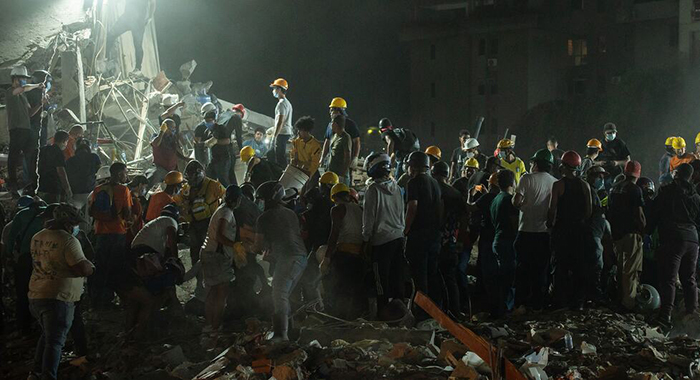
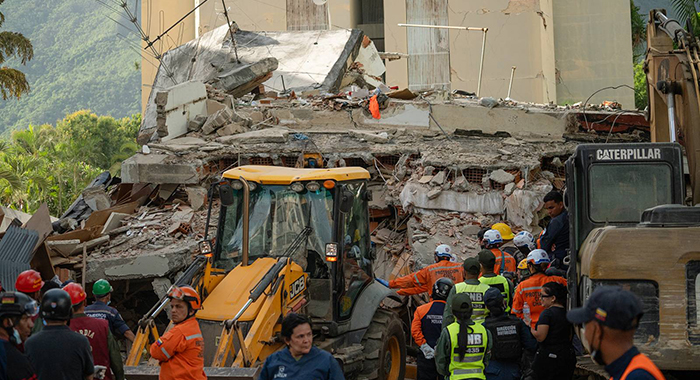
At least 250 buildings have been damaged or destroyed, particularly in La Guaira state, some 30km north of Caracas, the worst-affected area.

Critical infrastructure remained severely disrupted, including electricity, water, telecommunications and transport, with Maiquetía International Airport still closed due to damage, hospitals operating under mass casualty protocols and shelters established for displaced families.
The UWI-SRC, which is responsible for monitoring earthquakes, volcanoes and tsunamis in the English-speaking Eastern Caribbean, noted public concern over the earthquakes in Venezuela and a separate earthquake between Trinidad and Tobago and Grenada.
It said it was seeing a small increase in the number of regional earthquakes at present in response to this.
Erouscilla P. Joseph, director of the UWI-SRC, said that while all earthquakes occur within the broader Caribbean-South American plate boundary zone, the events resulted from different tectonic processes.
“At this time, there is no evidence that the earthquakes are directly related to the same fault system,” Joseph said.
“While all earthquakes occur within the broader Caribbean-South American plate boundary zone, the events occurred as a result of different tectonic processes. Earthquakes of this size can influence stress in the surrounding region, but it is generally difficult to establish a direct cause-and-effect relationship between individual events.”
Joseph noted that a magnitude 7.5 earthquake is considered a major earthquake and is significant on a regional scale.
However, she explained that earthquakes of this size occur somewhere in the world almost every year.
While the Venezuela event is among the larger earthquakes recorded globally this year, it is not among the largest earthquakes recorded worldwide over the past decade.
What makes the event particularly noteworthy, she said, is its occurrence near populated areas and the fact that two large earthquakes occurred within less than a minute of each other.
“It is relatively uncommon but not unprecedented,” Joseph said.
“Large earthquakes can occur as complex ruptures involving multiple fault segments or closely spaced seismic events. The occurrence of a magnitude 7.2 earthquake followed approximately 39 seconds later by a magnitude 7.5 earthquake suggests a complex rupture process involving significant stress release over a short period.”
Preliminary analyses indicate that the earthquakes occurred within the active plate boundary zone between the Caribbean and South American tectonic plates.
The region contains several major fault systems, including the El Pilar-San Sebastián fault system and associated offshore structures. Detailed studies are ongoing to determine the exact fault segment involved.
On whether citizens in Trinidad and Tobago should be concerned about further seismic activity closer to home, Joseph said that aftershocks are expected in the vicinity of the earthquakes in Venezuela, and some may be felt in nearby areas.
However, she said there is currently no evidence suggesting an increased likelihood of a major earthquake occurring in Trinidad and Tobago as a direct result of these events.
“The public should not be alarmed, but they should be prepared,” Joseph said.
“Trinidad and Tobago, like Venezuela and many other Caribbean countries, is located within an active seismic region where earthquakes can occur. Events such as this remind us of the importance of preparedness.”
The tsunami threat issued after the earthquakes was later cancelled after tsunami specialists evaluated seismic data and sea-level observations from regional monitoring stations and deep-ocean tsunami detection systems.
These observations showed no evidence of a significant tsunami being generated, and the forecast wave heights remained very small.
Researchers are now examining the earthquake source characteristics, fault rupture processes, aftershock distributions, ground-shaking patterns, and any evidence of seafloor displacement.
Data from seismic stations, GPS networks and sea-level monitoring systems are also being reviewed to better understand the event and its implications for regional seismic hazard assessments.
Joseph said that if an earthquake of similar magnitude occurred near Trinidad, the level of impact would depend on several factors, including the earthquake’s depth, distance from populated areas, local ground conditions and the vulnerability of buildings and infrastructure.
Older buildings that were not designed with modern seismic considerations may be more vulnerable than newer structures. A strong nearby earthquake could cause damage to buildings, utilities, transportation networks and other critical infrastructure.
Continued efforts to improve building practices and preparedness remain important.
In response to videos showing people running outside during strong shaking, Joseph said strong earthquakes can be frightening and people’s instinct is often to run.
However, moving during intense shaking can increase the risk of injury from falling debris, broken glass or collapsing building elements.
The recommended action is to Drop, Cover and Hold On until the shaking stops. Once it is safe to do so, people should calmly evacuate, if necessary, and move to a safe open area away from damaged structures and other hazards.
Members of the public are encouraged to know safe actions during earthquakes, identify safe places in their homes and workplaces, secure heavy furniture and appliances, prepare emergency supplies and discuss family emergency plans.
“It is natural to feel concerned when a major earthquake affects a neighbouring country, particularly one with which we share such close ties,” Joseph said.
“The SRC remains committed to monitoring seismic activity across the region and providing timely, reliable information so that individuals, communities and governments can make informed decisions.”
She added, “This earthquake is a reminder that while we cannot prevent earthquakes, we can reduce their impacts through preparedness. The goal is not to be fearful, but to be ready.”
The UWI-SRC continuously monitors seismic activity across the Eastern Caribbean and provides real-time earthquake information through its website and social media platforms, including Facebook, Instagram and X, formerly Twitter.
UWI-SRC is encouraging the public to stay informed through these official channels and to use events like this as an opportunity to review their earthquake preparedness plans.