



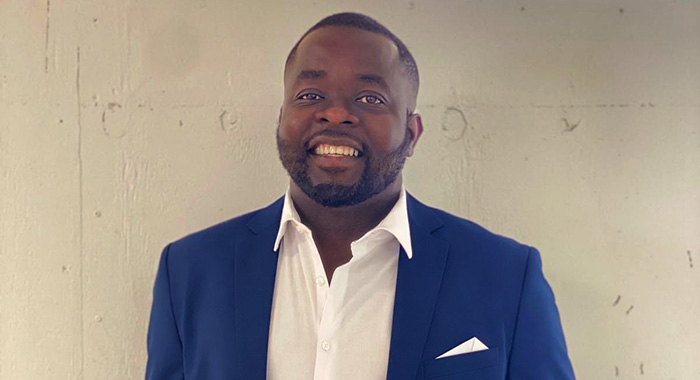

By Kenrick Quashie
Ever so often, we speak about the divisions that exist in SVG from the lens of partisan politics. I can still recall some of the salient points I made in the Lions Club South Public Speaking competition in 2002 on the topic “Is Partisan Politics negatively affecting the development of SVG?”
We are quick to identify red and yellow, government and opposition, loyalty and resistance when discussions about our nation’s progress are at their peak. It is probably the most visible fault line in our society, and perhaps the easiest one to blame when progress stalls.
However, if we are honest with ourselves, politics is not the only place where division lives. There is another force that is quieter and more insidious, that shapes decisions, blocks opportunities and quietly undermines national development and individual growth. We call it “bad mind”!
It is a phrase we use casually, sometimes jokingly, but its impact is anything but light. Bad mind shows up when someone’s progress is met with suspicion instead of support. It appears when ideas are dismissed not because they lack merit, but because of who brought them forward. It thrives when we choose to pull down rather than build up, when we guard access instead of open doors.

In our offices, it can look like resistance to innovation simply because it did not originate within a familiar circle. Yet again, it can manifest itself as favouritism, quiet gatekeeping or the reluctance to mentor someone perceived as a future competitor. In our communities, it becomes the whispered doubts that discourage risk-taking and ambition.
These are not partisan behaviours. In fact, they cut across political lines, social classes and professional spaces. And that is precisely why they are so difficult to confront. We cannot vote them out. We cannot legislate them away. They require something far more uncomfortable. They require a difficult act of self-examination.
The truth is, no country our size can afford the luxury of wasted potential. Every entrepreneur discouraged, every young professional sidelined, every good idea quietly buried represents a cost we all pay. We feel it in our nation’s slow growth, in missed opportunities and in the lingering sense that we are capable of far more than we are achieving.
If we are serious about development, then our conversations must move beyond politics. We must be willing to ask harder questions about culture, mindset and about the unwritten rules that govern access and advancement.
Are we rewarding competence or familiarity? Are we creating space for new voices or protecting established ones? Are we building systems that encourage collaboration or are they steeped in competition that is rooted in insecurity? These are not easy questions, but they are necessary ones.
The responsibility does not rest solely with government or private sector leaders. It belongs to all of us. It is reflected in how we respond to someone else’s success, how we treat those trying to break into established spaces, and whether we choose to mentor or marginalise.
Progress, especially in a small island state, demands a level of collective maturity. We ought to recognise that another person’s advancement is not our loss. In fact, it is a gain. Indeed, a stronger business sector, a more innovative workforce and a culture that rewards initiative will benefit everyone.
We often say that we want development. We speak about growth, investment and opportunity. But those outcomes do not exist in isolation from the attitudes that shape our daily decisions.
If we continue to operate through lenses of suspicion, envy and exclusion, we will continue to limit ourselves, regardless of which party is in power.
It is time to widen the conversation. Politics matters, but it is not the only barrier to progress. The quieter biases, the everyday acts of bad mind, are just as powerful and often more damaging because they go unchecked.
National development is not only about policy. It is about people. And until we address the mindset that quietly resists progress, we will continue to stand in our own way.
The opinions presented in this content belong to the author and may not necessarily reflect the perspectives or editorial stance of iWitness News. Opinion pieces can be submitted to [email protected].