



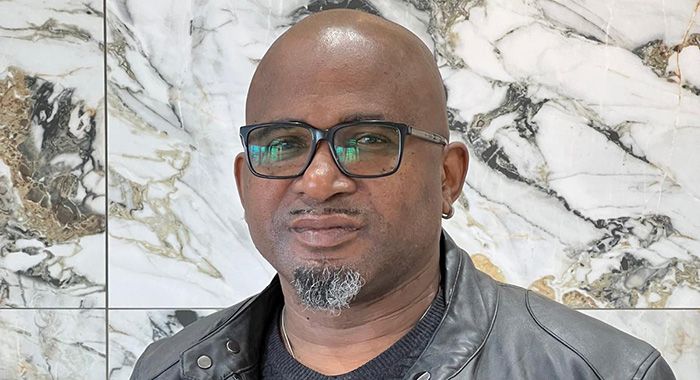

By Marlon Bute
When I was a young boy, I would sit and listen to the stories my father told me. I lapped them up, especially the Anansi stories. The animals talked, schemed, quarrelled, and behaved very much like the people around us. We laughed, but long after the laughter, those memories remained.
One of my favourites was the story of the horned animals’ party aboard a ship. Goat, sheep, cattle, and the others with horns were preparing for one big festive occasion. There would be plenty to drink and, more importantly, plenty to eat. Dog had no horns, but dog, being dog, and as greedy as dogs could be, had no intention of missing that food. He made himself a pair of horns out of cardboard and mud, fixed them to his head and boarded the boat as if he were king of the horned animals.
As the ship was about to sail, Agouti spotted Dog among the horned animals. My father placed Agouti on the shore at Lowmans Bay, though some say it was Chateaubelair Bay. Wherever he stood, that feisty little animal knew what he had seen. He shouted across the water:
“Traitor on board! Examine the horns!”

Then he shouted again:
“Traitor on board! Examine the horns!”
Bull, the sturdiest and fiercest animal aboard, began to inspect the passengers. He touched one set of horns, then another, until he came to Dog. The cardboard and mud gave Dog away. Bull backed up and butted him repeatedly. Dog yelped and leapt from the boat.
Hurt and humiliated, Dog decided to teach Agouti a lesson. He chased him from Lowmans Hill to Chateaubelair and from Chateaubelair back to Lowmans Hill. But Agouti was quick. Dog managed to catch only his tail, which he bit clean off. And that, my father told me, is why agoutis have short tails to this day.
Now, as Ghana and others advance the sacred struggle for reparations, I find myself thinking about Agouti’s cry. Examine the horns.
The Government of Ghana invited Dr. Ralph Gonsalves to serve on its Global Advisory Council on Reparatory Justice. I ask President John Dramani Mahama and his government to examine Gonsalves’s record. I ask all who lead this struggle to look closely at the words and convictions of every person they place at its centre.
This cause is pursued on behalf of us, the children of the formerly enslaved. It honours our ancestors, whose lives, labour, and freedom were taken. We owe them to be vigilant in deciding who speaks for them. We must satisfy ourselves that those who take up this work believe in it and have not come to it for political expediency or because reparations have become a fashionable cause.
On Oct. 27, 2004, Gonsalves spoke as prime minister at our Independence celebrations. He acknowledged the genocide of the indigenous peoples of St. Vincent and the Grenadines and the cruel enslavement of Africans.
But then he sought to explain the conduct of the colonial rulers. He said they were not “intrinsically evil”. Rather, he said, “expansionist mercantile capitalism and economic imperialism” had transformed people he described as nominally Christian.
What am I to make of that? In my view, he shifted attention from the choices and responsibility of those who committed and profited from these wrongs to the economic forces that changed them. He acknowledged the injury but softened his account of those who inflicted it.
To the descendants of the people they enslaved, that distinction is no small matter. Mercantilism did not hold the whip by itself. People made decisions, passed laws, owned human beings, and defended a system from which they benefited.
Gonsalves went further. Speaking in the name of “we, formerly subject peoples,” he said that we did not demand reparations. He called instead for an admission of wrongdoing, partnership, fairness, and preferential treatment. Who authorised him to set aside a demand that the descendants of the enslaved had every right to make?
He was speaking from the highest public office in our country, at an event marking our freedom. He was also a man of Portuguese descent speaking for a majority Black nation. I do not claim that any ancestor of his enslaved anyone. However, he had no personal claim to the experience of Africans brought here in chains. Yet he used the word we to tell former colonial rulers what the victims and their descendants did not want. In my view, that use of his office and of a national occasion served to assuage the consciences of those from whom an account and repair were due.
In the same address, he said colonialism was not entirely marked by underdevelopment, evil, violence, and subjugation. He credited it with “the majesty of the English language”, a sound public service, a quality judicial system, broadly democratic government and rights protected by law. He presented these as inheritances on which we should build.
I do not deny that we use those institutions today. I question whom we thank for them, and what that gratitude asks us to overlook. We did not need subjugation to learn a language. We did not need colonial masters to understand justice. Our people have had to struggle to make inherited institutions serve us. That struggle belongs in the story too. To list the supposed benefits of colonialism immediately after describing genocide and enslavement diminished, in my view, the injury he had just acknowledged.
Gonsalves must tell us what he believes now. Does he still stand by his claim that we did not demand reparations? Does he still believe colonialism deserves the credit he gave it? If he has changed his mind, what changed it? He must retract the statements he no longer believes and apologise for using his public office and our Independence celebrations to speak in that way on behalf of the descendants of the enslaved. An international appointment cannot answer those questions for him.
Mia Mottley, speaking at the United Nations General Assembly, on Friday, said that the mindset which established, justified and sustained slavery is the same mindset that sustains inequities in today’s international power structures.
I would bring her observation home. The mindset that facilitated the destruction of our Indigenous peoples also facilitated African enslavement and colonial rule. It allowed one people to seize another people’s land and labour, deny their humanity, and then presume to decide what was good for them.
There are other words from Gonsalves that trouble me. I remember him telling this majority Black nation that Portuguese people knew how to spend money. I understood that remark, made in the context of his political contest with Arnhim Eustace, as an appeal to trust him, a man of Portuguese descent, over a Vincentian of African descent.
On another occasion, Gonsalves told Vincentians that they should not replace him with another prime minister unless that person looked like Jesus. His principal opponent was Eustace, a Black man. Generations of Vincentians had been shown a white European image of Jesus in churches, schools and homes. What were voters being invited to picture when Gonsalves asked them to compare a prospective replacement with Jesus?
Jesus came from a part of the world where, given the people and period in which he lived, he was far more likely to have been brown-skinned, perhaps dark-skinned, than to have resembled that pale European image.
The accounts of his life do not give us a portrait from which to determine his exact complexion. They give us no reason to assume he looked like the white figure familiar from colonial Christianity. He may well have looked closer to Eustace than to the white image of Jesus that Gonsalves’ remark called to mind.
We cannot say with certainty whether Eustace’s ancestors came from Ghana or another part of Africa. Most of us came from West Africa. Slavery deprived many families of the names, places and records that would allow them to know. That loss is itself part of the wrong for which we seek repair.
The pursuit of reparations is best served, in my view, by an Afrocentric mindset. I mean a willingness to place Africa and African people at the centre of their own history, and to listen seriously to descendants of the enslaved. Africa is the birthplace of humankind and the cradle of civilisation.
From Africa came our earliest human ancestors; in Africa arose some of the world’s earliest civilisations, including those of the Nile Valley. Ancient Egypt and Nubia belong to African history. African people did not acquire intelligence, dignity or the capacity to build societies when Europeans arrived. Our history did not begin in a slave ship, and it did not begin with what colonial rulers claimed to have given us.
Gonsalves was born and raised in the Caribbean. He pursued advanced studies in Africa, including time at Makerere University in Uganda. He earned a doctorate, taught at the University of the West Indies, and wrote about Africa and the Caribbean. His education and experience gave him every opportunity to appreciate Africa’s place in the origins of humankind and civilisation. So why the eurocentrism?
Did Gonsalves understand that Africa was where man originated and from where the first civilisations appeared when he spoke in 2004? Does he understand it now? He must answer for himself.
A person’s ancestry does not disqualify him from supporting reparations. My concern is with Gonsalves’s words, the authority with which he spoke them, and whether he has honestly reckoned with them.
There is nothing personal in my challenge. I have a duty to be loyal to my ancestors. For years I have argued that he cannot lead a reparations struggle for me, and I know I am not alone among descendants of the formerly enslaved.
Perhaps those who invited him did not know the full record of what he had said at home. Vincentian politics may be local, and his 2004 address may never have reached them. I do not claim to know what they considered. I ask President Mahama and the Government of Ghana to read that address now, put these questions to Gonsalves, and hear his answers before treating his role as settled.
The struggle for reparations asks former colonial powers to face the truth about what they did. Those who speak in that struggle must be prepared to face the truth about their own words. My father’s story made me laugh as a boy, but I hear its lesson differently now. Agouti saw something that needed checking and called out before the ship sailed. We owe our Ancestors that same vigilance.
Examine the horns.
The opinions presented in this content belong to the author and may not necessarily reflect the perspectives or editorial stance of iWitness News. Opinion pieces can be submitted to [email protected].