



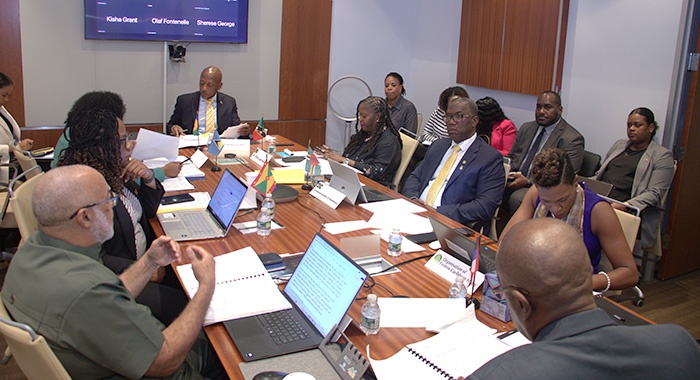

The 10th Meeting of the Council of Ministers: Foreign Affairs (COM:FA) of the Organisation of Eastern Caribbean States (OECS) focused on stronger collective diplomacy, deeper regional coordination, and a more strategically focused OECS response to a rapidly changing global environment.
The meeting was held in New York on Sept. 20, on the margins of the 81st Session of the United Nations General Assembly (UNGA).
Opening the meeting, OECS Director General Didacus Jules emphasised the importance of sustained coordination among member states and ensuring that the region’s diplomatic institutions remain responsive to global change.
“Our region’s strength has always been our capacity to act together, and this meeting reaffirms that our diplomatic architecture must keep pace with a world that is changing quickly around us,” Jules said.
The 10th COM:FA was hosted by the Permanent Mission of Antigua and Barbuda to the United Nations, and it also marked the formal transition of the Council’s Chairmanship from Dwight Fitzgerald Bramble of St. Vincent and the Grenadines.

E.P. Chet Greene of Antigua and Barbuda now serves as chairman, as OECS member states navigate a global landscape marked by shifting geopolitical relationships, heightened pressures on small states and growing demands for coordinated action on trade, finance, connectivity, climate, and international diplomacy.
In handing over the chairmanship, Bramble reflected on the gravity of the international environment now facing OECS member states.
“The minister’s assumption of the chairmanship comes at a moment when the established certainties of the international system are increasingly being tested, reinforcing the need for a more cohesive and strategically aligned OECS,” Bramble said.
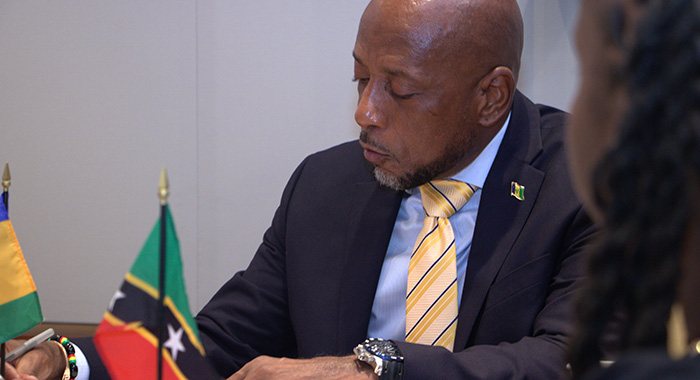
Accepting the chairmanship, Greene highlighted the particular vulnerabilities of small states and called for stronger unity, strategic coordination, and collective action across the sub-region.
“We need stronger air links among our islands, regular sea transport for people and cargo, and new connections to nearby markets in Central and South America. Governments can create the policy framework, but carriers, ports, exporters, importers, financial institutions and investors must help design, finance and manage viable services,” Greene said.
He also called for OECS foreign policy to serve as a more deliberate instrument for advancing the economic and developmental interests of Member States.
He proposed a focused set of core objectives to be pursued intensively, including:
- safeguarding the OECS Economic Union
- securing fair treatment for Citizenship by Investment and financial services programmes
- expanding access to climate finance
- strengthening reliable air and maritime connectivity
- defending multilateralism and international law
Ministers agreed to the new chair’s proposal to strengthen the diplomatic implementation capacity of the OECS Commission, recognising that closer coordination and stronger execution would enable Member States to project greater collective diplomatic weight internationally.
Against this backdrop, the ministers held wide-ranging discussions on strategic issues affecting the OECS region, including the diversification of the OECS’s external partnerships, trade and maritime connectivity, regional developments with humanitarian and diplomatic implications, and the continued strengthening of the OECS’s shared diplomatic and institutional architecture.
They also reviewed progress on ongoing regional programmes and reaffirmed their commitment to close and continued consultation in the period ahead.
As part of efforts to sharpen the region’s collective strategic response, ministers agreed to convene a dedicated foreign ministers’ retreat before the end of the year. The retreat will provide an opportunity for deeper consideration of the OECS’s strategic positioning and priorities in a rapidly shifting global order.
The meeting brought together ministers, senior government officials, and diplomatic representatives from across the OECS Membership, reflecting broad high-level participation from member states.
The meeting reaffirmed the OECS’s commitment to a unified, forward-looking foreign policy agenda and to strengthening the region’s collective capacity to advance and protect the interests of its member states in an increasingly complex international environment, a press release said.