



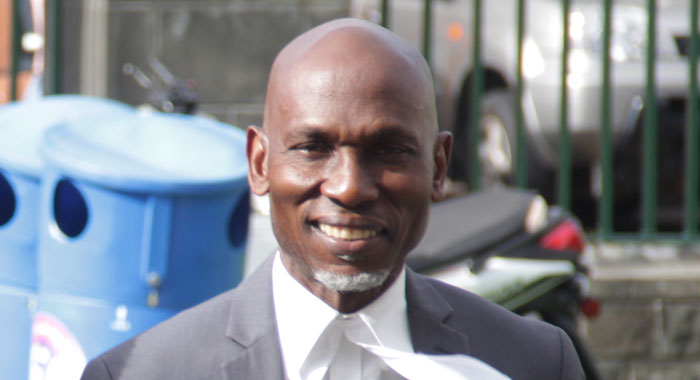

By *Jomo Sanga Thomas
(“Plain Talk” Aug. 8, 2025)
“Hide nothing from the people. Tell no lies. Expose lies whenever they are told. Mask no difficulties, mistakes or failures and most of all claim no easy victories.’ — Amilcar Cabral, the revolutionary leader from Guennea Bissau assassinated by French agents in 1973.
In August 1834, when the Emancipation Proclamation was issued, there were an estimated 22,786 enslaved Africans in St. Vincent. Some 757 compensation claims were made, and 759,300 pounds were paid to the colonial enslavers. Our ancestors, whose toil created millions of pounds, did not get a single cent. A clear reminder that freedom ain’t free. Because of the heroic resistance of our ancestors, St. Vincent and the Grenadines experienced the shortest period of slavery (1797 to 1838) in the English-speaking Caribbean.
Scholars have estimated that, in addition to the 20 million pounds in compensation to the slave-holding class for the freedom granted to the enslaved, those four years of free labour, termed apprenticeship (1834 to 1838) generated another 27 million pounds across the region.

Our people must understand as well that the brutal enslavement of our forebears did not end with emancipation. The British continued their colonial conquest, domination and exploitation of our island for a further 141 years until independence in 1979. During this sordid period, our people were taught to hate themselves, to reject their Africanness and to look up to Europeans for notions of ethics and morals, beauty and culture.
It is this history, this trail of torture and tears, this story of resilience and accomplishment against the odds that Emancipation Day celebrations are supposed to memorialise and commemorate. It is the moment we take stock of from whence we came and commit to remembering not to forget.
And so, it has been for many years with marches and demonstrations, lectures and cultural events with drumming and dancing, poetry and consciousness-raising speeches. All of this is slowly receding now. Glitz and glamour, jive and laughter have taken centre stage. Reflection and remembrance have given way to power lust and wastage of scarce national resources.
The only meaningful Emancipation celebration in our country this year was the annual July 31 to Aug.1 Wake at Diamond, Daniel Cummings’ Emancipation Day celebration on Aug. 1 at Kingstown and another small event in Georgetown. All of these events featured lectures on slavery, history, emancipation and reparations.
Contrast those consciousness-raising emancipation events with Gonsalves’ back-of-the-envelope $750,000 cricket extravaganza. Remove the prop, mascot-like appearance of some of the heroes/champions of the 1975 Cricket World Cup: Lloyd, Greenidge, Kallicharran, Collis King, and Deryk Murray away from the spectacle, and Gonsalves’ will be exposed for the political grifter he is. Notably absent from the four-day profligate folly at Arnos Vale was the iconic Vivian Richards, universally regarded as the best and most destructive batsman of his era.
We can hope only that Richards’ absence was much more than a scheduling conflict and was more fittingly in the same tradition in which he rejected the blank-cheque offer from Ali Bacher, the Apartheid South African cricket administrator who tried to lure him to play in racist South Africa.
We know that Gonsalves has a silver tongue. Still, one cannot help but wonder why the legendary Clive Lloyd, Gordon Greenidge et al jumped at Gonsalves’ short notice to honour them in a situation where Cricket West Indies officials were conspicuously absent. Kallicharran, we know, bit into the apartheid dollar bait and journeyed to South Africa as an “honorary white”, earning for himself a life ban from ever playing again for the West Indies team. But Lloyd! Greenidge! Ah well, clear signs that conscious fervour that drove us to dominate world cricket has evaporated.
Contrast what happened here to events in the sister isles across the region. From Jamaica to Guyana, meaningful events were held to mark this significant date in world history.
Across Jamaica, the government lent its support and state resources to a multiplicity of events intended to remind, reflect and celebrate the Jamaican reality.
Among the events were: Emancipation Jubilee that featured performances that blend the influences of Taino, African, Spanish, and English cultures, showcasing music, dance, and art.
Cultural Exhibitions: The Independence Village, established at the National Stadium Complex, showcases Jamaican creativity through cuisine, art, and concerts from August 2 to 6.
Speeches and Reflections: National leaders deliver speeches emphasising the importance of unity and the need to honor the legacy of those who fought for freedom.
In Antigua, with full government support, the Antigua and Barbuda Reparations Support Commission led the celebrations with:
Africa Dress Day: A national call to wear African-inspired attire on July 25, 2025.
Emancipation Sunday: A day of collective worship and reflection on July 27, 2025.
Uhuru Spiritual Awaken: A digital production showcasing spoken word, African fashion, music, and dance on July 28, 2025.
17th Annual Watchnight Gathering: A cultural and spiritual tradition at the Botanical Gardens on July 31, 2025, featuring music, libations, drumming, and performances.
During the Emancipation celebration in Trinidad and Tobago, PM Kamla Persad Bessesar unveiled her country’s reparations plan aimed at deepening cultural recognition, economic empowerment, and reparatory justice for the descendants of enslaved Africans.
PM Persad Bessesar pledged to re-empower the National Reparations Committee, noting, “This is a lawful debt, forged in centuries of unpaid labour and stolen futures. I commit every ounce of political capital to move reparations from aspiration to achievement — so the next generation inherits not just the memory of freedom but the means to flourish in its fullness.”
Persad-Bissessar called for collective mobilisation across village councils, civil society networks, CARICOM, and the Commonwealth until “former empires pay their moral debt”.
While government and civil society leaders across the region were instilling cultural and raising African consciousness, at home, our government chose to turn the emancipation celebration into a divisive, expensive and political con-game directed at an audacious black son of the soil.
All patriotic Vincentians should reject and condemn Gonsalves and his clansmen, and demand a complete and transparent accounting of every cent spent to hold his cricket festival, which had more to do with state capture than with emancipation.
*Jomo Sanga Thomas is a lawyer, journalist, social commentator and a former Speaker of the House of Assembly in St. Vincent and the Grenadines.
The opinions presented in this content belong to the author and may not necessarily reflect the perspectives or editorial stance of iWitness News. Opinion pieces can be submitted to [email protected].
Independence in 1979 was a hollow victory because we are just as dependent on outside forces than ever and demoralized by inside forces like sky high criminality and murder.
Had we resisted the siren song of foolish patriotism by willingly cutting our political ties to Great Britain, we would be so much better off today in every aspect of our lives, just as the remaining American, British, French, and Dutch colonies and quasi-colonies in the Caribbean are the region’s richest, best educated, and most developed enclaves.
As for emancipation in 1838, it was only a partial physical victory because our ancestors continued to be tied to near starvation level sugar cane cultivation for another 100 years. The only way for most to raise their level of living was to flee to other countries, a process that is still with us as our best, brightest, and most ambitious people are forced to migrate to better their condition.
Many of those left behind are still gripped by mental slavery, an even more debilitating form of bondage. Too many of our men can only numb the pain of abject ignorance, compounded by social and economic adversity, using strong rum and ganja. Too many of our women can only earn a bread by selling their bodies to one and all.
Surely, we are a failed society composed of failed people.
Poor we on “Emancipation” Day.