



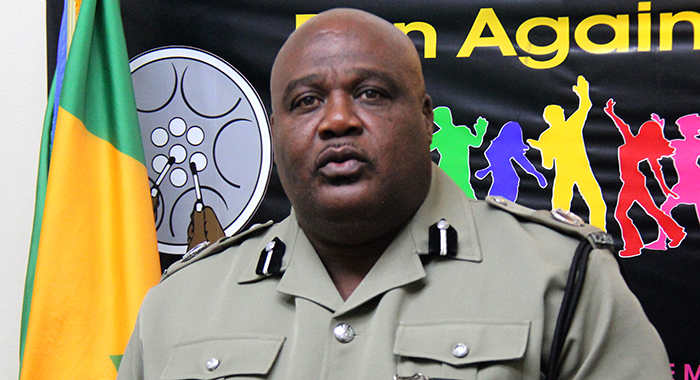

Assistant Commissioner of Police with responsibility for crime fighting, Trevor “Buju” Bailey, says police are concerned about the amount of violence in the nation’s schools.
“… young people have to find ways to deescalate …, and I find that they’re too hasty and they’re acting impulsively,” he told iWitness News.
“And funny enough, sometimes, a lot of cases involve our young girls…, not so much the boys. Not that the boys are not committing themselves as well, but a good percentage of it involves young girls. So, there’s work to be done.”
Bailey was speaking in the aftermath of an incident at North Union Secondary School on Oct. 3 that had left a 15-year-old male student in the intensive care unit of Milton Cato Memorial Hospital after he was stabbed in the head, allegedly by a 16-year-old schoolmate.
“We really, really have to find ways and help them to find ways to de-escalate because a lot of people are not making any attempt to walk away and de-escalate a situation. It is like you just throwing gas on the flames and expecting that it won’t blaze up. It will blaze up.”

Asked how much of a problem is violence in schools in St. Vincent and the Grenadines, Bailey said, “It is cause for concern.
“I mean, we get reports from schools almost on a weekly basis,” Bailey said, adding that this is why he is calling on all concerned to help students learn to de-escalate.
He saw a role for parents, counsellors and other people involved in the lives of students.
“I mean all the different institution, the family, the school, the church, because the police is coming in at the back end, because you may have a child who is giving a lot of trouble in school, and not until when the matter is reported, that it is brought to the attention of the police, and that is on the back end.”
Bailey said that students can be helped if there is early detection of hasty behaviour and apparent irrational thinking.
“.. we should try and intervene early and then get the necessary counselling and help for that child, rather than to wait until they commit a serious infraction, and then be reported to the law.”
The senior detective said that when a student is arrested and charged, the system might punish them for their actions.
“But is that what we really want? The issue of punishment, or we want the child to be rehabilitated and turn out to be a model citizen?” Bailey said.
“And if we wait until they reach the stage where they’re committing serious offences, then I guess the law will just have to take its natural course,” he told iWitness News.
“But early intervention, in my opinion, can assist in getting the child help that he or she deserves.”