



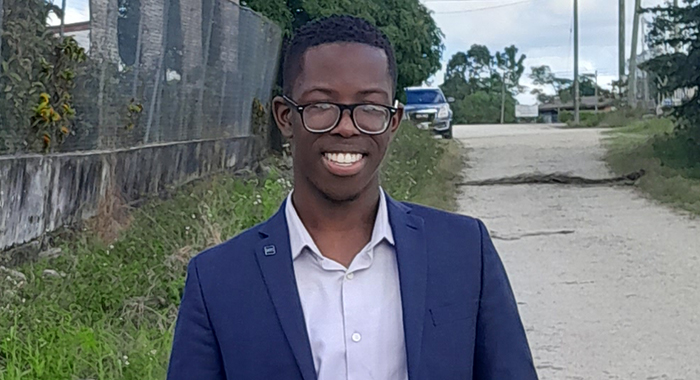

By Daniel Burgin
My heart sank, and a thousand thoughts filled my mind.
A few weeks ago, as I walked into my office, I received an alert about a military strike against a speedboat in international waters likely carrying two Trinidadian men. At the time, reports stated that these men were fishermen who often travelled to Venezuela, but could not confirm whether the men were just missing or deceased. Even at this point, that information remains unclear.
In recent weeks, we’ve had front-row seats to witness rising tensions and military posturing between the United States and Venezuela. Not too long ago, the United States deployed additional naval assets to the region and reopened a previously defunct military outpost in Puerto Rico, stationing a few Marine Corps units there. For those unaware, the Marines are an amphibious (water-based) assault force that is often the first US boots on the ground when an invasion is underway. The US government maintains that they are combating drug trafficking at the order of an authoritarian regime. While we could spend hours debating true motives, the reality is that our citizens are caught in the crossfire of a political game that doesn’t relate to us but directly affects us.
Fishermen in this region are fearful of traversing our seas, as they’ve done for generations, because of the threat of violent, extrajudicial death over their heads. In an interview with Al Jazeera News, a fisherman in Trinidad stated that with the current political climate, they only go out as far as they can swim back to avoid being within range of the bullseye. The effects of these actions ensure significant harm to the economies of our nations and threaten consequences for the social wellbeing of these communities.

As the build-up of events continues, our leaders remain wholly silent, resorting to backroom conversations (if any) instead of addressing the people. In our island nation, the name-calling and trading of insults continue with juvenile immaturity, while the real issues are obscurely mentioned and inadequately addressed. Just a few months ago, our prime minister, along with others, loudly declared they were more than willing to give up their visas in support of the Cuban doctors who contribute greatly to our nation. Where are their voices now? As evidenced by this past week’s festivities, citizens have come to expect the lack of dialogue on the issues that affect their day-to-day lives. Rather, they will wear whatever colour shirt fits on the day to watch the performance of rhetoric on stage, followed by the main event of a free concert by a foreign artiste. It’s about time our leaders demonstrate real statesmanship in speech and conduct to address the real concerns of the people of this country, and do so in a way that looks after the needs of the State above scoring a point on a political opponent.
Right now, our nation and, at large, our region are at a critical juncture, probably one of the most crucial positions we’ve been in since our independence and likely even before then. The threat of war is at our front door, but its imminence becomes exacerbated by the lack of communication, preparation, and strategy displayed by the leaders of CARICOM.
Stand up
In 1973, CARICOM was formed with the objectives of coordinating foreign policies, fostering social development, and ensuring security among its member nations on behalf of the citizens of its member states. As a collective body, the organisation has failed to maintain its responsibility to its stakeholders, the nationals of the Caribbean. Firstly, the individual components of the institution remain divided on their allegiances to either nation involved in the conflict, displaying a failure to coordinate foreign policy. Secondly, with no message given to its constituents, the organisation has again failed, leaving us alone and afraid in the shadows of silence and uncertainty. Our leaders continue to forget that their first priority as heads of state is to their people and not to outside forces. This includes keeping us safe through the coordination of policy and security efforts, and informing us about the effect their actions in these engagements have on us.
We, the citizens of the Caribbean, ask that the leaders of CARICOM convene an emergency session to discuss their intent regarding both nations. Moreover, we request that they make a joint statement to the people of the region and the international community regarding their participation in the events that have unfolded thus far and outline a pathway forward.
For generations, the Caribbean has been seen as a region of peace that avoids armed conflict in favour of diplomatic resolutions. In that spirit, we have stood in the gap for our neighbouring nations, including those in Latin America, as a mediator on issues of grave political and military effects. We have served as the voice of reason, inspiring others to choose peace. Let it not be said that we stood on the sidelines and watched, silently, as foreigners brought war to our peoples again.
Many will argue that our “small island nations” cannot have any decisive influence in the ongoing situation. Organisations like the United Nations (UN), the Association of Caribbean States (ACS), the Community of Latin American and Caribbean States (CELAC), and the Organisation of American States (OAS) bring together the many countries that make up this hemisphere for discussion, trade, and collective development. As members of these organisations, and others like them, our nations individually and even more powerfully, collectively, possess significant political and economic liberty to demand that their voices at the very least be heard and respected.
Prepare
As noted, a plethora of times before, in previous articles, our national security apparatus, and that of our Caribbean brothers and sisters, is insufficient to meet the level of danger posed by technologically sophisticated cartels and criminal enterprises, nefarious nation-state actors, and increasingly vicious natural disasters. While that remains our current unfortunate reality, it’s never too late to start genuine and intentional improvement. At the ministerial level (Ministry of National Security), planners can improve funding and its outcomes as well as bring in foreign military-trained Caribbean subject matter experts to develop doctrine at the strategic and administrative levels, leading to eventual changes in tactical (on-the-ground) procedure.
Despite these long-term solutions, the reality is that the tense situation in our region is a today issue. The leaders of our police and defence forces must begin to seriously discuss and employ defensive postures—a strategic initiative of fortification and reactive planning—in the case that the conflict breaks out on our shores. Furthermore, these bodies, in collaboration with the Ministry of Foreign Affairs, should draft and implement evacuation plans for Vincentians and others, including students, businesspeople, and diplomats, residing in at-risk areas.
To those who may say these measures are extreme or unnecessary, the reality is that we live in an increasingly volatile and violent world, with our homes currently being in the crosshairs of that violence. For decades, we’ve had the luxury of living without fear of extraordinary conflict; unfortunately, that is no longer the case. We can no longer just wish to be unaffected and react when trouble reaches the gate. Our collective mindset, and therefore our actions, must adapt to our modern political and military landscapes in order to maintain the peace, tranquillity, and hope our region naturally boasts.
The saying goes, “Hope for the best, plan for the worst… and expect to be surprised.” How about we change that last part to “Create the future” by making the decisions today that prevent regret tomorrow.
The opinions presented in this content belong to the author and may not necessarily reflect the perspectives or editorial stance of iWitness News. Opinion pieces can be submitted to [email protected].
Another excellent and thoughtful article by young Burgin. Thank you. I pray that the right power brokers find this article and they are both disturbed and inspired by it, enough to act accordingly.