




By Marlon Bute
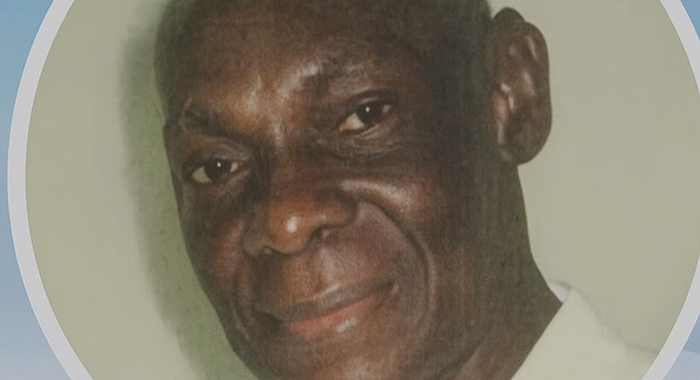
It was about two weeks ago that I received some sad news — news of the passing of the oldest boy of the Fairbairn family. His name was Leroy Fairbairn.
Leroy’s passing came just days after I had written a tribute to his younger brother, Solomon, better known as So-Lo. Then, I immediately set out to put some thoughts together to pay tribute to Leroy, as I had paid tribute to So-Lo. For these were not ordinary men in the sense that they were special to their families, friends, and community. These were Lowmans Hill men of the Fairbairn family — a proud and God-fearing family who knew discipline, ambition, and hard work. Yet they were ordinary, salt-of-the-earth people who lived balanced and productive lives.
Both brothers had been battling prostate cancer, and although I knew that Leroy was bedridden, I did not know then that he would follow So-Lo just a few days later. It is heart-breaking that both brothers were ill with cancer. It is heart-breaking that both brothers lost their battle with cancer. But perhaps there is some comfort that we got to say goodbye to them together.
I lost one brother to cancer in 2019. Elmond. The Fairbairn family has now lost two brothers to cancer in 2025, in October, and in the same week. The pain must be immeasurable.

Only a few months before Solomon’s passing, a cousin we called Brother — his given name was Herman — also died of cancer.
These deaths signal the changing face of a village. In time, there will be fewer left from our generations, as we continue to be reminded of the changing aspect of life. And so, we must pay tribute to each other, so that all may know that we were once here, and that we were somebody.
Cancer has taken much from us — lives, laughter, and the people whose presence once defined the texture of our days, and who helped define our communities — our village. But it cannot take away what they gave: the examples they set, the work they did, and the small joys they brought into the lives of those who knew them.
Nicknames and Village Life
I remember Leroy well. As a boy growing up in the village, we called him Dummy.
I do not believe we meant any harm by it. In those days — and perhaps still to some extent today — villagers were often known by nicknames that reflected a physical feature or personality trait.
If you had a prominent belly, or really liked to eat, you would be called Guts.
If your lips were a bit outstanding, you would be called Lips.
If you were short, Short Man.
If you were tall, Tall Man or Tall Boy.
If you were of a lighter complexion, Red Man.
And if you were darker, Black Boy or Blackie.
But those names never told the whole story. For the Black Boys and the Darkies, their skin — their skins — it is rich, rich skin, layers of melanin, protective layers from the sun. It is the colour of endurance, of beauty, of a people shaped by the earth and the light that shines upon it.
There was even a woman who was called Queen Ape — though she was neither a queen nor an ape. She was an empress — beautiful and hardworking. A man who was called Double Ugly — though there was nothing ugly about him that I could tell — and another man, who was actually my cousin, called Piece-a-Man. In fact, he was a whole man — a man who set out each day to his lands to farm them, so that he could put food on the table for this nation.
Though, of course, meaning no harm does not mean that there was no harm, because there must have been. But these nicknames existed as a feature of the times — an accepted part of a village culture that found identity, humour, and sometimes unintentional cruelty in the language of familiarity.
Leroy’s Work and Way of Life
Though Leroy could not speak, he was very much part of the community. He loved to laugh, and he was generous — as generous as Albert, actually, who died, I believe, under suspicious circumstances.
In his youthful years, he was well built, like Solomon, with big arms and a well-defined chest and shoulders. He worked hard and carried himself with quiet pride — as did many from Lowman’s Hill.
He was a farmer who planted, reaped, raised animals, and went hunting from time to time like many of the boys in the village. For years, he also worked with Bassy Alexander, assisting with surveying and fieldwork.
He earned his living honestly — through his hands, his patience, and the quiet dignity of a man who knew the value of producing.
A vibrant and balanced community
Leroy was part of a generation that came of age in the 1960s, 70s, and 80s, when Lowman’s Hill was a vibrant, balanced, and self-sufficient community.
People lived close to the land but were also connected to the wider world through their jobs in Kingstown. Many worked eight-to-four jobs in the public service, or in teaching, nursing, or policing — as civil servants, carpenters, masons, mechanics, or store workers.
Yet when they returned home in the evenings, they tended to their gardens, animals, and crops.
Chickens, goats, pigs, and cattle were common in every yard. Cassava, corn, okra, plantain, and peas grew in backyard plots and small farms.
On Saturdays, villagers carried their produce to the market or sold to the Marketing Board, which in those days bought almost everything — from vegetables to poultry.
And there was that place called Over Yonder, where on evenings, mostly weekends, and public holidays, the elders of the village — led by Reuben Fairbairn, the proud patriarch of the Fairbairn family, and one of the patriarchs of Lowman’s Hill — gathered to play cricket. The women did the cooking while the children perched on trees, or sat comfortably on the lush green grass, or on one of the big boulders that dotted Over Yonder, enjoying a lovely game of cricket. It was life at its purest — laughter, rivalry, the smell of food, and the sound of bat on ball echoing through the evening.
And so, Leroy lived a full and balanced life — with fishing, farming, cricket, and he did enjoy playing dominoes and draughts, which we played fairly frequently. Of course, Julian Fairbairn was perhaps the best domino and draughts player in Lowmans Hill — or at least, he certainly bragged that he was.
It was a wholesome, dignified way of life — a rhythm built on work, faith, and community.
Faith, Family, and Legacy
Leroy fit that rhythm perfectly. He represented the steadiness and decency of that generation — people who rose each morning determined to improve the circumstances they were born into.
His parents were God-fearing, disciplined, and enterprising — farmers and vendors who taught by example that work was a blessing, not a burden.
It is tragic that two brothers from such a family have passed within such a short time. Yet, for those who believe, there is comfort in imagining that they are now reunited — free from pain and at peace.
Cancer takes a heavy toll, but it cannot take away a person’s goodness or erase the life they lived in service to others.
A generation transitions
Leroy and Solomon were both in their early to mid-sixties — still young in the eyes of many — but they lived full lives.
They served their community, and by extension their country, as producers, contributors, and men who did their part.
Their passing marks more than a family’s sorrow. It marks the slow transition of a generation — the men and women who built my village of Lowmans Hill, and the communities around Lowmans Hill, who made something out of little, and who knew how to live meaningfully and honourably.
Farewell, Leroy. Farewell, So-Lo.
My deepest condolences to the Fairbairn family, relatives, friends, and to the Lowman’s Hill community.
The opinions presented in this content belong to the author and may not necessarily reflect the perspectives or editorial stance of iWitness News. Opinion pieces can be submitted to [email protected].
Well said Marlon.
We appreciate the knowledge of the families you share of our proud lowmans Hill community and the recognisation you bring of a little village in a small part of the world , that is forgettable by all but the people and their many memories of the families who live, love, build nourish and share their knowledge, understanding ,charity and moonlight night stories .
growing up in such a strong Community of supportive neighbours Our generation has been bless with wonderful fun friends and family .
although some of us has move to other areas on the island and many have travelled and lived abroad, our heartstrings tugs for home especially when we are made aware of a loss in our home village where everyone knew everything about everyone,
My condolences to all our village families that have loss love ones this year.
Thank you Marlon for keeping us village kids, that are now parents and grandparents updated and for all the lovely tributes you share with every loss you still manage to make us smile in time of sorrow.
Kindest regards and sincere gratitude.