




By Ari Shaw
While policy discussions on renewable energy often occur at the national and governmental levels, a new generation of young innovators is rewriting the narrative of energy resilience.
From solar-powered farming operations in St. Vincent and the Grenadines (SVG) to waste-to-material innovations in Jamaica, it is the youth-led enterprises that are bringing real change to communities.
These entrepreneurs are creating jobs, lowering energy costs, and reimagining sustainability through technology and creativity. The region’s energy transition is not just about infrastructure; it’s about investing in people who have the power to make change from the ground up.
Young people (some barely out of their 20s) are not waiting for the next grant or foreign investor. They’re solving the problem in their own creative ways.

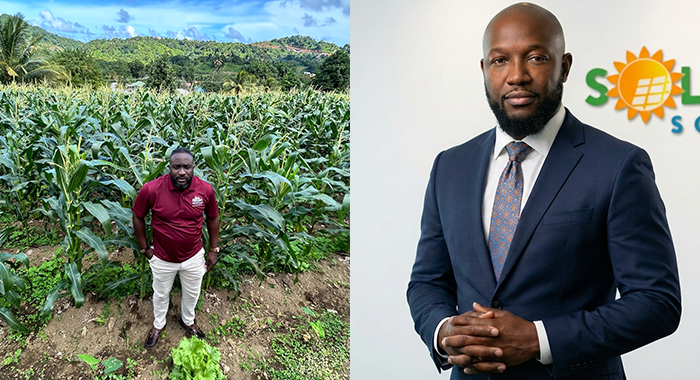
In the lush Marriaqua Valley, on of SVG’s two man “food baskets” (the other being the Vermont Valley), Hance John, now 34, saw the high cost of electricity as a barrier to modern farming in his early 20s.
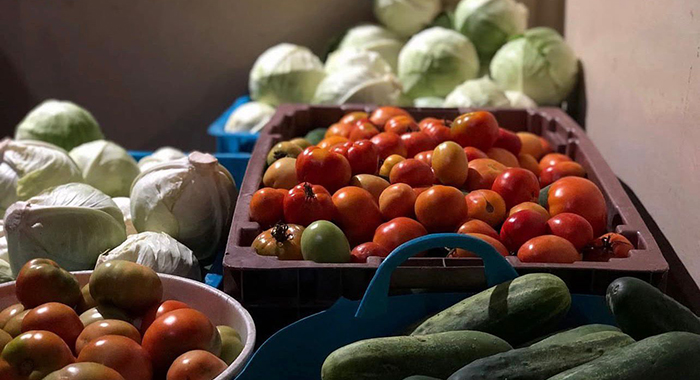
John started small, installing solar-powered lights to avoid the expense of grid connection. Seven years later, he graduated to a full suite of solar solutions: cameras for security, pumps for irrigation, and feeders for crops and livestock, but this time, for his business, Westfield Farms.
John explains that this move bridges traditional agriculture with cost-effective, sustainable technology.
“My community has been pushing the boundaries of sustainable farming,” he further essays, adding, “We live in a farming community where innovation is inherent.”
John says his systems cut bills and withstand hurricanes and droughts better. The young farmer disclosed that he hires locally, sources raw materials from nearby, and offers internships to agricultural students and young technicians.
“I try my best to give opportunities within the community,” he explains.
John credits his early education in agriculture to primary school through to the tertiary level. His work represents a general reduction in energy costs for small-scale stakeholders by combating praedial larceny with solar surveillance. It also promotes modular systems that make farming more resilient to disasters such as hurricanes and droughts.

However, initiatives are not without challenges. He identifies funding as the “number one killer” of micro and small agricultural businesses. The young farmer states that banks view investments in small farmers as high risk, noting theft, pests, diseases, and extreme weather events. He further disclosed that “outdated laws” on praedial larceny offer “all bark and no bite”, discouraging investment.
His solutions? Policies that open doors early. He suggests youth-led community projects, Research and Development (R&D) forums to bridge the gap, education on sustainable energy starting in primary school, student exchanges, internships abroad, and even green scholarships.
“Focus on agriculture and tourism,” he suggests. “That’s where the real development happens.”
Across the island, Ricardo Boatswain experienced similar challenges.
He states in an exclusive interview that, 15 years ago, aged 27, he launched Solife Solar after noticing that families and businesses were “bleeding money” due to high electricity bills.
However, Boatswain didn’t pull this knowledge from thin air. Banking taught him numbers and risk. Project management taught him execution, and construction gave him the “hands-on” feel for building things that last.
That combination taught him to see the sun not as a natural anomaly but as an economic equation. He bootstrapped the company and reinvested every win to avoid “handouts”.
“Formal setup would have cost hundreds of thousands,” Boatswain recalled. “But I gained traction through grit and risk-taking.”
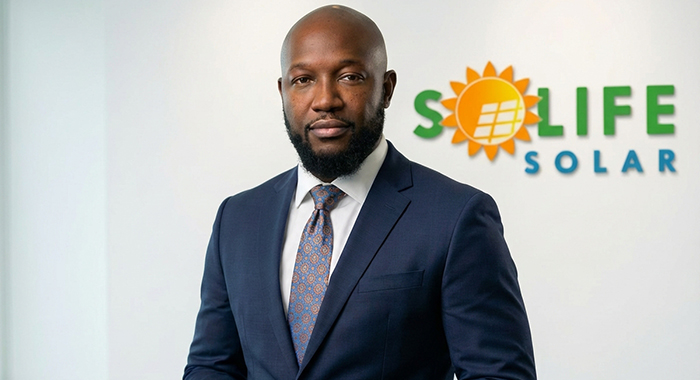
Today, Solife is a regional leader, offering the Caribbean’s only 84-month payment plan for solar installations. This makes clean energy accessible to everyday Vincentians, from homes to businesses.
His utility-scale projects and residential collages of rooftop panels demonstrate how solar can deliver energy independence.
Boatswain describes the youth as “the engine of the transition”.
He, however, points out that engines need fuel. “Funding, clear vision, policy support, and most of all, grit and taking risks.”
Further north, on the island of Jamaica, another story was shaped through harder circumstances.
At the age of 13, Sheed Cole left his grandmother’s house, which lacked electricity and running water.
After his family emigrated, he collected empty soda bottles to buy food.
“Survival meant recycling long before it was a buzzword,” he tells this writer.
Cole went on to become a visual arts educator for several years, but the island’s waste crisis never left his mind.
He calculated the number of plastic bottles, Styrofoam, and food containers that clogged gullies and streets — some 2 million per day.
“What if this waste is not the problem, but the raw material?” That question gave birth to 360 Recycle Manufacturing Ltd.
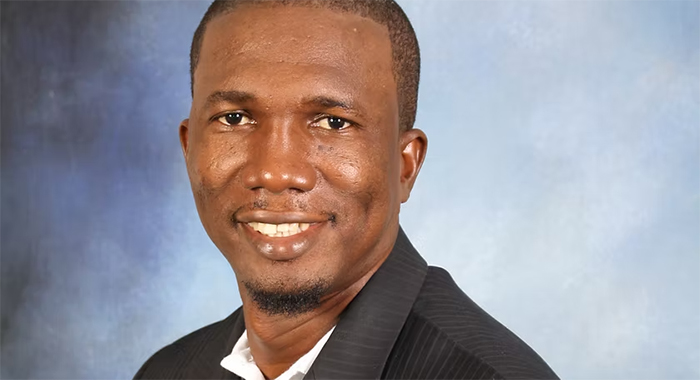
In his 30s, Cole began using low-tech methods that locals can easily learn, which shred styrofoam and plastic, mix it with cement and wire mesh to create a lightweight composite for playgrounds, benches, planters, sculptures, and even housing components.
He says that in places like Rosetown, children play on equipment built from the very trash that once littered their streets.
“Environmental, social, and psychological all at once,” Cole adds.
The Jamaican entrepreneur, now 48, points out that while he faced numerous difficulties, mainly scaling, his innovation has won awards, attracted partnerships and funding, and led to the development of better equipment that now trains artists, fabricators, labourers, and youth from tough communities in fabrication, design thinking, and entrepreneurship.
“Youth are central to the Caribbean’s sustainability,” Cole insists. “When they see waste as value, they stop seeing themselves as victims.”
He further points out that his company has embedded energy efficiency directly into construction: composite insulation keeps buildings cooler in Jamaica’s heat.
“Less need for fans or air conditioning means lower electricity bills over time.”
The innovator called for a policy that backs local talent over imported fixes.
“Invest here, mandate recycled materials in public works, parks, schools, sidewalks, and housing,” he says. “Prioritise them in procurement, and the industry scales itself.”

He offers young entrepreneurs what he terms a simple truth: “This work is hard. You’ll feel isolated. But if it’s rooted in your community, you were born for this moment. The Caribbean’s future depends on it.”
From Marriaqua’s solar-fed farms to Kingston’s recycled playgrounds, there’s one thing in common: Caribbean youths aren’t waiting for approval. They are developing resilience by utilising their grit, local expertise, and inventiveness.
SVG’s Nationally Determined Contribution (NDC) 2.0 aims for 60% renewable energy by 2030, with a strong focus on private innovation and youth participation (30% actively participating in climate discussions).
Jamaica is travelling in tandem with the larger region. The question at hand is not whether the shift is feasible, but rather whether communities, partners, and governments will make sufficient investments in the individuals already making it happen.
One solar panel, one composite block, one trained young person at a time, the Caribbean is recharging itself.
I like the article on entrepreneurship for the GEN-Z population. I also agree with the topic of funding for any plans they may come up with.
The youths can start a project at a home garden that can help them to convince the banks and other investors that are serious.
Farmers throughout the island should pool some funds together to buy cameras to monitor the crops in the valleys or mountains. They should also work with the police, so that they can quickly report any stolen products or other entities. So the police can report the issue to all police stations, so they can check for anyone selling items in towns and communities.
Then there is the water problem due to dry season. The governments can several dams in the rivers to store water, instead of allowing the water to flow entirely into the sea.
The government can also lease lands from folks who can\t or don’t cultivate anything on them. It can then help the youths to start projects on these lands. The funds derive from these projects can cover the cost of the projects with government assistance.
This is an opportunity for these farmers to produce the food stuff for hotels on so that they don’t have to import them. It also works well for Vincentians when they “grow what they eat and eat what they grow”.
Thanks for an educational and informative article on the contributions of young men to the development of small businesses in the Caribbean. Two in SVG and one in Jamaica.
Congratulations to the three young men.
Hance John
In farming in Marriaqua. Reducing the cost of energy, to lower the costs of production in farming and developed his farm. “Westfield Farm.”
Richard Boatswain.
Producing solar panels for the home and business. Bringing clean energy and making consumers more independent in their use of energy.
Sheed Cole.
In Jamaica who developed “360 Recycling Manufacturing Ltd.
The company recycles waste such as water bottle. And transform such waste in to usable products, say for children to play.
My passion in agriculture. SVG could do with a revolution in Agriculture. Agriculture the main sector of the economy has been neglected for years. We people like Hans John to help foster the development of Agriculture.
(Just a footnote. You wrote of three men, there could be young women across the Caribbean developing businesses. If they are please showcase them.)