



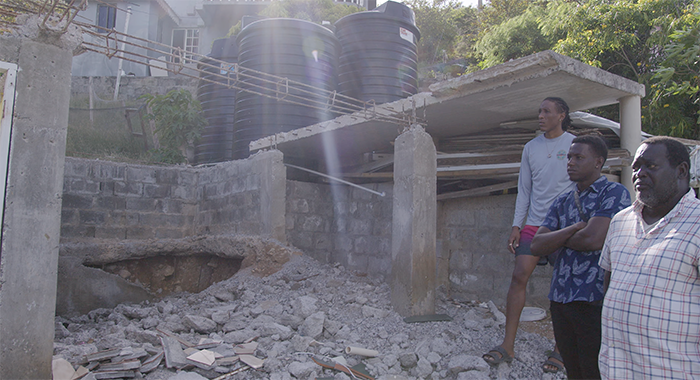

A journalist who visited the Southern Grenadines more than 10 times under the Unity Labour Party (ULP) administration following the impact of Hurricane Beryl said he was surprised by what he saw when he visited with members of the new government last week.
“I learned a very valuable lesson: Perception is something else. … And I will encourage people that they should not just listen to what politicians have to say and take their word for it all the time,” Lyf Compton, who works for the state-owned Agency for Public Information (API) said in his commentary on WE FM On Monday.
Compton suggested that during his trips under the ULP government, he was prevented from seeing the reality of the situation in Canouan, Mayreau, and Union Island, which were devastated by Hurricane Beryl on July 1, 2024.
The ULP administration had bragged about the progress it had made in rebuilding and repairing houses on the islands, where the hurricane damaged or destroyed more than 90% of buildings.
However, the Vincentian electorate ended its 25-year relationship with the party, voting them out of office on Nov. 27, handing 14 of the parliamentary seats to the New Democratic Party (NDP), with the remaining one going to the ULP.

Compton said that he visited the three Grenadine islands along with Minister of Housing, Andrew John and Parliament Representative for the Southern Grenadines, Terrance Ollivierre, who is also the minister of Grenadines affairs, during last weekend’s assessment of the housing situation on the islands.
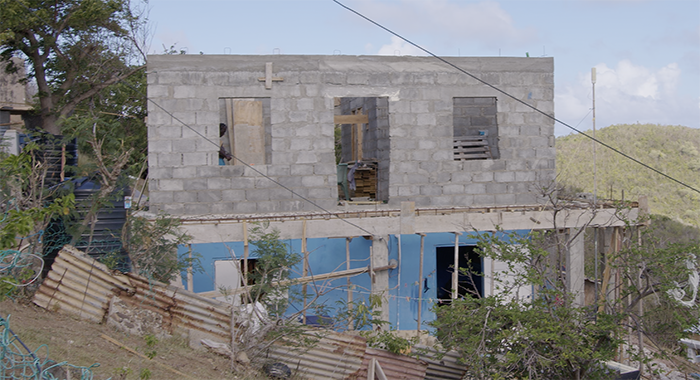
“When a politician says something, you need to not just swallow it just like that. You need to go out and investigate and see things for yourself,” Compton said, referring to the eye-opening experience he had last weekend.
“Because … the months … after Beryl, I went to the Southern Grenadines a lot of times, not on my own, but with people, officials responsible for the rebuilding process. And what I was seeing then is not what I’m seeing now,” said Compton, who has three decades of experience in the media, mostly working with non-state media.
“A lot of the things I saw over the weekend I have never seen before, and I’ve gone to the Southern Grenadines probably 15, 20 times, if not more. And the things I saw on Mayreau, especially, I’ve never seen before.
“There’s still people living in tents. The hurricane season is fast approaching as usual. There’re still people living in tents there,” Compton said.
“There are structures that just went up, but that’s all that’s there: just structures; no fittings inside, nothing whatever.”
NDP gov’t has a task ahead
Compton said what he saw last weekend shows that the new government has quite a task ahead.
“And I wouldn’t like to be part of this new administration at all; at all. They have a … huge job to do in the Southern Grenadines in relation to a lot of things, especially housing,” the journalist said.
He said the main jetties and wharves on the islands, especially in Mayreau, need a lot of attention, adding that it seems as if some of them would collapse if a big vessel dock against them.
“These islands need a lot of attention,” Compton said. “And as I said, it’s all about perception. Sometimes you need to just go and look at things for yourself.”
He acknowledges the realities of the Vincentian economy, saying:
“I know we are basically a struggling economy, a third world economy and the money is not always available to do everything that needs to be done, but politicians need to just come out and say, ‘Listen, we don’t have the money for do this. We know it’s bad, but we don’t have the money. We’re trying to get the money.’
“And I think this new administration has a lot of work to do. I don’t know where the funding is going to come from.”
The journalist noted that the NDP government has said it would implement a citizenship-by-investment (CBI) programme, but said that CBI is facing many challenges.
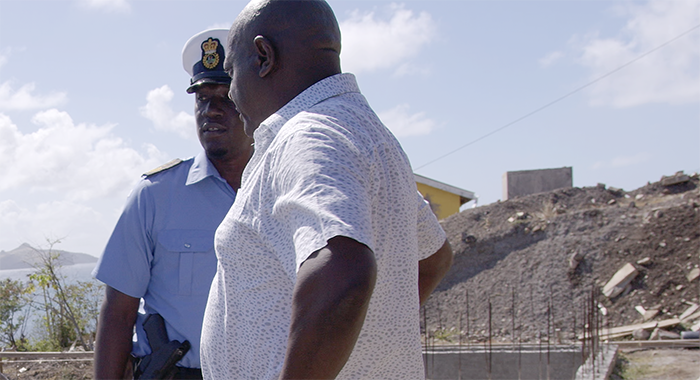
He said the government delegation last weekend included a representative from the World Bank.
“So, I think that some the financing for certain projects needed down there might come from them, because they saw first. But, yeah, housing is a big problem down there.”
Compton said 700 people from the Southern Grenadines live in rented accommodations in St. Vincent, which is paid for by the government.
“And from what I understand, the bill is something like a million dollars a month to pay for all these people,” he said.
“But they can’t really stop because some of these people have nowhere to go back to. Some of them not working. So, it’s a monumental task. They have a monumental task on their hands. Trust me, I’ve seen it firsthand.”
Compton said the situation in Canouan is the best of the three islands.
“There’s a lot of unfinished houses, partially built houses on Mayreau.”
Canouan-based British millionaire Ian Wace, said he contributed US$25 million to the recovery efforts.
“Canouan is the best off because that was his original base,” Compton said, adding that his information is that Wace “hasn’t really been around much” after he was criticised for endorsing the ULP ahead of the Nov. 27 vote.
“I think he took offence to the way that people treated him for endorsing the ULP, although all the work that he did,” Compton said.
He said that on Union Island, the ULP government repaired or rebuilt houses that were damaged or destroyed by the storm.
“A roof alone does not make a house,” Compton observed. “Roofs went on to houses. A lot of roofs went on to houses. We all know roofing is very expensive, but a lot of the houses need doors.
“A lot of the houses need windows and fittings inside, or whatever to make them complete as homes. So, some of them are still uninhabitable.”
He said that while a lot of work remains to be done in the Southern Grenadines, realistically, some of the people there cannot help themselves.
“They wouldn’t be able to build back a house. There are several other issues too. There are homes that were rented that were destroyed that the owners not going to let people come back into.”
He said that in some cases, the landlords had wanted to evict the tenant for years but was unable to do so legally.
“… so ,now we have a reason to get them out. So, some people just would not be able to go back to these rented accommodations.”
He said that the government cannot rebuild some houses because of family disputes over land ownership.
“Because, obviously, you have to have a clear indication of who owns the land before you build back something on it,” Compton noted.
He said other property owners are overseas and cannot be reached while others whose homes were destroyed do not have land on which to build.
“So, it’s a lot, a lot, a lot of issues. And I said the government has a monumental task ahead of them in relation to dealing with this, so it will be very interesting to see how they deal with this.”
When we examine the events that have defined our recent history, the ULP’s conduct is indefensible. The evidence points to significant financial misconduct and a deliberate cover-up, diverting vital disaster relief funds meant for the people. The documentaries from the hurricanes and the volcanic eruption tell the real story: the woman and her son in a Fancy shack, the landslides, the enduring ruin in Owia and the red zones. That is not mere misfortune; it is the result of gross mismanagement. Prime Minister Gonsalves and his administration must be held accountable through a rigorous investigation. They have forfeited the right to lead this nation for a couple of generations.
Lyf JUST found his voice and conscience?????