



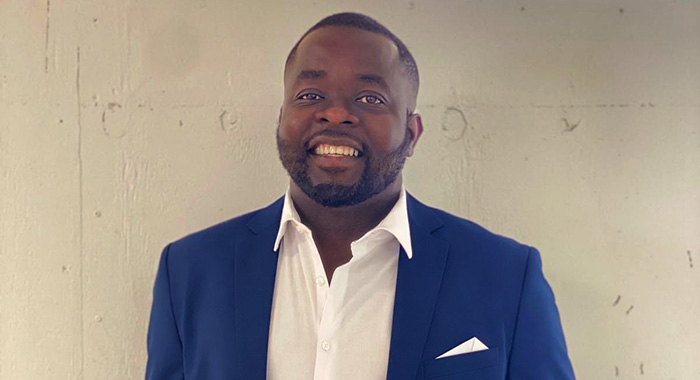

By Kenrick Quashie
Following the recent ramblings of the leader of the opposition about the “swift” return of the Unity Labour Party (ULP) to power, I am reminded of the lamentation found in 2 Samuel 1:27: “How are the mighty fallen, and the weapons of war perished!” Few passages capture our current political reality more accurately.
Since the general elections defeat, Ralph Gonsalves has embarked on what increasingly appears to be a relentless quest for relevance. There is a striking disconnect between his public pronouncements and the verdict delivered by the Vincentian people. He speaks as though the electorate simply misplaced its confidence and will soon return it. Even when the scale of the rejection he received far exceeded all of the victories he celebrated during his 24 years in office.
Watching him today, one could easily conclude that he sees himself as the sole custodian of political wisdom and governance. The irony is impossible to ignore. The same leader who spent decades dismissing criticism and resisting scrutiny now positions himself as a bastion of transparency and accountability. Even when his observations occasionally contain valid political points, the messenger often undermines the message. For many Vincentians, Gonsalves no longer represents the future. He represents a chapter in our history that has already been written.
Political influence is rarely sustained by personality alone. It is often reinforced by access, networks, institutional relationships, and the machinery of government. Once those instruments disappear, so too does much of a politician’s ability to shape events.

The administrative landscape has changed. New permanent secretaries, new institutional leaders, and new decision-makers are now occupying positions that were once populated by individuals who had spent decades operating within the previous political order. The informal channels of influence that may have existed in the past are rapidly disappearing. The locks have changed. The old keys no longer fit. Indeed, David mentioned that “The weapons of war have perished.”
More importantly, independent institutions are beginning to reassert themselves. Bodies such as the Public Service Commission appear increasingly focused on strengthening professionalism, fairness, and public confidence in the state. Whether one supports the current government or not, the broader objective of building stronger institutions should be welcomed by all Vincentians.
For political figures accustomed to operating in a highly centralised environment, this represents a profound shift. Influence increasingly flows through institutions rather than personalities. The challenge for the Unity Labour Party extends beyond Gonsalves himself. There are undoubtedly individuals within the party who recognise that renewal is necessary. Yet meaningful political renewal cannot occur while the party remains unwilling to confront difficult questions about its future leadership and direction.
Every political movement eventually faces a generational crossroads. The question confronting the ULP is whether it intends to prepare for the future or remain anchored to the past. Meanwhile, Gonsalves appears increasingly determined to compete for relevance on a national and regional stage. There is a certain irony in this.
During his years in office, he was often reluctant to share political space in ways that could elevate his opponents. He famously declared that certain activities would make former prime minister and then leader of the opposition, Arnhim Eustace, look “prime ministerial”.
Today, having lost office, he seems eager to project the image of a statesman whose influence remains undiminished. He is all about the place, trying to look “prime ministerial”. Political authority, however, ultimately rests on legitimacy at home.
Regional leaders will form their own judgments as they engage with Prime Minister Godwin Friday and the new administration. Over time, they will assess leadership not through speeches or reputation, but through results, conduct, and relationships. They will see in Friday a humble, focused and well-intentioned leader who wants the best for his country and this region.
The broader lesson here is not really about Ralph Gonsalves. It is about power itself. Power has a way of convincing those who possess it that their influence is permanent. History repeatedly teaches otherwise. Governments change. Institutions evolve. New leaders emerge. The political tools that once seemed invincible eventually lose their effectiveness.
That is the true meaning of the scripture. The mighty have fallen. The weapons of war have perished. And the country has entered a new political era. Whether that era succeeds or fails will ultimately depend not on the voices of the past but on the choices made by those entrusted with the future.
The opinions presented in this content belong to the author and may not necessarily reflect the perspectives or editorial stance of iWitness News. Opinion pieces can be submitted to [email protected].
Vrry diplomatic but true
Good insights and it’s time for Gonslaves to exit and let in new leaders with new visions to take over the opposition. He definitely should have a role in advising the new leaders. His legacy is now history and he did a lot for SVG!
Quite balanced & true.
another excellent and succinct crystallisation of the man and party that was