



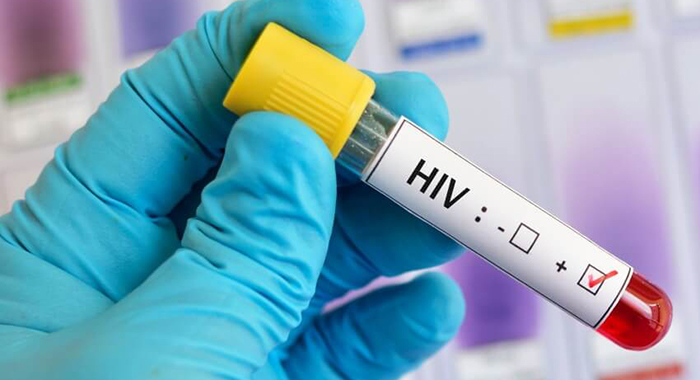

Health authorities are warning of an uptick in HIV infections in St. Vincent and the Grenadines, with new cases clustering among young adults aged 25–29 and older men 60 and above, even as more women than men continue to come forward for testing.
Speaking at a Ministry of Health press conference on Thursday, Chief Health Promotion Officer Shanika John said recent data show worrying patterns that demand renewed attention to safe sex, particularly in the run-up to the carnival period.
“We continue to see an increase in our number of cases,” John said.
“Right now we are seeing HIV positive cases between age 25 and 29… and 60 years and older, which is predominantly male.”
She said women are still testing in greater numbers than men.

“Females are the ones who are still coming forward for testing as they rank higher, but we’re still seeing a lot of the males who are showing up positive within that age group,” she added.
‘You cannot tell by looking if somebody is HIV positive’
John cautioned that changing sexual practices and a false sense of security may be contributing to riskier behaviour, especially among younger people.
“For those younger persons, we do understand that you get creative and that you get innovative with your sex practices,” she said.
“But we’re asking you to remember that HIV and AIDS are still possible, and you cannot tell by looking if somebody is HIV positive, and the only way that you can do that is by protecting yourself.”
She advised people to use a condom every time they have sex, “especially if it is not your partner, and if you have not tested yourself and your faithful partner”.
Officials did not release raw case numbers at the briefing but framed the pattern as a clear upward trend that cuts across age groups, with a particular concern about younger adults and older men.
Carnival risk: pleasure now, problems later
The warning comes as the country prepares for Vincymas, dubbed “the hottest carnival in the region”, a period traditionally associated with increased travel, alcohol use and casual sex.
Positioning her HIV message alongside broader health and safety advice, John urged revellers to plan ahead rather than abandon caution “just for a moment of what might seem to be pleasure…
“From the Ministry of Health, we really don’t want you drinking, but we do understand the nature of what’s happening. So we’re going to ask you to do so within moderation,” she said.

“For those persons who have pre-existing conditions, do not forget your pre-existing conditions and your medication. This is not the time for you to neglect existing conditions… just for a moment of what might seem to be pleasure.”
Within that broader appeal, HIV prevention remains a central concern: officials fear that unprotected sex fuelled by alcohol, fatigue and a party atmosphere could further drive new infections, especially among people who have never tested.
Women test more, men show up positive
John’s remarks highlighted a persistent challenge in HIV control efforts. Women are testing more frequently, but a significant share of positive results are among men, particularly in the 25–29 and 60+ brackets.
This dynamic, she suggested, leaves gaps in the detection and treatment of HIV in the male population and raises questions about hidden transmission chains, particularly where partners are not mutually tested.
The ministry’s message to men mirrors its wider public appeal:
- Get tested – do not assume you are negative because you feel well or believe your partner is faithful.
- Use condoms consistently, especially with non-regular partners.
- Do not rely on appearances – HIV status cannot be seen.
Although the press conference did not go into treatment figures, the emphasis on testing and prevention indicates that authorities are concerned both about new infections and late diagnoses, which increase the risk of onward transmission and more complicated clinical cases.
HIV part of a wider health picture
The HIV message was delivered in a briefing that also covered mental health reforms, substance use, sanitation, and hospital pressures during carnival.
By placing HIV alongside issues such as handwashing, food safety, and responsible drinking, John and her colleagues framed sexual health as one component of a broader public health agenda, not a niche issue.
“We ask persons to have a safe and festive season,” John said. “Your health and energy is a shared responsibility.”
For now, the ministry is banking on targeted messaging, testing outreach, and condom promotion to slow the observed rise in HIV cases.
The age bands and gender patterns outlined at the press conference suggest that young adults and older men will be central targets of that effort in the months ahead.
Pleasure now, problems later says it all and a lot, they know the behavior of a lot of people in the country. Who cannot control themselves will pay the price.