



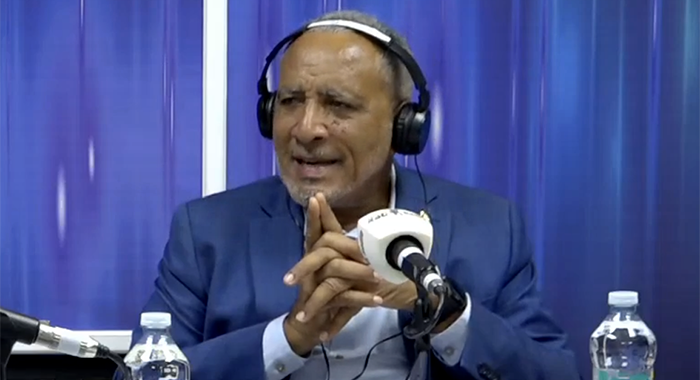

Prime Minister Godwin Friday on Tuesday outlined a broad strategy to tackle the rising cost of living in St. Vincent and the Grenadines, centring its immediate efforts on taming soaring electricity bills while pursuing longer‑term reforms to make the economy more resilient to external shocks.
Speaking on NBC Radio, the prime minister said his 8-month-old New Democratic Party administration is “constantly reviewing” ways to cushion Vincentians from the surge in energy prices triggered by the war in the Gulf and its impact on global oil markets.
“The surcharge is too high, but it’s still lower than it could have been because of the measures that we have instituted,” Friday said. He stressed that the government and state‑owned utility VINLEC must both “bear some of the costs” rather than passing them fully to consumers.
Electricity at the centre of the cost‑of‑living squeeze
Friday framed the electricity issue as the most immediate and visible pressure on household budgets and business operations.

“When VINLEC prices go up, essentially the surcharge is passed on to consumers and to businesses. It affects everybody,” he said.
“I have total sympathy with the families who are struggling to make ends meet because of increasing energy prices.
The prime minister said the administration moved early, announcing measures in May to blunt the impact of rising diesel prices used in electricity generation.
Those steps include:
• Removing the fuel surcharge at the port on diesel imported by VINLEC.
• Reducing or removing the excise tax on that fuel to keep VINLEC’s input costs down.
• Pressuring VINLEC to absorb part of the fuel increase instead of fully passing it through to customers.
Friday said that in July, VINLEC absorbed “over $730,000” that would otherwise have appeared on consumers’ bills.
Without those interventions, he said, the fuel surcharge would be “over 90 cents per kilowatt hour” — a level he warned would put “a lot of pressure on households, businesses and the economy at large”.
Friday urged VINLEC not only to share the burden of higher fuel costs, but also to reconsider its disconnection practices in the current climate.
“VINLEC also has to understand that they can’t rush and cut off people in the same time frames that they used to… We have to all have some more grace and simply say we are trying to work our way through this crisis.”
Short‑term cushioning vs. long‑term energy security
Friday acknowledged that the current subsidies and tax relief on fuel are essentially short‑term tools designed to “cushion” an externally driven price shock.
The prime minister agreed that permanent relief must come from structural changes in the energy sector, not endless subsidies.
His longer‑term strategy includes:
• Reducing vulnerability to oil‑price shocks by investing in renewable energy and “more sustainable energy systems that are now affordable.”
• Mandating VINLEC to lead the transition, rather than treating renewables as a competitor to the utility:
“VINLEC has to lead the way… so that we become more sustainable in our energy supply,” the prime minister told radio listeners.
While Friday said the government would continue to remove or reduce fuel taxes “within the constraints that we find ourselves in, with tightened government finances,” he made it clear that the country cannot rely indefinitely on fiscal giveaways to keep electricity prices in check.
VAT‑free days and targeted support
Beyond electricity, Friday outlined a suite of initiatives to ease everyday expenses, particularly for low‑income households and families with school‑age children.
The government is banking on periodic VAT‑free days to provide direct, visible relief:
The first VAT‑free day in December 2025 generated a “phenomenal” response and “a frenzy” in Kingstown, the prime minister said.
A second VAT‑free day is scheduled for Aug. 28, specifically targeted at back‑to‑school shopping, rather than the general VAT-free day in December.
Businesses, he noted, were given more advance notice after some complained that they had underestimated demand in December. Friday also urged retailers to match the state’s sacrifice by offering their own discounts.
Protecting the most vulnerable
Friday linked the VAT‑free day to a broader philosophy of targeted protection for vulnerable groups during the current squeeze.
Among the measures he highlighted was the government’s increase of public assistance to EC$500 per month and support for poor and vulnerable persons to prevent them being “crushed by the current circumstances”.
He noted that the government has also removed registration fees for secondary schools and the Community College and will pay for the exam fees for the upcoming cohort of students leaving secondary school.
“You shouldn’t get to form 5 and then you’re basically out there with a sponsor sheet to write eight or ten subjects… That’s part of your education. The state will take care of that responsibility,” the prime minister said.
Word salad 2.0
Vincentian let us join together and support the Prime Minister and his Cabinet for what they are doing to ease the suffering for the people of beautiful St. Vincent and the Grenadine. Thank you.
The PM has to seriously look at alternative means of generating electricity. This should include solar, thermal, and wind energy. We also need to look at ways to increase the export of products from SVG.