



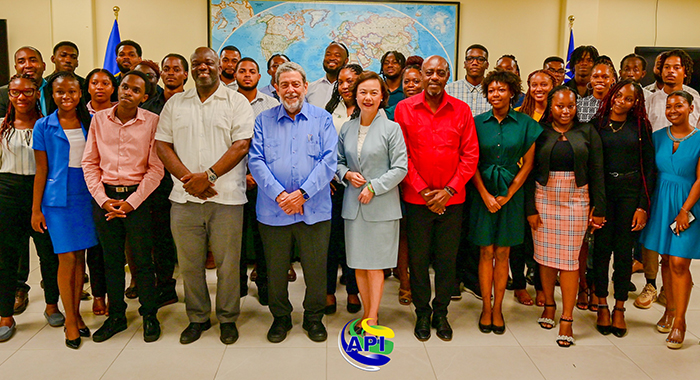

Taiwan has granted 30 scholarships to Vincentian students to pursue university degrees in the Asian nation.
The scholarships were presented during a ceremony hosted by the Taiwan Ambassador to St. Vincent and the Grenadines (SVG), Fiona Huei-Chun Fan and the Prime Minister of SVG, Ralph Gonsalves.
During the ceremony, Gonsalves thanked Taiwan for contributing for over two decades to the programme, which has benefited hundreds of Vincentians.
He described Taiwan as a steadfast ally and went on to encourage the recipients to dedicate themselves to their studies, while remembering to transform lives and lead changes to the community upon their return.
Meanwhile, Fan said that the 30 scholarships awarded this year bring to 321 the number of scholarships received by Vincentians since 2004.

For a student pursuing a bachelor’s degree and the pre-degree Mandarin Language Enrichment Program, the scholarship will cover one round-trip flight ticket, and up to five years of tuition and a monthly stipend.
Fan said that the recipients this year have shown a vast variety in their areas of study, including public health, international affairs and diplomacy, information engineering, economics and social development, digital media, business, trade and culinary art.
She said education is the cornerstone of bilateral collaboration and Taiwan has also been funding programmes such as YES and ON-SITE to support the development of Vincentian youth.
Fan encouraged the students to immerse themselves in the Taiwanese society, adding that Taiwan cherishes democracy, freedom and civil participation — common values shared by both countries.
Among the recipients this year, six have taken the Test of Chinese as a Foreign Language. Fan encouraged them to continue to excel in Mandarin in Taiwan.
SVG’s Minister of Foreign Affairs, Frederick Stephenson, Minister of Education, Curtis King, and relatives and friends of the scholarship recipients also attended the ceremony.
While the article clearly outlines the scholarship program as a key tool of Taiwanese soft power, it lacks critical depth. The most significant omission is the perspective of the recipients themselves. Incorporating a direct quote from a student about what the opportunity means to them would add a vital human-interest dimension and emotional resonance. Furthermore, highlighting the accomplishments of past alumni would powerfully illustrate the program’s long-term impact on fostering diplomatic alliances.