



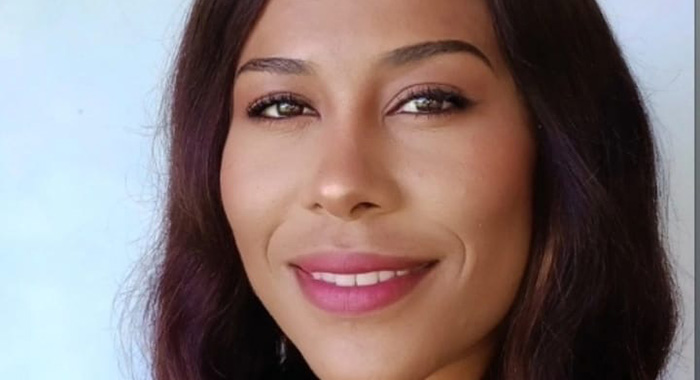

By Shermaine Joseph-Barnwell
As a teacher, I found myself deeply puzzled by the argument presented in the article “The revolution eats its own”. Not because it offered criticism of government policy, as critique is an essential part of any healthy democracy, but because it seemed to express concern about something far more fundamental: the increasing participation of ordinary Vincentians in public discussion, policy debate, and civic life.
If this interpretation is correct, then I must respectfully disagree.
In my classroom, this type of thinking would not be tolerated. Not because students should never challenge authority, but because education itself is built upon inquiry, participation, discussion, and the confidence to contribute one’s perspective. The purpose of education is not to produce silent observers. It is to produce informed participants.
As educators, we understand a simple principle: the primary indicator of learning is behavioural change, in this regard, I assume the perceived change is the voracity for intellectual content that is being interpreted as cannibalism.

Learning is not measured merely by exposure to information. It is measured by what a learner does with that information. Educational psychologists and teachers assess growth through increasingly sophisticated levels of cognition. Bloom’s Taxonomy describes this progression as movement from remembering and understanding to applying, analysing, evaluating, and ultimately creating new knowledge.
When a student begins asking questions, seeking evidence, comparing perspectives, challenging assumptions, and constructing arguments, we recognise this as intellectual development.
What I am observing in St. Vincent and the Grenadines today is not the death of an Education Revolution. I am observing many of the behavioural markers that suggest one may finally be taking root.
Across social media platforms, community meetings, call-in programs, political forums, and public consultations, Vincentians are discussing environmental impact assessments, baseline studies, procurement processes, governance structures, transparency mechanisms, educational outcomes, and economic development strategies. Whether one agrees with every conclusion reached is irrelevant. The more important observation is that people are engaging.
They are reading. They are questioning, investigating and forming opinions.
From a pedagogical perspective, these are not signs of educational decline. They are signs of educational participation.
What concerns me most about arguments such as “The Revolution Eats Its Own” is that it unintentionally reveals a deeper historical issue embedded within Caribbean education systems: the coloniality of knowledge.
For centuries, education in colonial societies was not designed to produce widespread participation. It was designed to determine who would be permitted to speak and whose knowledge would be considered legitimate. Education functioned as a mechanism of social sorting. Certain groups were granted authority to interpret reality, while others were expected to receive information passively.
The legacy of this structure remains visible today with coveted spots at the top elite schools in the top streams. There continues to be an implicit assumption in some circles that serious discussions should be reserved for designated experts, recognised intellectuals, political elites, or professional commentators. The moment ordinary citizens begin participating in these conversations, some perceive a decline in quality rather than an expansion of democratic engagement.
Yet this is precisely where education should lead.
An educated society is not one where only a few people possess the microphone. An educated society is one where many people possess the confidence and capability to contribute meaningfully to public discourse. This is why I find the criticism of social media participation particularly problematic. St. Vincent and the Grenadines has always had social influencers.
Long before Facebook, there were political speakers on street corners with a bullhorn, community leaders under tents, radio hosts like E.G. Lynch on the New Times programme, Glen Jackson on the Shakeup programme, 2KoolKris with “What does get me vex” and Bing OMG in da Morning and callers participating in public affairs programme shaping public opinion, numerous school public speaking competitions, and calypsonians critiquing society.
For clarity, the word social simply refers to society, and the word media refers to the plural “mediums” through which messages are transmitted. The platforms have changed. The phenomenon has not. What digital media has done is democratize access to participation. It has allowed more people to enter discussions that were once limited by geography, status, profession, or institutional affiliation.
From an educational perspective, this resembles one of the most effective teaching strategies available: collaborative learning.
When teachers use strategies such as Think-Pair-Share, group discussion, peer teaching, and cooperative learning, the objective is not merely to transmit information. The objective is to create opportunities for learners to construct knowledge collectively through interaction.
As more students contribute, the collective understanding of the group expands. Many socio-linguistic learners respond very keenly as barriers previously created by their learning style do not limit them to written content only or social understanding they may not perceive. Students are exposed to perspectives they had not considered. Assumptions are challenged, ideas are refined, critical thinking develops, learning becomes social, connected, personal, emotional. What is occurring on digital platforms today mirrors this process on a national scale. The concern should therefore not be that more people are participating. The concern should be whether participation is informed by evidence. As teachers, we do not discourage participation because some answers may be incorrect. We improve participation by strengthening accuracy. We do not attack effort. We reward it and refine understanding. We do not silence questions because they are imperfect. We use questions as the starting point for learning.
When citizens begin discussing environmental assessments, procurement procedures, economic forecasts, educational outcomes, or governance structures, they may not always possess perfect knowledge. Yet the educational response is not ridicule. It is guidance. In classrooms, when students encounter unfamiliar concepts, we encourage them to consult multiple sources. We tell them to read. We tell them to research. We tell them to ask questions. Increasingly, we tell them to use digital tools responsibly. Today, many Vincentians are doing exactly that. Some are reading reports, searching for legislation, consulting experts, and comparing sources. Some are even using emerging technologies like A.I. to better understand complex topics.
A teacher witnessing this behaviour would recognise something important. The literacy gap is beginning to close. Citizens who question policies, analyse decisions, compare evidence, and engage in public debate are demonstrating precisely the forms of critical consciousness that democratic education seeks to cultivate. As understanding increases, more questions naturally emerge. This is not dysfunction. This is inquiry. This is how learning progresses. The scientific method itself begins with observation and questioning, and the democratic process relies upon informed participation. National development is a process that requires highly educated and skilled citizens capable of analysing problems and proposing solutions.
Paulo Freire, the theorist who first proposed the model of Universal access to Education, argued that education should enable learners to read not only the word but also the world. For years we have heard that Vincentians needed to become more engaged, more informed, more critical, and more invested in national development. Yet now that many citizens are doing precisely that, there appears to be discomfort with the resulting noise, disagreement, and diversity of perspectives. There is a common misconception in teaching that no learning can take place in a noisy classroom, when in reality healthy learning environments are rarely silent. Healthy classrooms are loud and active, full of excitement and agency. Learners bursting with eagerness to participate and share, so too are healthy democracies active with advocates and activists operating within small societies to make big impact.
What some describe as chaos may simply be the sound of participation. As a teacher, I remain unconvinced that an active, questioning, and increasingly informed population represents evidence of a revolution consuming itself. On the contrary, I see evidence that the Education Revolution in the past months have increased its appetite with more citizens moving from passive consumption toward active inquiry.
I see people becoming more socially aware, more politically conscious, and more willing to engage with issues affecting their communities. I see individuals developing agency and taking matters into their own hands to be proactive with their new found knowledge, confidence and freedom. I see learners finding their voice, more articles being written, more lives, more podcasts and streaming. And perhaps that is where the real tension lies.
When participation expands, traditional gatekeepers no longer enjoy exclusive authority over public discourse. Ideas must compete on their merits rather than on the status of the person presenting them. That can be uncomfortable, especially those with that intellectual hubris. However, discomfort is often a sign that learning is occurring. Maybe this is an indicator that they may have more learning to do to answer these questions of their own.
There is a fallacy that exists in the contradiction to trust citizens to elect governments while simultaneously distrusting them to question the actions of those governments. In fact, the latter is a necessary condition for the former. An educated population should not merely vote. It should think, analyse, question, contribute and create. Democracy does not begin and end at the ballot box. The right to choose a government is inseparable from the right to question that government. Indeed, an electorate capable of evaluating policies, scrutinising decisions, and engaging in informed debate is the very foundation upon which democratic legitimacy rests. To celebrate participation during elections while discouraging participation between elections is to misunderstand the civic purpose of education itself.
Therefore, as a teacher, my response is simple:
If the Education Revolution was intended merely to increase access to schools, then its success can be measured in enrolment figures and examination results Those figures as we know need work. However, if its purpose was to develop a population capable of critical thought, civic participation, and informed engagement in national development, then the current explosion of public discourse may represent one of its most significant outcomes. A population that reads, questions, investigates, debates, and participates is not evidence of educational failure. It is evidence that education has extended beyond the classroom and into the public sphere.
Do not attack participation. Instead, challenge inaccuracies and elevate the discussion. Do not discourage inquiry. Strengthen critical thinking with deeper, more nuanced understanding. Do not fear discussion. Improve its quality, expand the vocabulary, use the jargon, expound on theories, compare models, and discuss approaches.
The objective of education has never been to ensure that only a select few answer the questions, that is a vestige of the colonial classroom that never favoured the dreaming black boy. The concept is built on the objective to create a society where everyone has the opportunity to learn, contribute, and think for themselves and contribute to a life more abundantly.
If more Vincentians are researching, questioning, debating, and engaging than ever before, then perhaps the real question is not whether the revolution is eating itself. Perhaps the real question is whether the Education Revolution is finally working for the students who were once expected to remain silent and swallowed up by the system.
The opinions presented in this content belong to the author and may not necessarily reflect the perspectives or editorial stance of iWitness News. Opinion pieces can be submitted to [email protected].
Great article!
Even the socalled dull and the ignorant, they too have their story.
I do hope the other writer, of the piece you referred to, gets to read this article.
People, especially writers, seem to forget that word usage, writing styles and viewpoints are clues to character.
Thank you, Ms. Joseph-Barnwell for so articulately sharing your valuable and interesting perspective!