



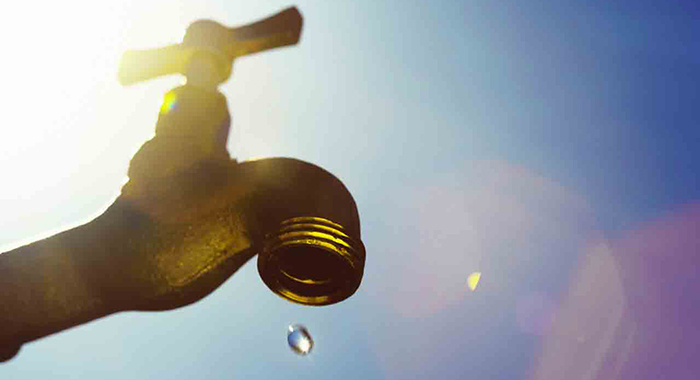

The government has defended its record on the water situation in the Grenadines, pointing to ongoing shipments from St. Vincent, planned desalination plants and proposed islands-wide distribution networks, while blaming the last administrations for longstanding structural problems.
St. Vincent and the Grenadines is experiencing a drought, with the Central Water and Sewerage Authority (CWSA) announcing widespread rationing in St. Vincent, which has a municipal water supply.
In the Grenadines, where there are no rivers or streams and no municipal water supply, the situation is even worse, as household cisterns are very low or empty.
The situation was highlighted in commentaries sent to some media houses.
Southern Grenadines MP Terrance Ollivierre and Minister of Health, Daniel Cummings, addressed the issue in a video published by the state-owned Agency for Public Information on Friday, while Senator Lavern King outlined the government’s longer-term policy approach in a call to Hot 97 FM.

Ollivierre, who is also minister of Grenadines affairs, said authorities are continuing to transport water from St. Vincent to the Grenadines by sea.
“As a matter of fact, I think a boat will be going down to the Grenadines on Saturdays and stopping in Mayreau and Union Island,” he said.
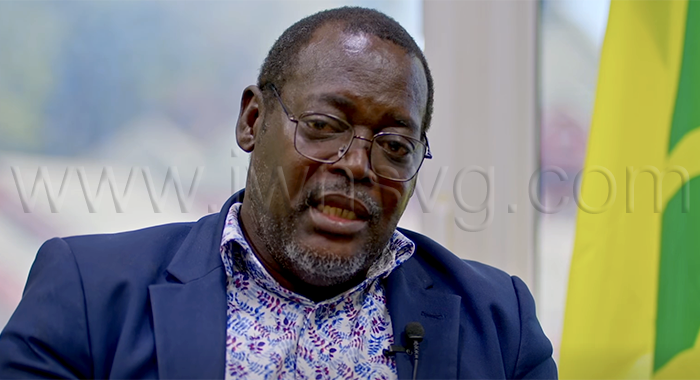
Cummings, who has ministerial responsibility for water, added that this has been happening for some time.
Ollivierre said the government has also arranged to have CWSA trucks and other vehicles transport the water across the islands “… to make sure that they, as they are accustomed to do, would be able to carry water… to different locations throughout the island so that people can get the water that they need”.
He said this arrangement would continue during the dry period, adding,
“And we’ll be doing that from time to time.”
Ollivierre indicated that he has been in contact with CWSA management and the responsible minister to maintain focus on the Grenadines.
“I also spoke to the person in charge at CWSA, along with the minister, to make sure that during this period of dry season… the people of the Grenadines can be assured that this government, and through your representative and the Minister of Health with responsibility for CWSA, and the CWSA, are cognizant of the problems that are being faced in the Southern Grenadines,” he said.
The MP noted that the drought is affecting the entire country, but said the government would “do our best” to meet needs on both the mainland and the Grenadines.
“They must also realise that the mainland also is experiencing its own problem… but we would do our best to make sure that both mainland and in the Grenadines, where it seems to be at the crisis proportion, some may say, to make sure that we get the water… to the people that they need,” Ollivierre said.
Meanwhile, Senator King, addressing criticism about the pace of improvements, said the government has allocated funding in the budget to move beyond temporary measures and build a permanent water system for the Grenadines.
“… you remember in the budget, the people… on the other side was saying, this is a Grenadine budget and all those sort of things,” King said, adding that this description arose because of the scale of spending earmarked for the Grenadines’ water infrastructure.
King, who noted that she is from the southern Grenadine island of Canouan, said the intention is to create a full system that delivers water across the islands.
“So we’re going to be investing in an actual system that will see people getting water throughout in the Grenadines,” she said.
King said that weekly shipments of water from St. Vincent are part of the existing short-term response.
“In the immediacy, however, I can confirm that we have been sending water weekly to the Grenadines,” she said. “Now, can it be increased? Perhaps so,” she added.

King also pointed to reduced rainfall as a key driver of the current situation.
“One of the things that we must also know is that overall, if we’ve been paying attention to the weather report, St. Vincent and the Grenadines has been experiencing decreasing … rainfall,” the senator said.
“So that means that water catchment is low. It means that we have to also start being good stewards of the water that we [have],” she added.
King said the government is pursuing external funding to build desalination plants in several parts of the Grenadines, describing these as part of a broader long-term plan.
She said the weekly shipments and other measures are interim steps while more permanent systems are designed and implemented.
King argued that these long-term projects cannot be completed in a matter of months, citing the need for studies, design work and proper project management.
“Can you have a long-term plan implemented in five months? You cannot … because it’s impossible,” she said, mentioning the age of the New Democratic Party (NDP) government, which was voted into office in November.
“If you’re supposed to do something that’s meant to last and meant to create a solution that the people will be happy about, you have to do the studies, you have to do the research, you have to have proper project management in place,” she said.
She contrasted this approach with what she described as “poor planning” by the previous administration.
“What we used to see from previous administration is they used to just take things .. haphazardly just before they’re ready to go back to the polls, and then you have to go and try and fix the problem again, and then it results in wastage,” King said.
The senator pointed out that the Grenadines has always been faced with water challenges.
“I’m from the Grenadines. I know this… Since… there’s not as much rainfall as before, the problem is more than before, but we have, in fact, been sending water down,” she said.
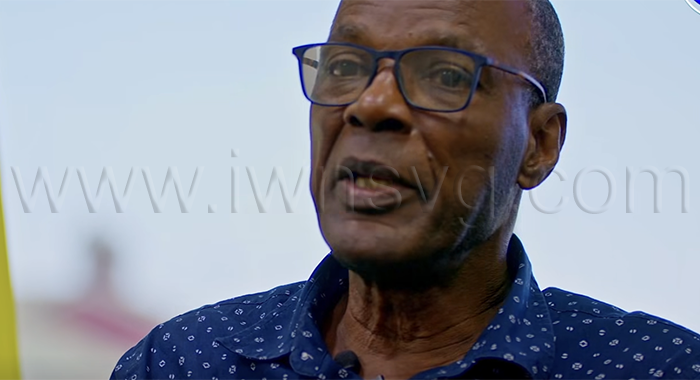
And, Cumming emphasised that beyond production and emergency supply, the Grenadines lack a modern piped distribution system.
He said new projects were intended to provide storage at elevation and a full network of mains to carry water to homes by gravity.
“So there will be transmission and distribution mains on the islands of a comprehensive water distribution system, as you expect in a normal society,” said Cumming, a former manager of the CWSA.
Cummings said it was “regrettable” that a previous government had not implemented such projects earlier.
“We are going to make sure this [comes] on stream as soon as possible,” he said.
The minister urged residents, especially on the mainland, to reduce waste and fix leaks to stretch available supplies during the dry spell.
He said both consumers and the CWSA must make an extra special effort to avoid leaks on the system.
“Whenever you see a leak, we urge you to call the water authority. They will respond and get it fixed,” Cummings said.
“If you have leaks on your premises, overflowing tanks and so on, please adjust them to stop wasting the water, so that… we have to spread it, to make sure most people, all people, get sufficiency in water supply,” he added.
Can the government import water tanks from Taiwan or Japan? Most home can have two so, that the main one is for food and drinking, while the other can be used for washing. It can also collect rainwater and utilized for bathing and washing.